

Effective testing guidelines require a combination of clear, measurable goals, comprehensive test case design, and a smart approach to risk. By adhering to best practices like automating repeatable checks, ensure reliable software development and smooth deployments.
- Ensure the software works correctly and meets user requirements.
- Follow testing principles to identify defects and improve quality.
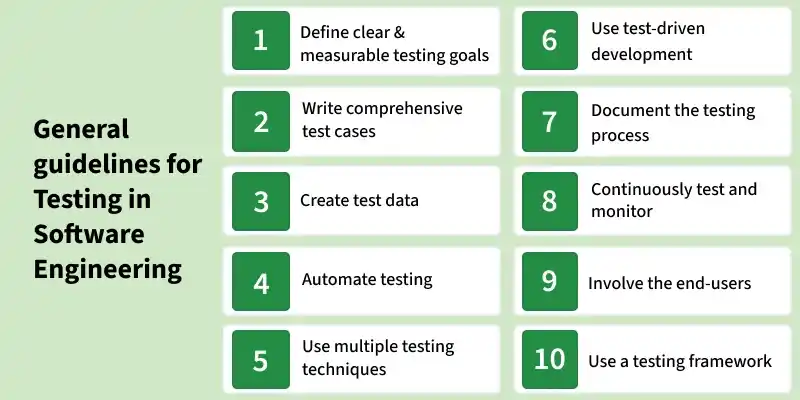
General Guidelines for Testing in Software Engineering
Here are the following Guidelines for Testing in Software Engineering which are follows:
- Define Clear and Measurable Testing Goals: Establish what needs to be tested and what constitutes a pass or fail for each test.
- Write comprehensive test cases: Develop a set of test cases that cover all possible scenarios, including edge cases and negative test cases.
- Create test data: Create test data that represents the expected and unexpected data that the software will encounter during normal operation.
- Automate testing: Automate as much of the testing as possible to increase efficiency and reduce human error.
- Use multiple testing techniques: Use a combination of different testing techniques such as unit testing, integration testing, system testing, and acceptance testing to provide a comprehensive test coverage.
- Use test-driven development (TDD): This is a method where the tests are written before the code, this approach helps in verifying that the code meets the requirement and also helps in refactoring the code.
- Document the testing process: Keep detailed records of the testing process, including test cases, test data, and test results. This can be helpful for debugging and maintaining the software.
- Continuously test and monitor: Continuously test and monitor the software during development and after release to ensure that it continues to function as expected.
- Involve the end-users: Get the end-users involved in testing to ensure that the software meets their needs and is easy to use.
- Use a testing framework: Use a testing framework to help organize and automate the testing process.
