

Software Crisis is a term used in computer science for the difficulty of writing useful and efficient computer programs in the required time.
- The software crisis arose from using the same workforce, methods, and tools despite increasing software demand, complexity, and challenges.
- Increasing software complexity made existing development methods insufficient, causing various software problems.
- These included budget overruns, efficiency issues, poor software quality, project management difficulties, and delayed software delivery.
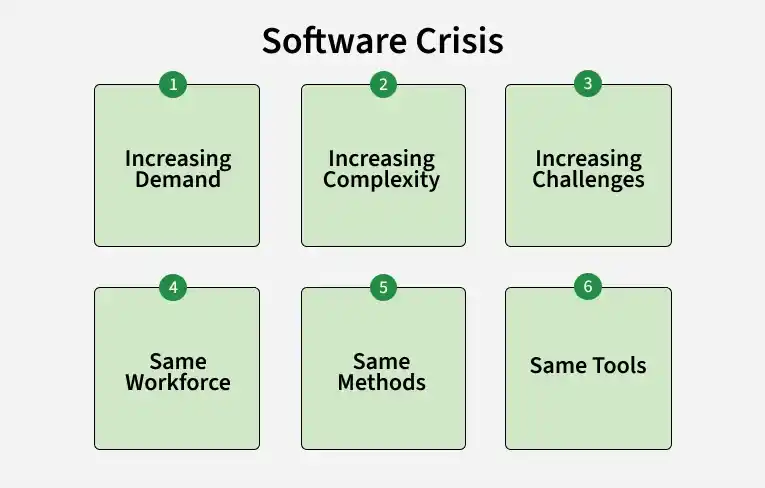
Causes of Software Crisis
Following are the causes of Software Crisis:
- The cost of owning and maintaining software was as expensive as developing the software.
- At that time Projects were running overtime.
- At that time Software was very inefficient.
- The quality of the software was low quality.
- Software often did not meet user requirements.
- The average software project overshoots its schedule by half.
- At that time Software was never delivered.
- Non-optimal resource utilization.
- Challenging to alter, debug, and enhance.
- The software complexity is harder to change.
Factors Contributing to Software Crisis
Factor Contributing to Software Crisis are:
- Poor project management.
- Lack of adequate training in software engineering.
- Less skilled project members.
- Low productivity improvements.
Solution of Software Crisis
There is no single solution to the crisis. One possible solution to a software crisis is Software Engineering because software engineering is a systematic, disciplined, and quantifiable approach. For preventing software crises, there are some guidelines:
- Reduction in software over budget.
- The quality of the software must be high.
- Less time is needed for a software project.
- Experienced and skilled people working on the software project.
- Software must be delivered.
- Software must meet user requirements.
