Log In


Rossite
A valid IMA mineral species - grandfathered
This page is currently not sponsored. Click here to sponsor this page.

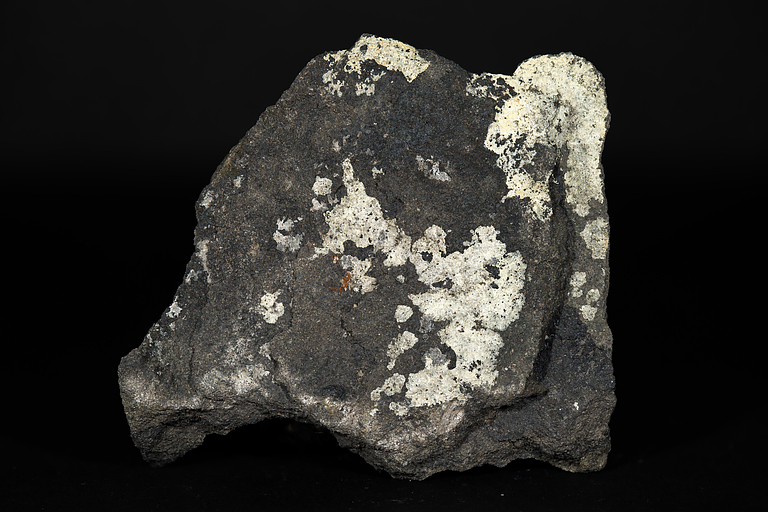
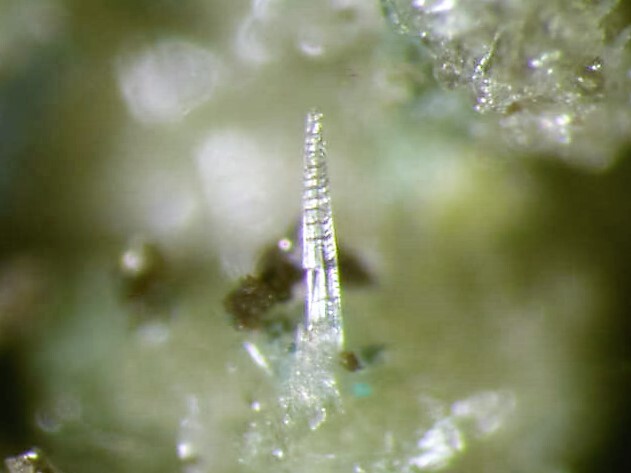
About Rossite
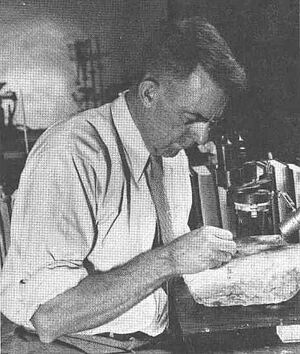
Clarence S. Ross
Formula:
Ca(VO3)2 · 4H2O
Colour:
Pale yellow; yellow in transmitted light.
Lustre:
Vitreous, Pearly
Hardness:
2 - 3
Specific Gravity:
2.45
Crystal System:
Triclinic
Name:
Named 1927 by William F. Foshag and Frank L. Hess in honor of Dr. Clarence Samuel Ross (September 20, 1880 - April 19, 1975, Rockville, Maryland, USA), American geologist and mineralogist, U.S. Geological Survey, Washington, D.C., USA.
Dimorph of:
Rossite Group.
A rare calcium vanadate hydrate that transforms reversibly to metarossite (dehydration within a few weeks time).
A rare calcium vanadate hydrate that transforms reversibly to metarossite (dehydration within a few weeks time).
Unique Identifiers
Mindat ID:
3460
Long-form identifier:
mindat:1:1:3460:5
Similar Names
| Brossite | A variety of 'Iron-bearing Dolomite' [Dolomite] | Ca(Mg,Fe)(CO3)2 |
| Crossite | A discredited species name | |
| Grossite | A valid IMA mineral species | CaAl4O7 |
| Mossite | ||
| Raisaite | A valid IMA mineral species | CuMg[Te6+O4(OH)2] · 6H2O |
| Riesite | A valid IMA mineral species | TiO2 |
| Risséite | A synonym of Aurichalcite | |
| Rosasite | A valid IMA mineral species - grandfathered | (Cu,Zn)2(CO3)(OH)2 |
| Roseite | (Os,Ir)S | |
| Rosiaite | A valid IMA mineral species | PbSb25+O6 |
| Rosite (of Huot) | A synonym of Chalcostibite | |
| Rostite | A valid IMA mineral species | Al(SO4)(OH) · 5H2O |
| Rouseite | A valid IMA mineral species | Pb2Mn2+[AsO3]2 · 2H2O |
| Ruizite | A valid IMA mineral species | Ca2Mn23+[Si4O11(OH)2](OH)2 · 2H2O |
| Russoite | A valid IMA mineral species | (NH4)ClAs2O3(H2O)0.5 |
IMA Classification of Rossite
Approved, 'Grandfathered' (first described prior to 1959)
IMA Formula:
Ca(V5+O3)2·4H2O
First published:
1928
Classification of Rossite
4.HD.05
4 : OXIDES (Hydroxides, V[5,6] vanadates, arsenites, antimonites, bismuthites, sulfites, selenites, tellurites, iodates)
H : V[5,6] Vanadates
D : Inovanadates
4 : OXIDES (Hydroxides, V[5,6] vanadates, arsenites, antimonites, bismuthites, sulfites, selenites, tellurites, iodates)
H : V[5,6] Vanadates
D : Inovanadates
47.1.1.1
47 : VANADIUM OXYSALTS
1 : Normal Anhydrous Vanadium Oxysalts
47 : VANADIUM OXYSALTS
1 : Normal Anhydrous Vanadium Oxysalts
21.2.2
21 : Vanadates (and vanadates with arsenate or phosphate)
2 : Vanadates of Mg, Ca, Sr or Ba
21 : Vanadates (and vanadates with arsenate or phosphate)
2 : Vanadates of Mg, Ca, Sr or Ba
Mineral Symbols
As of 2021 there are now IMA–CNMNC approved mineral symbols (abbreviations) for each mineral species, useful for tables and diagrams.
| Symbol | Source | Reference for Standard |
|---|---|---|
| Rs | IMA–CNMNC | Warr, L.N. (2021). IMA–CNMNC approved mineral symbols. Mineralogical Magazine, 85(3), 291-320. doi:10.1180/mgm.2021.43 |
Physical Properties of Rossite
Vitreous, Pearly
Transparency:
Transparent
Colour:
Pale yellow; yellow in transmitted light.
Hardness:
2 - 3 on Mohs scale
Tenacity:
Brittle
Cleavage:
Distinct/Good
One direction, prominent.
One direction, prominent.
Density:
2.45 g/cm3 (Measured) 2.42 g/cm3 (Calculated)
Optical Data of Rossite
Type:
Biaxial (-)
RI values:
nα = 1.71 nβ = 1.77 nγ = 1.84
2V:
Measured: 60° , Calculated: 90°
Max. Birefringence:
δ = 0.130
Based on recorded range of RI values above.
Based on recorded range of RI values above.
Interference Colours:
The colours simulate birefringence patterns seen in thin section under crossed polars. They do not take into account mineral colouration or opacity.
Michel-Levy Bar The default colours simulate the birefringence range for a 30 µm thin-section thickness. Adjust the slider to simulate a different thickness.
Grain Simulation You can rotate the grain simulation to show how this range might look as you rotated a sample under crossed polars. Each grain retains its interference colour (retardation) while its brightness falls to black at extinction and reaches a maximum between extinction positions.
The colours simulate birefringence patterns seen in thin section under crossed polars. They do not take into account mineral colouration or opacity.
Michel-Levy Bar The default colours simulate the birefringence range for a 30 µm thin-section thickness. Adjust the slider to simulate a different thickness.
Grain Simulation You can rotate the grain simulation to show how this range might look as you rotated a sample under crossed polars. Each grain retains its interference colour (retardation) while its brightness falls to black at extinction and reaches a maximum between extinction positions.
Surface Relief:
Very High (positive)
Relative to Canada balsam mounting medium (n ≈ 1.537).
Relative to Canada balsam mounting medium (n ≈ 1.537).
This shows the grain boundary and Becke line effect under plane-polarised
light, based on the contrast between this mineral's average refractive
index and the mounting medium. It does not take into account mineral
colouration.
In focus
Interference Figure:
This shows the idealized biaxial acute bisectrix (Bxa) interference figure
- the conoscopic view for a grain cut perpendicular to the acute bisectrix, using
this mineral's 2V. The two small white dots mark the melatopes - the points
where the two optic axes emerge - and are shown only when they fall within the
field of view. The coloured bands are isochromatics, and the dark bands are
isogyres.
Rotate the stage: at 0°/90° the isogyres form a cross through the melatopes; at 45° they pull apart into curved hyperbolas. That splitting on rotation - absent in a uniaxial figure - is the standard diagnostic test for telling biaxial minerals from uniaxial ones. If 2V is large, the melatopes may fall outside the field of view, as they often do at the microscope too.
Rotate the stage: at 0°/90° the isogyres form a cross through the melatopes; at 45° they pull apart into curved hyperbolas. That splitting on rotation - absent in a uniaxial figure - is the standard diagnostic test for telling biaxial minerals from uniaxial ones. If 2V is large, the melatopes may fall outside the field of view, as they often do at the microscope too.
Dispersion:
relatively strong
Optical Extinction:
Y ∧ b ≃ 45°; Z ≃ c.
Comments:
Optical class is based on recrystallized material.
Chemistry of Rossite
Mindat Formula:
Ca(VO3)2 · 4H2O
Element Weights:
Elements listed:
Crystallography of Rossite
Crystal System:
Triclinic
Class (H-M):
1 - Pinacoidal
Space Group:
P1
Cell Parameters:
a = 8.552 Å, b = 8.576 Å, c = 7.028 Å
α = 101.5°, β = 114.96°, γ = 103.39°
α = 101.5°, β = 114.96°, γ = 103.39°
Ratio:
a:b:c = 0.997 : 1 : 0.819
Unit Cell V:
428.03 ų (Calculated from Unit Cell)
Z:
2
Morphology:
Small glassy lumps surrounded by alteration rims. Artificial crystals commonly elongated [001] and rather flattened on {010}; rarely tabular {001}, lath-like or acicular [001].
Twinning:
On {100} ?
Comment:
Space group is based on recrystallized material.
Crystal Structure
Load
Unit Cell | Unit Cell Packed
2x2x2 | 3x3x3 | 4x4x4
Unit Cell | Unit Cell Packed
2x2x2 | 3x3x3 | 4x4x4
Show
Big Balls | Small Balls | Just Balls | Spacefill
Polyhedra Off | Si Polyhedra | All Polyhedra
Remove metal-metal sticks
Big Balls | Small Balls | Just Balls | Spacefill
Polyhedra Off | Si Polyhedra | All Polyhedra
Remove metal-metal sticks
Display Options
Black Background | White Background
Perspective On | Perspective Off
2D | Stereo | Red-Blue | Red-Cyan
Black Background | White Background
Perspective On | Perspective Off
2D | Stereo | Red-Blue | Red-Cyan
View
CIF File Best | x | y | z | a | b | c
CIF File Best | x | y | z | a | b | c
Rotation
Stop | Start
Stop | Start
Labels
Console Off | On | Grey | Yellow
Console Off | On | Grey | Yellow
Data courtesy of the American Mineralogist Crystal Structure Database. Click on an AMCSD ID to view structure
| ID | Species | Reference | Link | Year | Locality | Pressure (GPa) | Temp (K) |
|---|---|---|---|---|---|---|---|
| 0005081 | Rossite | Ahmed F R, Barnes W H (1963) The crystal structure of rossite The Canadian Mineralogist 7 713-726 |  | 1963 | Dolores River, Colorado, USA | 0 | 293 |
CIF Raw Data - click here to close
X-Ray Powder Diffraction
Loading XRD data...
Data courtesy of RRUFF project at University of Arizona, used with permission.
Powder Diffraction Data:
| d-spacing | Intensity |
|---|---|
| 3.860 Å | (100) |
| 6.636 Å | (95) |
| 7.260 Å | (90) |
| 3.432 Å | (60) |
| 3.033 Å | (55) |
| 3.000 Å | (50) |
| 3.934 Å | (25) |
Comments:
Yellow Cat Wash, Utah, USA. Data from Bayliss (1985). Material was rehydrated from metarossite.
Geological Environment
Paragenetic Mode(s):
| Paragenetic Mode | Earliest Age (Ga) |
|---|---|
| Stage 7: Great Oxidation Event | <2.4 |
| 47a : [Near-surface hydration of prior minerals] | |
| 47e : [Vanadates, chromates, manganates] | |
| Stage 10b: Anthropogenic minerals | <10 Ka |
| 55 : Anthropogenic mine minerals |
Type Occurrence of Rossite
General Appearance of Type Material:
Veinlets; small glassy lumps surrounded by alteration rims of metarossite.
Place of Conservation of Type Material:
U.S. National Museum of Natural History, Washington, D.C., USA: #95331, R5707.
Geological Setting of Type Material:
Carnotite-bearing sandstone.
Associated Minerals at Type Locality:
Other Language Names for Rossite
Relationship of Rossite to other Species
Structurally related to group(s):
Common Associates
Associations Based on Photo Data:
| 8 photos of Rossite associated with Pascoite | Ca2Ca(V10O28) · 17H2O |
| 6 photos of Rossite associated with Metarossite | Ca(V2O6) · 2H2O |
| 4 photos of Rossite associated with Uraninite | UO2 |
| 4 photos of Rossite associated with Hewettite | CaV6O16 · 9H2O |
| 3 photos of Rossite associated with Montroseite | (V3+,Fe3+)O(OH) |
| 3 photos of Rossite associated with Metahewettite | CaV6O16 · 3H2O |
| 3 photos of Rossite associated with Corvusite | (Na,K,Ca,Mg)2(V5+,V4+,Fe2+)8O20 · 6-10H2O |
| 2 photos of Rossite associated with Pascoite Family | |
| 2 photos of Rossite associated with Sherwoodite | Ca5.5(AlV4+V5+12O39) · 28H2O |
| 2 photos of Rossite associated with Dickthomssenite | Mg(V2O6) · 7H2O |
Related Minerals - Strunz-mindat Grouping
| 4.HD. | Pseudodickthomssenite | Mg(VO3)2 · 8H2O |
| 4.HD.10 | Metarossite | Ca(V2O6) · 2H2O |
| 4.HD.15 | Munirite | NaVO3 · 1.9H2O |
| 4.HD.20 | Metamunirite | NaVO3 |
| 4.HD.25 | Dickthomssenite | Mg(V2O6) · 7H2O |
| 4.HD.30 | Ansermetite | Mn2+(V2O6) · 4H2O |
Other Information
Thermal Behaviour:
Heated before the blowpipe, rossite fuses easily to a black bead without coloring the flame. Heated in a closed tube it fuses easily and gives off water.
Notes:
Slowly soluble in water. Transforms to metarossite in open air within a matter of weeks. The process is reversible.
When moisted with concentrated HCl, rossite turns mahogany red (vanadic acid).
When moisted with concentrated HCl, rossite turns mahogany red (vanadic acid).
Health Risks:
No information on health risks for this material has been entered into the database. You should always treat mineral specimens with care.
Internet Links for Rossite
mindat.org URL:
Blue Cap Mine, La Sal Creek Mining District, San Juan County, Utah, USA