
Previewing The Upcoming Shortstop Class
As the regular season winds down, MLBTR is taking a position-by-position look at the 2026-27 free agent market. Next up are the shortstops. Free agency is always a tough place to go shopping for a shortstop, but that’s extra-true this season, where the best options are rebound candidates and utilitymen.
Player ages are for the 2027 season, and names within each tier are listed alphabetically, not “ranked.” Only players who appeared in MLB (or on major league 60-day injured lists) this year are included.
Previous entries in this series: Catcher, First Base, Second Base, Third Base.
Top Names
J.P. Crawford (32)
Once upon a time, Crawford rated as a plus defensive shortstop, but we’re a long way removed from 2020-21. The 31-year-old veteran’s glovework has deteriorated considerably. He’s played 706 innings at shortstop and graded out at -12 Defensive Runs Saved and -13 Outs Above Average. Crawford has made five throwing errors in his 706 innings this season — way above his typical pace for errant throws. That could be attributable to separate IL stints for shoulder, wrist and hand injuries this year. It’s tougher to blame what Statcast considers to be bottom-of-the-scale range on that trio of arm/hand issues, though.
At the plate, Crawford is a low-average, high-OBP hitter. He’s walked in 11.6% of his career plate appearances and has logged an 11.3% walk rate or better in each of the past five years. He’s at 13.3% this season. He’s not going to do a lot of damage against southpaws, but he walks a ton versus righties and lefties alike, so he doesn’t really need a platoon partner. Crawford is batting .218/.334/.344 on the season. His average is being dragged down a bit by a .251 BABIP, though some of the discrepancy between that mark and the career .296 mark he carried into the season can be explained by an uncharacteristic uptick in pop-ups. Entering the season, 11% of Crawford’s career fly-balls had been harmless infield flies. This year, that number is 17.5%. His 20 infield pop-ups are the second-most in his career, despite considerable time on the injured list this season.
Crawford is likely past his prime, though an age-32 renaissance in a better hitter’s environment than T-Mobile Park wouldn’t be a total shock. He’ll draw some extra interest for his off-field traits, too. Crawford is revered as a clubhouse leader in Seattle. Teammates are never shy to sing his praises. Crawford went out of his way to approach the Mariners this season about moving to third base as a means of clearing a path for shortstop-of-the-future Colt Emerson to get acclimated at shortstop in the majors. That may not seem like a big deal, but there are stories every year about veterans not wanting to move off their positions. Crawford not only being willing to do so but volunteering for it exemplifies the type of teammate he’s been in Seattle.
Mauricio Dubón (32)
Dubón probably fits better in the “utility players” section below, but he’s played well on both sides of the ball this winter and the options for any team seeking shortstop help are minimal. Dubón is hitting .276/.321/.395 with career-highs in plate appearances (612), homers (11), doubles (28), triples (3) and stolen bases (10). He doesn’t hit the ball hard (86.4 mph average exit velocity, 29.2% hard-hit rate) but puts it in play a lot; Dubón’s 11.9% strikeout rate is the 10th-lowest among all qualified big league hitters. It’s good that he has such strong bat-to-ball skills, as Dubón is a free swinger who has never walked much and probably isn’t going to change at this point.
Admittedly, Dubón has never been a full-time shortstop, but there’s no real reason to think he couldn’t handle the job for a year or two. He’s not likely to command more than a two-year deal anyhow. He could capably serve as a one-year or even partial-season stopgap at shortstop for a team looking to bridge its way to a top prospect’s promotion, or he could take over shortstop duties outright for a club looking to scale back on its strikeouts. Of course, there will be more teams that target Dubón with an eye toward him reprising his jack-of-all-trades utility role. It’s one he’s handled quite well.
Utility Players
Isiah Kiner-Falefa (32)
There are some similarities between Kiner-Falefa and Dubón, but the latter has better contact and on-base skills. Kiner-Falefa’s strikeout rate hovers between 15-17%, which is well shy of the roughly 22% league average, but he typically doesn’t walk much. This year’s 9.8% walk rate is easily a career-best but comes in a tiny sample of 173 plate appearances. Is it an outlier or the beginning of a trend? Kiner-Falefa’s plate discipline history suggest the former. His 31.2% chase rate on pitches outside the zone and 47.5% swing rate are right in line with the respective 30.8% and 47.3% marks he posted in 2024-25, when he walked at just a 3.5% clip between Pittsburgh and Toronto.
From a defensive standpoint, IKF can handle shortstop, second base and third base more than capably. He has limited experience in the outfield. He dabbled with catching earlier in his career, and while he’s not going to return there on a regular basis at any point, he makes a fine emergency catcher. Kiner-Falefa is hitting just .242/.318/.314 in this year’s 173 turns at the plate. He should get a big league deal, but it’ll probably be a one-year pact with a lesser guarantee than the $6MM he got from Boston.
Edmundo Sosa (31)
Sosa has had an odd season, posting awful numbers in May and July, roughly league-average numbers in April and June, and then finishing the season on a blistering hot streak in August and September. Such is life for a versatile utilityman who typically tallies 250 to 300 plate appearances per season and thus is prone to some bizarre small-sample streaks in either direction. In the aggregate, his 2026 offense (.247/.285/.417) is below average but not egregiously so. It’s also not far off the combined .261/.301/.438 pace he set from 2023-25 in Philly.
The righty-hitting Sosa is very good against lefties, poor against righties and can play all over the field. He has plus defensive marks at second base, shortstop and third base in his career and has held his own in limited left field work, too. The Phils have used him as an emergency option in center, though he has just three innings there during his time with the team.
Rebound Candidate
Ha-Seong Kim (31)
Kim has seemingly never recovered from the shoulder surgery he required late in 2024. He signed a two-year, $29MM deal with the Rays in the 2024-25 offseason, which allowed him to opt out following the season. Kim’s return took longer than expected, and he hit poorly with Tampa Bay. The Braves scooped him up off waivers in August 2025, and he caught fire for a few weeks before cooling off for the final few games. Atlanta clearly was intrigued by his upside; the Braves re-signed him to a $20MM deal after Kim turned down a $16MM player option.
It’s proven to be a disastrous decision. Kim has been one of the least productive players in baseball this year, hitting .113/.203/.121 in 139 trips to the plate. By measure of wRC+ (-4), he’s been 104% worse than average at the plate. That’s the third-worst single-season wRC+ mark of any player (min. 130 plate appearances) in the past decade, leading only 2023 Cam Gallagher and 2018 Trayce Thompson.
It’s been a shocking fall for Kim, who at one point looked like a potential nine-figure shortstop. He’s never been a great hitter, but from 2022-24 he batted .250/.336/.385 in a total of 1678 plate appearances. That was 6% better than average, and Kim paired that solid-but-unspectacular work at the plate with plus defense at three infield positions (shortstop included) and high-end baserunning. There’s nowhere to go but up from here, and he’s still only 30 years old (31 in a few weeks). A club could sign him to a cheap one-year deal or even a minor league contract and hope for a rebound as he further distances himself from that 2024 shoulder procedure.
Is the Class Thin Enough…?
Jazz Chisholm Jr. (29)
I’m not going to pretend this is a good idea or particularly likely, but when the market presents next to no options, teams might think outside the box. Chisholm hasn’t played shortstop since 2021. He didn’t grade well there early in his big league tenure, though that amounted to all of 330 innings. The Marlins had Chisholm split time between the two middle infield spots in 2021-22 before moving him to center field in 2023. By 2024, he was back at second base. The Yankees put him at third base for a while but he’s been back at second since July of 2025.
Chisholm has typically graded as a solid or better defender at second base. This year’s -6 showing in Defensive Runs Saved is his lone negative mark in that regard, and Statcast (13 OAA) thinks he’s actually been quite good. He’s not coming off his best season offensively but could still pop 20 homers and swipe 40 bags. He’s one of the most talented players in this year’s class, but he’s missed time due to injury and hasn’t been as strong overall at the plate as in recent seasons.
The strong likelihood is that Chisholm will sign somewhere to play second base, but we’ve seen stranger things happen. No one expected a team to sign Luis Arraez to play second base last winter — and certainly no one expected Arraez to post high-end defense in his age-29 return to second base after spending several seasons as a first baseman/designated hitter. This would be a larger risk — the kind a team might take if Chisholm were open to a one-year or opt-out-laden deal to bet on himself and return to the market next winter. We’ll probably look back at the fact that this was even written and say, “Remember when MLBTR got really weird and riffed on Chisholm as a shortstop option … in 2026-27?!” But in the tiny event that this actually happens and somehow works out, I reserve the right to call myself prescient and completely disregard the fact that this scenario was presented in overwhelmingly skeptical fashion.
Depth Options
Orlando Arcia (32), Paul DeJong (33), Kyle Farmer (35), Nick Madrigal (30), Jorge Mateo (32), Brendan Rodgers (30), Ramón Urías (33)
Option Decisions
Bo Bichette (29): Can opt out of remaining two years, $84MM (would receive $5MM buyout for opting out; contract allows Bichette to opt out next winter as well)
Bichette’s awful start to the season is still weighing down his numbers, but he’s been productive dating back to early June. In just over 400 plate appearances, he’s batting .289/.335/.441 with a dozen homers, 18 doubles, two triples, a 6.7% walk rate and a 19.3% strikeout rate. That’s very close to the career .294/.337/.469 line he carried into the season but is also well shy of last season’s career-best pace at the plate.
Despite how poorly his season started, there’s a case for Bichette to opt out and earn more than the net $79MM he’d leave on the table in doing so. However, he might not clear that sum by all that much, and Bichette certainly wouldn’t be pulling in $42MM next season if he opted out and signed elsewhere. The smarter play is probably to forgo this opt out, collect next year’s $42MM salary and hope for a big year. In that scenario, Bichette could opt out next season, collect the $5MM buyout, and then “only” need to top $37MM to come out ahead. With a big rebound, he could even reposition himself for another nine-figure deal.
Whether any team views Bichette as a viable option at shortstop, of course, is another question entirely. The Mets have given him some run there this year while Francisco Lindor has been unavailable, but it’s hard to think many clubs would be excited about plugging him back in as a full-time shortstop. It seems pretty likely that he’ll forgo his opt-out clause anyhow, rendering this all a moot point.
Trade Rumors Front Office Subscriber Chat Transcript
Steve Adams
- Hello! As you may have noticed Monday, Anthony and I flipped our chats around this week. He’s off today, so you’re stuck with me heading into the weekend. Apologies in advance!
- Speaking of advance, feel free to send questions in advance. We’ll get going at 3pm CT!
- Hello all! Happy (almost) weekend and happy (almost) playoff baseball!
- Let’s begin
Alex
- The Cubs have all of Gausman, Holmes, Boyd, and Imanaga departing via FA this offseason. Other rotation options include tons of question marks (Steele, Cabrera, Ben Brown, Horton). How do you see them addressing the SP staff this offseason (maybe with some names you think make sense), and what would they have to do to make you feel confident about them as a threat for the division going into next season?
Steve Adams
- Yeah, they (again) need to add pitching — both on the rotation and bullpen side of things. The market doesn’t have many candidates for long-term deals, which works in their favor, because the Cubs don’t love to go long-term on pitching deals. I doubt they’ll be on Tarik Skubal, just based on how they’ve operated in recent years. Probably not Trevor Rogers, either.Anyone from Gausman, Boyd, Holmes, Sonny Gray, Robbie Ray, Tyler Mahle makes some sense.Trade-wise, Drew Rasmussen’s one of the likeliest players to be moved this winter in my view. Reid Detmers will be out there again. Cubs liked him at the deadline. After years of speculation, I think the Mariners will be open to moving a starter … any of George Kirby, Logan Gilbert, Emerson Hancock will probably be in play to some extent.
- They have enough question marks that I think they ought to sign someone and trade for another rotation arm.
gordoj
- Trevor Larnach and Bailey Ober appear to not have roles with Twins next year. Is there much trade value there?
Steve Adams
- Yeah I think they’re both goners. Larnach basically told the Star Tribune this week that he thinks he’s gone, too. With Buxton, Walker Jenkins, Emmanuel Rodriguez, Luke Keaschall, Alan Roden and some more prospects (e.g. Hendry Mendez), there’s just no good reason for the Twins to pay $7MMish to Larnach for his final year of arbitration. I think they could get a reliever or a low-end prospect there, but he’s slipped a lot since the deadline and doesn’t provide any real defensive value so I don’t expect a big return — and it’s possible he’s just non-tendered.
- Ober is in a similar spot. Twins have Pablo Lopez coming back to join Joe Ryan, Taj Bradley and a smattering of other interesting arms (Mick Abel, Connor Prielipp, Zebby Matthews, Kendry Rojas)… they also traded an actual prospect for Dean Kremer at the deadline, and Kremer is in the same price range and service bucket as Ober. He’s pitched mostly well since the trade and has better stuff than Ober, whose fastball slipped under 90 mph this year.
- As with Larnach, there’s a chance this just leads to a straight non-tender. But Ober has a decent track record as a fourth starter and could be shipped off to a team in need of innings to fill out a staff. If the Twins can get the Athletics’ or Giants’ No. 23 prospect or something in return, go for it?
Guest
- What happens with Profar in 2027?
-

Unlock Subscriber-Exclusive Articles Like This One With a Trade Rumors Front Office Subscription
BENEFITS- Access weekly subscriber-only articles by Tim Dierkes, Steve Adams, and Anthony Franco.
- Join exclusive weekly live chats with Anthony.
- Remove ads and support our writers.
- Access GM-caliber tools like our MLB Contract Tracker
Alec Burleson Open To Offseason Extension Talks With Cardinals
Cardinals slugger Alec Burleson is enjoying the best season of his career in 2026. The 27-year-old first baseman (28 next month) is controlled by St. Louis for another two seasons but tells Derrick Goold of the St. Louis Post-Dispatch that he’s “all ears” if the team wants to approach him about a contract extension. That hasn’t happened to this point, but Burleson tells Goold he’s hopeful the club will do so prior to the looming lockout this winter: “I would be 100% be open to being here and being with this group of guys.”
Burleson’s .279/.343/.464 batting line is nearly identical to the .290/.343/.459 slash he posted last season. It’s remarkable consistency, but this year’s output comes in a larger sample. He’s already taken 118 more plate appearances than he did in 2025 and still has three games left to play. Burleson is currently leading Major League Baseball with 113 runs batted in and is hopeful of adding to that total on the final weekend of the season as he looks to fend off Sal Stewart (110), Pete Alonso (110) and Pete Crow-Armstrong (107) for 2026’s top RBI total.
The 2026 season was Burleson’s first year of arbitration eligibility. He’s playing on a $3.3MM salary and ought to get a hefty raise this year after posting strong rate stats and piling up some of the top counting stats in the game. He’s due a raise this winter and one more following the 2027 season before reaching free agency in the 2028-29 offseason.
A look at MLBTR’s Contract Tracker shows there aren’t many recent comps that would be applicable to Burleson. The only first basemen in this service class who’ve signed extensions that bought out free agent years in the past half decade are Matt Olson (eight years, $168MM) and Yandy Diaz (three years, $24MM). Olson was coming off a 39-homer, five-WAR season — his second 30-homer campaign — while Diaz was entering his age-31 campaign and wouldn’t have been slated to become a free agent until his age-33 season. Olson was a more complete player, while Diaz knew an extension may have been his only chance at landing a notable multi-year deal, as teams typically aren’t keen on giving out long-term deals to players in their mid-30s.
Expanding the parameters to look at all position players who’ve signed an extension with between four and five years of service across the past five seasons shows a few more potentially relevant deals. Bryan Reynolds signed for seven years and $100MM with the Pirates in April 2023. Ryan McMahon signed for six years and $70MM in March 2022 (coming off that winter’s lockout). They’re closer in stature, but neither is a perfect comp.
Reynolds was a Super Two player who would’ve been arb-eligible four times instead of Burleson’s more typical three. He signed a two-year, $13.5MM deal covering his first two arb seasons, meaning he was negotiating from a higher starting point (salary-wise) and had some more leverage. McMahon had a lower starting point ($2.375MM in his first arb season) and a starkly different skill-set; he was also a 20-homer bat but a lesser overall hitter whose value was derived largely from elite defense at the hot corner. Burleson is a fine defensive first baseman but is clearly a bat-first player.
Burleson will probably earn somewhere in the vicinity of $15-18MM over his final two seasons of arbitration. The question for his reps at the Ballengee Group and for Cardinals brass would be one of how they value his free agent seasons. He’s not going to command an Alonso-level ($31MM) or Freddie Freeman-level ($27MM) annual value, but his 2025-26 numbers compare very favorably with what Josh Naylor did in 2025 before landing a five-year, $92.5MM free agent deal ($18.5MM AAV). If the Cards are confident that Burleson can sustain this offensive pace moving forward, something in the five-year, $75MM range would place a similar value on Burleson’s free-agent seasons.
There’s no real urgency for the Cardinals to extend Burleson, but there’s no clear first baseman of the future breathing down his neck in St. Louis, either. Ivan Herrera doesn’t have a clear position. He’d be an option at first base if the Cardinals permanently move him from behind the plate, but he’s only controlled for one season longer than Burleson and hasn’t shown as much with the bat. Young catcher Leo Bernal has played some first base, too, but manager Oli Marmol just this week told Goold that he believes Bernal has what it takes to be an everyday catcher in the majors. He might play some more first base when star catching prospect Rainiel Rodriguez is big league-ready, but the Cards will also surely be inundated with trade interest in their catching depth.
Of course, Burleson himself will draw trade interest this winter, too. There were clubs interested in him last winter and at this summer’s trade deadline. He’s down to two seasons of club control — the same juncture at which president of baseball operations Chaim Bloom traded Brendan Donovan last offseason. Outfielder Lars Nootbaar may have been traded last winter if healthy, but he was instead shipped out at the deadline with one-plus season of control left. Burleson is in this same window. The Cardinals could move him this winter, likely securing a nice package of prospects in return, sign him for the long haul or just go the arbitration route and see where they’re at next summer. The price of an extension would only increase if Burleson maintained his pace and the Cards were in contention, however.
Twins Outright Alex Jackson
Sept. 24: Jackson cleared waivers and was assigned outright to Triple-A. The Triple-A season is over, but the assignment is largely a formality. Jackson will surely accept rather than elect free agency, as accepting entitles him to the remainder of this year’s $1.35MM guaranteed salary. Once the season concludes, he’ll be eligible to become a minor league free agent (unless he’s quickly re-added back to the 40-man roster).
Sept. 21: The Twins designated catcher Alex Jackson for assignment Monday, per a club announcement. His spot on the 40-man roster goes to first baseman Aaron Sabato, whose previously reported promotion from Triple-A St. Paul has now been made official by the club.
It’s the third DFA of the season for Jackson. He’s cleared waivers on both prior occasions and accepted outright assignments to the minor leagues. That’s to be expected, as he’s earning a $1.35MM salary with Minnesota this season and would forfeit the remainder of that salary if he rejected an outright assignment in favor of free agency.
The 30-year-old Jackson is a former No. 6 overall draft pick and top prospect who has never settled in as a big league regular but has accrued nearly four years of service in journeyman fashion. He’s played for six big league teams across seven partial seasons at the MLB level, hitting .175/.254/.305 with a massive 39.6% strikeout rate along the way.
Jackson obviously hasn’t provided much with the bat — though he does sport a .256/.312/.444 batting line (112 wRC+) in 173 plate appearances between the Twins and Orioles across the past two seasons. That solid-looking output belies a 35.3% strikeout rate and has been buoyed by a .376 average on balls in play that he’s not going to sustain over a larger sample. He’s a quality defender behind the plate, particularly when it comes to controlling the run game.
Minnesota’s handling/usage of Jackson has been peculiar. The team designated him for assignment ten days after the trade deadline but immediately re-selected him to the majors a few days later when he passed through waivers unclaimed. As longtime Twins scribe Aaron Gleeman points out, the Twins carried Jackson on the roster for 44 games dating back to Aug. 1 but gave him only five plate appearances in that time. He was their third catcher behind Ryan Jeffers and Victor Caratini and a backup option at first base but was generally kept around as an insurance policy while manager Derek Shelton operated with an effective 25-man roster.
In all likelihood, Jackson will once again clear waivers and accept an outright assignment. He has about $50K remaining on his guaranteed salary that he’s not going to forfeit to elect free agency a week before season’s end. If another club is looking for some affordable, glove-first catching depth, they could place a claim on Jackson — but he’d be owed a modest raise on this year’s $1.35MM salary in arbitration this winter, making him a clear non-tender candidate.
If Jackson goes unclaimed on waivers and accepts his assignment to St. Paul, he can become a minor league free agent at season’s end — as is true of all players with three-plus years of major league service who are removed from a 40-man roster and not added back to the roster prior to the offseason.
Mets To Designate Xzavion Curry For Assignment
The Mets are designating right-hander Xzavion Curry for assignment. The team hasn’t formally announced the move, but it’s listed on their transaction log at MLB.com. New York also hasn’t announced yesterday’s reported claim of left-handed reliever Philip Abner from the Giants — also listed on their transaction log — so it seems safe to presume a formal announcement of that claim and Curry as the corresponding move is forthcoming.
Curry, 28, has appeared in nine games with the Mets this season. He’s pitched 21 1/3 innings and been dinged for a 5.48 ERA: 13 runs on 22 hits (seven homers) and nine walks with 15 punchouts. The former Guardians prospect signed a minor league deal back in May after opening the season with los Tigres de Quintana Roo in the Mexican League.
Prior to the 2026 campaign, Curry had pitched in parts of four MLB seasons — primarily with Cleveland but also briefly with Miami. He was a decent swingman with the Guardians in 2023-24, logging a combined 137 2/3 innings with a 4.25 ERA in 14 starts and 43 relief appearances. Overall, the right-hander has pitched 171 1/3 innings in the majors, during which he’s posted a 4.52 ERA with a tiny 15.6% strikeout rate and a solid 7.5% walk rate. Although Curry’s 10% homer-to-flyball rate is a couple percentage points shy of average, the sheer volume of fly-balls he gives up is so large (50.3% fly-ball rate, 28.7% ground-ball rate) that he’s still averaged an ugly 1.47 homers per nine innings in the big leagues.
Curry sat 92.5 mph on his four-seamer during his best season with Cleveland (2023) but is averaging just 90.8 mph on the pitch this year. He’s added a new splitter and sinker that he hasn’t used in the past, though the results obviously haven’t been favorable in the majors. Down in Triple-A, he’s notched a shiny 3.36 earned run average across 72 1/3 innings, although he’s shown the same problematic blend of low strikeouts (13.7%), good-but-not-elite command (6% walk rate) and tons of fly-balls (29% ground-ball rate, 42.9% fly-ball rate, 28.1% line-drive rate).
Since he’s been outrighted in the past, Curry will have the choice to reject a minor league assignment if he clears waivers. He’ll very likely be a minor league free agent in the offseason and will look to latch on as a depth option, whether back with the Mets or elsewhere.
Aaron Judge: Still Hoping To Be Active For Wild Card Round
September 23: Judge told Jorge Castillo of ESPN that he’s still hopeful of being ready for the Wild Card Series.
September 22: The Yankees don’t expect Aaron Judge to be available during the Wild Card round of postseason play, manager Aaron Boone announced to the team’s beat today (via Bryan Hoch of MLB.com). Judge received a platelet-poor plasma injection for what Boone described as a “moderate” calf strain, which landed Judge on the injured list three days ago.
New York and their archrivals in Boston appear to be on a collision course for a matchup in said Wild Card round. They’re currently the Nos. 4 and 5 seeds in the American League playoff picture, despite both having better records than the division leaders in the AL Central (Cleveland) and AL West (Texas). A prominent winning or losing streak from one of the Junior Circuit’s playoff clubs could still alter the expected matchups, but a Yankees/Red Sox showdown is the likeliest outcome.
With Judge sidelined, the Yankees would turn to an outfield including Cody Bellinger, Spencer Jones and deadline pickup Heliot Ramos. Trent Grisham, out since early September due to a hamstring issue, isn’t expected back before the end of the regular season but could return for the playoffs. That’s very much up in the air at this time. Switch-hitting Jasson Dominguez is healthy but was optioned to Triple-A, where he’s spent a significant portion of the summer, earlier this month. He’s hit well since being sent down again (7-for-19, two homers, two doubles) but hasn’t consistently shown an ability to hit big league pitching.
Stress fractures in Judge’s ribcage shelved the two-time AL MVP from June 1 through Sept. 7. The Yankees played 84 games in the interim and had one of baseball’s least-productive offenses. The Judge-less Yankees ranked 26th in runs scored (341), 29th in batting average (.227), 30th in on-base percentage (.295), 26th in slugging percentage (.386) and 28th in wRC+ (90).
Judge’s absence for a likely Wild Card showdown with the Red Sox is all the more crushing given the lefty-heavy state of the Boston pitching staff. Sonny Gray is the Red Sox’ only right-handed starter. Payton Tolle, Ranger Suarez, Jake Bennett and Patrick Sandoval all throw from the left side. (Gray, Suarez and Tolle would presumably be skipper Chad Tracy’s rotation choices in a three-game Wild Card set.) Closer Aroldis Chapman and setup man Erik Miller are both left-handed as well. Judge is a batting .242/.407/.548 against lefties this season and carries a career .285/.432/.623 line versus southpaws.
Barring a swifter-than-expected recovery, it seems the Yankees will be left to face their longtime nemesis without the benefit of their best player in the lineup. Whether Judge would be available for subsequent rounds of play remains unclear. The American League Division Series will begin on Oct. 3 — five days after the Wild Card round. The American League Championship Series would start on Oct. 12. The World Series is slated to begin on Oct. 23.
Previewing The Upcoming Second Base Class
As the regular season winds down, MLBTR is taking a position-by-position look at the 2026-27 free agent market. Next up is the second base class. There’s a pair of clear headliners among the group, but the next tier offers some notable veterans who could bounce back from injury-marred 2026 seasons and provide big value in subsequent years.
Player ages are for the 2027 season, and names within each tier are listed alphabetically, not “ranked.” Only players who appeared in MLB (or on major league 60-day injured lists) this year are included.
Previous entries in this series: Catcher, First Base
Top of the Class
Luis Arraez (30)
A year ago, Arraez didn’t seem like a viable fit on a preview of the second base class. The multi-time batting champion played primarily second base early in his career, but Arraez had knee problems before even reaching the majors and had seen his defensive grades at the keystone wane over the years. He functioned primarily as a first baseman with the Marlins and Padres in 2024-25.
When the market didn’t produce the multi-year offers Arraez sought coming off a relative down season, he pivoted and took the best one-year offer that’d allow him to return to second base. It’s worked out beautifully. Arraez’s bat has cooled since a trade from San Francisco to Philadelphia, but he’s still hitting .314/.349/.424 on the season — good for a 111 wRC+ and a clear path to another batting title. More importantly, he’s looked comfortable at second base. Defensive Runs Saved isn’t enamored of his work, but Statcast pegs him at 13 Outs Above Average. At the very least, he’s shown himself a capable second baseman whose preternatural bat-to-ball skills are in no danger of deteriorating (4.3% strikeout rate).
There are still flaws in Arraez’s game. He rarely walks, hits for no power and doesn’t hit the ball hard. His production is entirely dependent on his penchant for soft liners producing a BABIP comfortably north of league average. When his BABIP sags, as it did in 2025 when it fell to a league-average .289, then Arraez is a low-OBP singles hitter with questionable defensive value.
Since he was traded at the deadline, Arraez isn’t eligible for a qualifying offer. He should get a multi-year deal this time around, probably from a team with needs at second base and a desire to cut down on its strikeout rate. He probably won’t break the bank, as the bottom could fall out quickly if his one-dimensional offensive skill set takes even a slight downturn, but three or four years ought to be there this time around.
Brandon Lowe (32)
Lowe faced similar questions about his glovework after ranking as the game’s worst defensive second baseman with the Rays in 2025. Following an offseason trade to Pittsburgh, he now improbably ranks as one of the very best defenders at his position (+14 DRS and OAA alike). He’s also belted 33 home runs, giving him his second straight 30-homer season and the third in his career. Lowe’s .260/.330/.489 batting line is good for a 119 wRC+ (suggesting he’s been 19% better than an average hitter at the plate this season).
The knocks against Lowe are fairly obvious. He strikes out too much (28.8%), walks at a good-not-great rate (9.4%) and has notable platoon splits both in his career and in 2026. He’s also 32 years old, and if he’d been born a week earlier than his July 6 birthday, next year would be considered his “age-33” season rather than his age-32 campaign. As I outlined on our most recent Free Agent Power Rankings, the list of 32-year-old bats to land more than three years in free agency is tiny and generally reserved for a higher echelon of player. The fact that Lowe will (or should) receive a qualifying offer from the Pirates won’t help his cause.
Even with those flaws, Lowe is one of the most enticing bats — not just second basemen — on the offseason market. He has an outside chance of adding his name to that list of four-year deals for hitters aged 32 or older, but a strong three-year deal feels like a safer bet.
Everyday Options
Jazz Chisholm Jr. (29)
Chisholm just returned from the injured list, which gives him a chance to connect on at least one more round-tripper this year and punch his ticket on the second 20-40 season of his career. He’s currently sitting on 19 homers and 41 steals on the season.
It’s a rare blend of power and speed, but this is still something of a down year for Chisholm. He’s hitting .233/.313/.403 — about league-average output after weighting for his home park and a notable step back from 2025’s .242/.331/.481 line. Chisholm’s power output has dipped, and his strikeout rate has inched closer to 30% this year. After posting quality numbers against fellow lefties in 2024-25, he’s batting just .221/.268/.386 in left-on-left situations in 2026. As is the case with Arraez, there’s a cavernous rift between defensive metrics’ opinion on his glovework (-8 DRS, +12 OAA).
At his best Chisholm is a 30-homer, 40-steal threat who can wreck right-handed pitching, hold his own against lefties and play a fine second base. We haven’t seen that version of him this year, but it was on full display in 2024-25. This has still been a good all-around season for Chisholm, but he’s young enough and has shown a high enough ceiling in the past that he might prefer a contract that affords him an opt-out chance to try to re-enter free agency next winter. He’s a QO candidate but not quite the slam dunk receive-and-reject outcome we see with Lowe.
Gleyber Torres (31)
A pair of oblique strains have limited Torres to 96 games this season. He’s been a bit above average at the plate, slashing .260/.364/.363 in 420 trips to the plate. Torres has a lower-than-average 19.3% strikeout rate and a career-best 13.6% walk rate — nearly identical to last year’s 13.5%. He’s typically a league-average hitter in right-on-right matchups who beats up southpaw pitching en route to an above-average batting line. Torres isn’t a particularly good defender at second base, and he’d be a tough fit in left field, given that the average speed he showed early in his career has wilted; Statcast credits him with just eighth-percentile sprint speed.
It’s a solid but flawed package. Torres is a perfectly credible regular at second base. In a full season, it’s reasonable to expect something like 2.5 wins above replacement. He’s not the superstar he looked like early in his career, and his power is nowhere close to what it once was, but Torres is a top-of-the-order OBP machine who can significantly upgrade a team that has struggled against left-handed pitching. He accepted a qualifying offer last offseason and is thus ineligible to receive another one. A two- or three-year deal seems feasible, but it probably won’t be at an annual value close to this season’s $22.025MM.
Multi-Position / Utilitymen
Mauricio Dubón (32)
You could argue for Dubón to be in the “everyday options” bucket without much pushback. He’s listed down here not because he can’t be in a lineup every day (or most days), but because he’s such a strong defender at not only second base but also shortstop and left field, that he doesn’t feel constrained to playing just one position.
Dubón is lacking in power. This year’s 11 homers are a career-high. He’s a contact specialist who doesn’t walk much and thus relies on batting average to keep his OBP at quality levels. It’s worked out this year — Dubón is hitting .273/.318/.393 in a career-high 602 plate appearances with Atlanta — but the jack of all trades posted sub-.300 OBPs in each of the two prior seasons because he simply doesn’t take enough pitches to walk anywhere close to an average rate.
Some clubs will want Dubón to fill a versatile utility role. Others might eye him as an everyday option at second base, left field or even shortstop. Age and a lack of power are going to limit his earning ceiling, but Dubón should still get a multi-year deal.
Isiah Kiner-Falefa (32)
There are some similarities between Kiner-Falefa and Dubón, but the latter has better contact and on-base skills. Kiner-Falefa’s strikeout rate hovers between 15-17%, which is well shy of the roughly 22% league average, but he typically doesn’t walk much. This year’s 9.8% walk rate is easily a career-best but comes in a tiny sample of 173 plate appearances. Is it an outlier or the beginning of a trend? Kiner-Falefa’s plate discipline history suggest the former. His 31.2% chase rate on pitches outside the zone and 47.5% swing rate are right in line with the respective 30.8% and 47.3% marks he posted in 2024-25, when he walked at just a 3.5% clip between Pittsburgh and Toronto.
From a defensive standpoint, IKF can handle shortstop, second base and third base more than capably. He has limited experience in the outfield. He dabbled with catching earlier in his career, and while he’s not going to return there on a regular basis at any point, he makes a fine emergency catcher. Kiner-Falefa is hitting just .242/.318/.314 in this year’s 173 turns at the plate. He should get a big league deal, but it’ll probably be a one-year pact with a lesser guarantee than the $6MM he got from Boston.
Amed Rosario (31)
The versatile Rosario is typically deployed as a lefty masher, and it’s not hard to see why. He entered 2026 as a career .298/.336/.464 hitter against southpaws and mauled them at a particularly strong .302/.328/.491 clip in 2025. Then … 2026 happened. Rosario has slashed an awful .201/.245/.354 versus southpaws but delivered a massive .293/.333/.507 line against fellow righties.
It’s a confounding reversal of his platoon norms, but teams aren’t likely to be swayed by the change. Rosario has been dogged by a .220 BABIP versus lefties, but he’s still walking at a 5.8% clip with a 20.6% strikeout rate and averaging 90.1 mph off the bat against them. He’s hitting the ball hard against righties — harder, in fact — but has also fanned in nearly 30% his plate appearances while benefiting from a .362 BABIP in those situations. He’ll probably get another one-year deal to serve as a right-handed bench bat that bounces between second base, third base and left field.
Edmundo Sosa (31)
Sosa has had an odd season, posting awful numbers in May and July, roughly league-average numbers in April and June, and then finishing the season on a blistering hot streak in August and September. Such is life for a versatile utilityman who typically tallies 250 to 300 plate appearances per season and thus is prone to some bizarre small-sample streaks in either direction. In the aggregate, his 2026 offense (.247/.285/.417) is below average but not egregiously so. It’s also not far off the combined .261/.301/.438 pace he set from 2023-25 in Philly.
The righty-hitting Sosa is very good against lefties, poor against righties and can play all over the field. He has plus defensive marks at second base, shortstop and third base in his career and has held his own in limited left field work, too. The Phils have used him as an emergency option in center, though he has just three innings there during his time with the team.
Injury Rebound Hopefuls
Jonathan India (30)
The 2021 NL Rookie of the Year has never come close to replicating the .269/.376/.459 batting line and 21 home runs that helped him win that hardware. From 2022-24 in Cincinnati, he was at least a league-average bat, however. His offense cratered after the Royals’ ill-advised swap of India for Brady Singer; in 625 plate appearances with Kansas City, India hit .228/.322/.343 (88 wRC+) with poor defense at second base and in left field.
India draws plenty of walks and has a lower-than-average strikeout rate. The majority of his power in the majors has come at Cincinnati’s Great American Ball Park — one of the game’s most homer-friendly environments. India is still relatively young and has some name value, but he’s probably a low-cost one-year signee and might even need to take a minor league deal after his 2026 season ended in late April due to a torn labrum that required surgery on his left (non-throwing) shoulder.
Gavin Lux (29)
Once one of the game’s top five overall prospects, Lux was hobbled by injuries early in his MLB tenure and has settled in as a low-end second base/utility option. He didn’t play at all this season due to a left shoulder injury. He resumed baseball activities in full earlier this month, but it’s hard to imagine him landing a role on the Rays’ postseason roster after missing the entire regular season.
From 2021-25, Lux was a roughly league-average bat with a strong walk rate, average bat-to-ball skills and below-average power. He has strong overall defensive marks in his career at second base, but metrics like DRS and OAA soured on his glovework in 2024. The Reds, who acquired him in the 2024-25 season (sending current top prospect Mike Sirota and a Competitive Balance draft pick to the Dodgers … oops), seemingly agreed; he split his time between second base and left field last year but posted ugly defensive marks at both spots. Lux is young enough that perhaps a team would sign him to a modest one-year deal, but he might have to take a minor league pact.
Luis Rengifo (30)
The switch-hitting Rengifo was terrible in 209 plate appearances with the Brewers and great in 145 plate appearances with the Padres this season before suffering a season-ending ACL tear. He hit .248/.319/.317 overall — not much of an improvement on 2025’s .238/.287/.335. But from 2022-24, Rengifo was a quality regular in Anaheim, batting .273/.323/.431 with 39 homers and 36 steals in 1260 plate appearances. The Halos missed the boat on trading him during that window, and a new club will hope to get him back to that form in 2027. He looked to be on his way to getting there in San Diego, hitting .291/.375/.409 as a Padre.
Depth Options
Orlando Arcia (32), Santiago Espinal (32), Kyle Farmer (35), Adam Frazier (35), Enrique Hernández (35), Nick Madrigal (30), Jorge Mateo (32), Dylan Moore (34), Luis Urías (30), Ramón Urías (33), Ildemaro Vargas (35)
Option Decisions
Ozzie Albies (30): $7MM club option
Albies isn’t the star he once was, but he’s hitting .241/.296/.400 with 22 homers and solid defense at second base. He enjoyed a Herculean April this season and has slowly faded since, with his bat really cratering over the past four weeks. Despite that slump, he’s not too far off league average, and a $7MM salary is a minimal price to pay. Even if the Braves wanted to move on, they’d draw trade interest in a $7MM Albies. This option should be exercised.
Bo Bichette (29): Can opt out of remaining two years, $84MM (would receive $5MM buyout for opting out; contract allows Bichette to opt out next winter as well)
Bichette’s awful start to the season is still weighing down his numbers, but he’s been productive dating back to early June. In just over 400 plate appearances, he’s batting .295/.340/.450 with a dozen homers, 18 doubles, two triples, a 6.7% walk rate and a 19.7% strikeout rate. That’s a near-mirror image of the career .294/.337/.469 line he carried into the season but is also well shy of last season’s career-best pace at the plate.
Despite how poorly his season started, there’s a case for Bichette to opt out and earn more than the net $79MM he’d leave on the table in doing so. However, he might not clear that sum by all that much, and Bichette certainly wouldn’t be pulling in $42MM next season if he opted out and signed elsewhere. The smarter play is probably to forgo this opt out, collect next year’s $42MM salary and hope for a big year. In that scenario, Bichette could opt out next season, collect the $5MM buyout, and then “only” need to top $37MM to come out ahead. With a big rebound, he could even reposition himself for another nine-figure deal.
Reds’ Tony Santillan Likely To Require Hip Surgery
Reds right-hander Tony Santillan was placed on the 15-day injured list due to a torn labrum in his hip yesterday, the team announced. He’s visiting a specialist to gather an additional opinion, but manager Terry Francona tells the Reds beat that there’s a “pretty good chance” Santillan will undergo surgery as soon as tomorrow (via Gordon Wittenmyer of the Cincinnati Enquirer). A timetable for his recovery from a potential surgery isn’t clear, as it’ll hinge on input from the additional opinion he’s seeking.
The 29-year-old Santillan was a key reliever for Cincinnati in 2025 and started the 2026 season brilliantly, with 10 2/3 shutout innings of relief. It’s been all downhill since, however. Santillan struggled for most of May, into early June, before hitting the injured list due to an oblique strain. That injury cost him close to two months. He returned in late August but tells Wittenmyer he began experiencing hip pain in early September. He tried to work through the discomfort before learning of the tear.
Since that scoreless run to start his season, Santillan has tossed 30 innings around his pair of injuries. He’s been rocked for 29 runs on 37 hits — 11 of them home runs — and 22 walks while fanning only 24 of his 152 opponents (15.8%). It’s a far cry from the 2025 version of Santillan, who pitched a career-high 73 2/3 innings of relief and recorded a tidy 2.44 earned run average. Santillan fanned one-quarter of his opponents, issued walks at a 9.6% clip and allowed an average of 0.86 homers per nine frames.
Santillan clearly hasn’t been at his best this season. Even beyond the raw run-prevention numbers and rate stats, his stuff isn’t nearly as sharp. He relies on a three-pitch mix — four-seamer, curveball, slider — and has seen all three of those pitches lose at least 1.5 mph in average velocity over last year. His four-seamer is down 1.8 mph overall, falling from 96.3 mph last year to 94.5 mph this season. That includes his earlier-season form when he was healthier, however. During his final appearance of the season, Santillan’s four-seamer sat just 92.8 mph. To his credit, he gutted through a scoreless outing, but he walked two of his five opponents and the three balls that were put in play were hit at an average of 96.2 mph.
Hip surgery could present the Reds with a dilemma on Santillan. If he’s expected to be ready for spring training, they could chalk this year’s poor performance up as something of an injury-related fluke and hope that better health will yield better results on the mound in 2027. This year’s struggles mean he’ll only earn a nominal raise on his $1.8MM salary in arbitration. Santillan is under club control through 2028.
If the surgery threatens to sideline him for a notable portion of the 2027 season, however, the Reds could consider a non-tender. Santillan’s salary isn’t going to climb much higher than $2MM, but the Castellini family ownership group typically runs one of the smaller payrolls in the league. (This year’s $126MM Opening Day sum tied a franchise record.) The Reds will already be paying $15MM to right-hander Hunter Greene in a season he’ll spend recovering from Tommy John surgery. Putting down another $2MM or so on an injured reliever who’s coming off a career-worst season may not be particularly palatable.
As MLBTR’s Payroll Tracker shows, the Reds have $29.75MM in guaranteed contracts owed to four players next season (Greene, Ke’Bryan Hayes, Jose Trevino, Chase Burns). Option buyouts will add another $4MM to that sum. Emilio Pagán has a $10MM player option he could exercise. And if the Reds do indeed make a qualifying offer to Brady Singer, as they’re reportedly still considering, that could add a bit more than $23MM to the total; Singer would be a strong candidate to accept.
The rest of Cincinnati’s arbitration class has some notable raises to pay out, too. Nick Lodolo ($4.725MM salary in 2026), Spencer Steer ($4MM). Matt McLain ($2.3MM), Graham Ashcraft ($1.75MM), JJ Bleday ($1.4MM) and recent waiver claim Oswaldo Cabrera ($1.2MM) are all owed raises on this year’s salary. Elly De La Cruz and Andrew Abbott will command notable sums in their first trip through arbitration, while smaller-scale bumps will be in order for first-time eligible players like Brandon Williamson and Dane Myers.
Red Sox Exercise 2029-30 Club Options On Craig Breslow, Sign Manager Chad Tracy To Three-Year Deal
The Red Sox’ summer turnaround and postseason berth will lead to leadership continuity for the foreseeable future. The team announced Tuesday that it has exercised 2029-30 club options on chief baseball officer Craig Breslow and removed the “interim” label from manager Chad Tracy, who has signed a three-year deal covering the 2027-29 seasons. Tracy’s new contract also contains a 2030 club option.
“Craig and Chad are two exceptionally talented leaders who have earned these opportunities in very different ways,” Red Sox CEO Sam Kennedy said in a statement within this morning’s press release. “Over the last three years, we have watched Craig bring clarity, discipline, and conviction to the work of building our baseball operation. Chad was asked to step into a difficult situation with little notice, but the trust he immediately commanded at the major league level was earned through years of work across our organization. What this team has accomplished over the past several months has been historic. Results matter greatly in this business, but so do judgment, character, and the ability to bring out the best in others. Craig and Chad have demonstrated all of those qualities, and they have earned our confidence in leading us forward.”
Breslow was hired away from the Cubs following the 2023 season. The Yale grad and former big league reliever had been Chicago’s director of pitching and assistant general manager. The length of his original contract went unreported at the time, but it now seems clear that Breslow’s original contract was a five-year pact spanning the 2024-28 seasons. Boston’s 2026 performance has been impressive enough that ownership will proactively exercise options and give Breslow a chance at a seven-year run atop the team’s baseball operations hierarchy.

The 46-year-old Breslow has overhauled the core of the Red Sox since taking the reins a few years ago. His most notable transaction saw Rafael Devers shipped off to the Giants in exchange for Jordan Hicks, Kyle Harrison, outfield prospect James Tibbs III and minor league righty Jose Bello.
It seems the Sox were more interested in clearing Devers’ salary, as Hicks, Harrison and Tibbs were all traded within a few months of that deal. Tibbs went to the Dodgers just a month later in exchange for a Dustin May rental. Hicks’ salary was dumped on the White Sox in an offseason trade that also sent pitching prospect David Sandlin to Chicago. Harrison went to the Brewers alongside Shane Drohan and David Hamilton in what was (early in the season) a much-maligned Caleb Durbin trade. That swap is in many ways a microcosm of the entire season: disastrous early results that have swung the polar opposite direction as the year has progressed. Durbin carries a .294/.378/.453 line dating back to Memorial Day weekend.
The Red Sox stumbled out of the gates in 2026. With their record sitting just 12-17 in late April, the team fired manager Alex Cora, replacing him on an interim basis with Tracy, who’d previously managed the organization’s Triple-A affiliate in Worcester. The Sox treaded water for much of May and June and sat a colossal 11 games under .500 before a 15-game win streak flipped their season on its head. Boston looked like surefire trade deadline sellers even as the calendar flipped to July; they were 37-48 entering play July 3, when that miraculous streak saved the entire season.
Boston wound up going 21-4 in the month of July and followed with a 17-12 showing in August. They’ve played .500 ball in September, with nine wins and losses apiece. Since taking over the team, Tracy has led the Sox to a 74-55 record. He’s done so without ace Garrett Crochet, who’s been on the injured list since April 25 — the day Cora was fired. Touted young outfielder Roman Anthony has also missed nearly the entire season. He landed on the IL just ten days after the managerial change and didn’t return until Aug. 30.
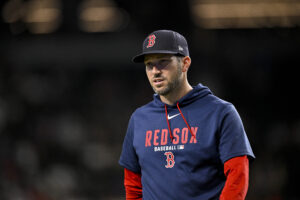
Tracy’s Sox have outperformed all reasonable expectations, particularly after that start to the season. While he alone can’t be credited for the shift, he’s overseen terrific performances from Willson Contreras, Sonny Gray, Ceddanne Rafaela, Wilyer Abreu, Aroldis Chapman and Garrett Whitlock. Rookies Payton Tolle and Jake Bennett have been excellent. Durbin has been one of the best all-around players in the league dating back to early July. Breslow augmented the roster at the deadline, paying big prices to acquire Adley Rutschman, Erik Miller and Curtis Mead.
Those trades cost the Red Sox top prospects Anthony Eyanson, Kyson Witherspoon and Enddy Azocar, as well as former top prospects/building blocks Marcelo Mayer and Connelly Early. Breslow’s willingness to deal prospects of that nature — at a time when most front offices cling to their high-end prospects more tightly than ever — only added to his reputation as a front office leader who’s unafraid to take big swings.
That much was evident not only at this year’s deadline but throughout his tenure. Beyond those moves and the Devers and Durbin trades, Breslow has swung deals to acquire Gray, Contreras, Crochet, Tyler O’Neill and Johan Oviedo. The Sox gave out nine-figure contracts to Alex Bregman and Ranger Suarez in free agency, though Bregman of course opted out of his deal and wound up signing with the Cubs on a deal that narrowly topped what Boston seemed willing to offer.
Not all of Breslow’s moves have panned out. One of his first trades on the job sent oft-injured ace Chris Sale to Atlanta in exchange for former prospect Vaughn Grissom. Sale has reemerged as an ace with the Braves and could win his second Cy Young Award in three years with Atlanta this season. Grissom made no impact with the Sox and is no longer in the organization. An April 2025 trade sending Quinn Priester to the Brewers looks a bit less regrettable now that Priester missed the 2026 season due to thoracic outlet syndrome, but Priester was a breakout star in Milwaukee last year and played a key role in the Brewers’ run to the postseason (and the game’s best regular-season record).
Every GM/president — or, in the Red Sox’ case, “chief baseball officer” — is going to have his share of misses. The Sale trade, in particular, stings and stands as a blemish. However, poor results from that one trade don’t appear to have curbed Breslow’s courage and willingness to make risky transactions.
At this juncture, the results speak for themselves. The Red Sox are playoff-bound for the second time in three seasons under his direction, and they’re well-positioned for the future. Crochet, Suarez, Tolle and Bennett will lead the rotation next season. Aroldis Chapman — a Breslow signing who was subsequently extended — and Garrett Whitlock will anchor next year’s bullpen. Anthony, Contreras, Rutschman, Abreu, Rafaela, Durbin and hopefully Mead will form the nucleus of a productive lineup in 2027. Franklin Arias, one of the game’s top 10 prospects, could debut at shortstop next year.
Some of that core was inherited from the prior regime under former chief baseball officer Chaim Bloom, but the current version of the Red Sox unmistakably have Breslow’s fingerprints all over them, and their successes and failures moving forward rest on largely on the shoulders of this newly extended duo.
Offseason Outlook: Kansas City Royals
The Royals missed the playoffs for the fifth time in the past six seasons. After an 86-win season netted a Wild Card berth in 2024, they went 82-80 in 2025. This year’s group will win, at most, 73 games. The promising core of a few years ago has been marred by injuries and the aging of several key veterans. Kansas City now heads into the offseason looking for ways to surround their MVP-caliber shortstop with enough complementary pieces to contend. It’s going to be an uphill battle.
Guaranteed Contracts
- Bobby Witt Jr., SS: $259MM through 2034 (Witt can opt out after 2030 season; if he does not opt out, contract includes club options for 2035-37)
- Maikel Garcia, 3B: $52.5MM through 2030 (includes buyout of 2031 club option)
- Seth Lugo, RHP: $23MM through 2027 (includes buyout of 2028 club option; option automatically vests at $20MM with 166 innings next year)
- Michael Wacha, RHP: $15MM through 2027 (includes buyout of 2028 club option)
- Salvador Perez, C/DH: $9MM through 2027 (not including deferred $7MM signing bonus and $2.5MM deferred salary)
- Cole Ragans, LHP: $7.5MM through 2027 (also controlled through 2028 via arbitration)
- Vinnie Pasquantino, 1B: $7.1MM through 2027 (also controlled through 2028 via arbitration)
Option Decisions
- Carlos Estevez, RHP: $13MM club option ($2MM buyout)
- Tony Gonsolin, RHP: $2.5MM club option
Arbitration-Eligible Players (service time in parenthesis)
- Kyle Isbel, OF (5.043)
- Nate Pearson, RHP (5.042)
- Nick Mears, RHP (5.022)
- Alex Lange, RHP (4.145)
- Daniel Lynch IV, LHP (4.136)
- Michael Massey, 2B (4.069)
- Anthony Gose, LHP (4.019)
- James McArthur, RHP (3.150)
- Randy Dobnak, RHP (3.148)
- Lucas Erceg, RHP (3.124)
- Non-tender candidates: Isbel, Lange, McArthur, Gose, Erceg
Free Agents
Although the 2026 season was an immense disappointment, it’s unlikely that there will be sweeping changes made to organizational leadership. The Royals extended manager Matt Quatraro on a new three-year contract that covers the 2027-29 seasons — with a club option for 2030 — back in February. General manager J.J. Picollo signed a five-year extension just 11 months prior. He’s under contract through 2030, with a club option for the 2031 season. Prolonged struggles can eventually jeopardize executives and managers even when they’re under contract, but it’s quite rare for those figures to be replaced so early in long-term contracts — and the Royals have historically been a franchise that’s very loyal to its top decision-makers.
The challenges for Picollo and his staff this winter will be significant. They’ll have multiple needs to address both on the pitching side of the roster and in the lineup. They’ll need to do so without a great deal of payroll space, barring a sudden hike in spending from owner John Sherman. One could argue that those facts, coupled with a last-place finish in a thin American League Central, signal there’s a need for a more forward-looking, long-term approach this offseason, but Kansas City’s activity at the trade deadline was indicative of the fact that a rebuild isn’t in the cards.
The Royals did operate as nominal sellers, but they largely stood pat. Lane Thomas, an impending free agent, was traded to Atlanta but packaged with left-hander Bailey Falter, whose contract was ostensibly absorbed by the Braves to lower the cost in terms of prospects. The only other trade of note was sending injured lefty Kris Bubic to the Dodgers in exchange for reliever Carlos Duran.
Kansas City had other players who’d have commanded interest — most notably right-handers Seth Lugo and Michael Wacha and left-handed reliever Daniel Lynch IV. Both Lugo and Wacha are signed through 2027. Lynch is under control through 2028. The Royals didn’t actively pursue trading any of those relatively short-term assets. They reportedly placed a very high asking price on Lugo or Wacha in particular, due to that pair’s importance to the 2027 rotation.
Trades of either may not have been easy to navigate; Lugo turns 37 in November and has a full no-trade clause. Wacha turns 36 next summer and has a limited no-trade clause. Still, the pricey nature of their contracts and the fact that both righties are entering their mid-30s seemed to make them natural trade candidates. Even if the Royals were concerned about needing the innings in 2027, they could have moved Lugo and Wacha for prospects then signed different veterans in free agency to round out next year’s staff. Hanging onto a pair of mid-30s veterans both signaled an intent to build around them next season and locked in $34MM of payroll on a team that has never had an Opening Day payroll north of $143MM.
Lugo and Wacha will return to anchor the staff alongside lefty Noah Cameron, who’ll be entering his third big league season. The 27-year-old hasn’t matched his brilliant rookie season but is sporting a quality 3.92 ERA through a career-high 172 1/3 innings with another start left to make. The rest of the group is going to need some augmentation.

Unlock Subscriber-Exclusive Articles Like This One With a Trade Rumors Front Office Subscription
- Access weekly subscriber-only articles by Tim Dierkes, Steve Adams, and Anthony Franco.
- Join exclusive weekly live chats with Anthony.
- Remove ads and support our writers.
- Access GM-caliber tools like our MLB Contract Tracker
