Log In


Cummingtonite (of Dewey)
This page is currently not sponsored. Click here to sponsor this page.
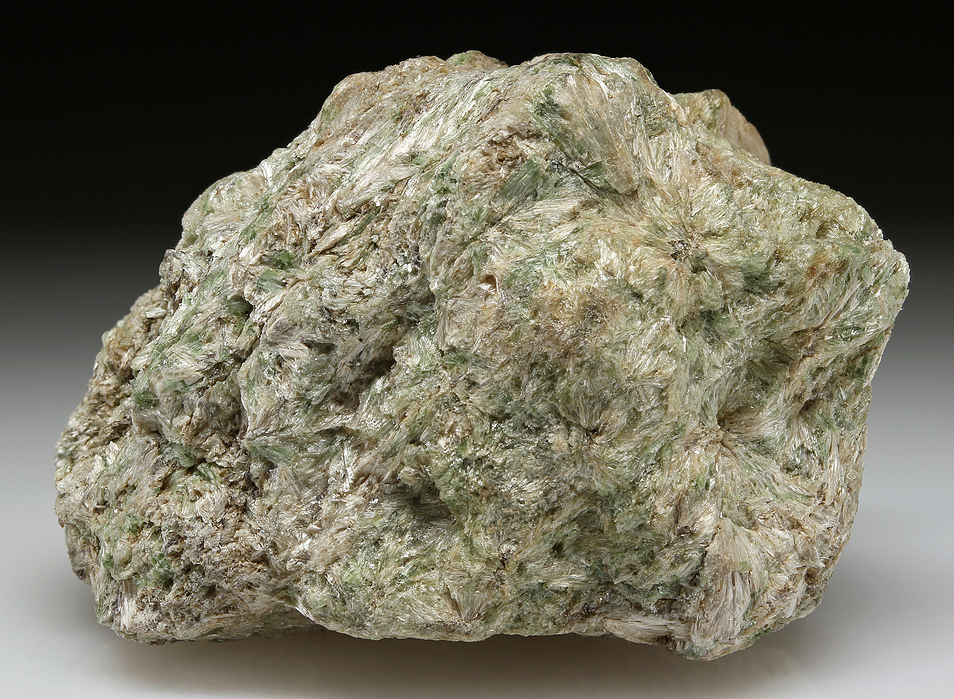
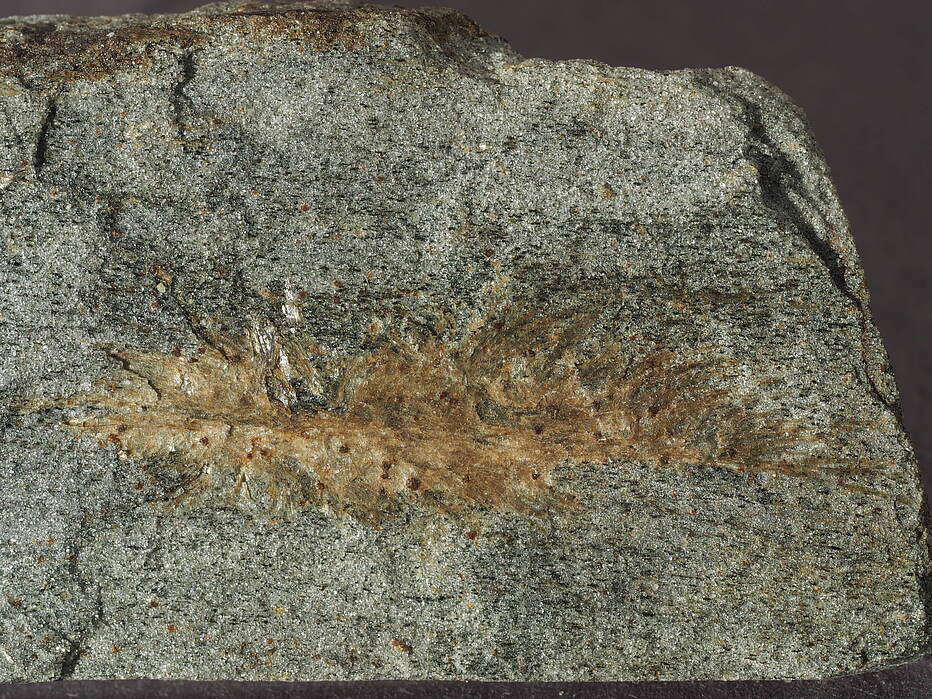
About Cummingtonite (of Dewey)
Formula:
(Fe,Mg)7Si8O22(OH)2
Cummingtonite (of Dewey) is an amphibole with a formula correspondiunt to gruenerite
Name:
Named after the locality of Cummington, Massachusetts, USA.
Cummingtonite was originally named in 1824 by Chester Dewey for the type locality in Cummington, Massachusetts, USA.
Dewey's description of cummingtonite was not in accordance with modern requirements for describing new minerals and he considered cummingtonite to be related to epidote:
"I have here given this name to a mineral found by Dr J. Porter in Cummington. It appears to be a variety of epidote. Its color is gray, sometimes with a faint reddish tinge, unless when acted on by the weather, when its color is yellowish…..With quartz and garnet it forms a large mass in Cummington"
Porter (1834) describes the discovery of cummingtonite: "Several years since a very curious mineral was discovered at Cummington and at Plainfield, at both which places it occurs in large quantities. Specimens were sent to the most eminent mineralogists in the country. After a considerable time had elapsed, it was described by professor Dewey, in the eighth volume of the American Journal of Science, under the name of cummingtonite from the place where it was first discovered. "
During the 19th century cummingtonite, anthophyllite, tremolite and other pale fibrous silicates was poorly distinguished. Sundius (1931) suggested that the name cummingtonite be reserved for the mineral ( in the cummingtonite-gruenerite series) containing 50-70 mol per cent of the magnesium component and that varieties richer in iron be named grunerite. Mason (1953) has noted that "this proposal would have the curious effect of requiring the original cummingtonite from Cummington, Massachusetts, to be called grunerite.
Jaffe et al. (1961) provides data showing that the cummingtonite (of Dewey) contains about 75% of the grunerite component and is as such a grunerite
Cummingtonite was originally named in 1824 by Chester Dewey for the type locality in Cummington, Massachusetts, USA.
Dewey's description of cummingtonite was not in accordance with modern requirements for describing new minerals and he considered cummingtonite to be related to epidote:
"I have here given this name to a mineral found by Dr J. Porter in Cummington. It appears to be a variety of epidote. Its color is gray, sometimes with a faint reddish tinge, unless when acted on by the weather, when its color is yellowish…..With quartz and garnet it forms a large mass in Cummington"
Porter (1834) describes the discovery of cummingtonite: "Several years since a very curious mineral was discovered at Cummington and at Plainfield, at both which places it occurs in large quantities. Specimens were sent to the most eminent mineralogists in the country. After a considerable time had elapsed, it was described by professor Dewey, in the eighth volume of the American Journal of Science, under the name of cummingtonite from the place where it was first discovered. "
During the 19th century cummingtonite, anthophyllite, tremolite and other pale fibrous silicates was poorly distinguished. Sundius (1931) suggested that the name cummingtonite be reserved for the mineral ( in the cummingtonite-gruenerite series) containing 50-70 mol per cent of the magnesium component and that varieties richer in iron be named grunerite. Mason (1953) has noted that "this proposal would have the curious effect of requiring the original cummingtonite from Cummington, Massachusetts, to be called grunerite.
Jaffe et al. (1961) provides data showing that the cummingtonite (of Dewey) contains about 75% of the grunerite component and is as such a grunerite
This page is kept to refer to the original material from the type locality which, confusingly, is still called cummingtonite by the majority of collectors and will still be seen in most museum and institution displays labelled as such.
Unique Identifiers
Mindat ID:
45891
Long-form identifier:
mindat:1:1:45891:1
Similar Names
| Cummingtonite | A valid IMA mineral species - grandfathered | ◻Mg2Mg5(Si8O22)(OH)2 |
| Cummingtonite (of Rammelsberg) | A synonym of Rhodonite | |
| Cummingtonite-(P21 /m) | A structural variant |
Chemistry of Cummingtonite (of Dewey)
Mindat Formula:
(Fe,Mg)7Si8O22(OH)2
Cummingtonite (of Dewey) is an amphibole with a formula correspondiunt to gruenerite
Cummingtonite (of Dewey) is an amphibole with a formula correspondiunt to gruenerite
Element Weights:
Common Associates
Associations Based on Photo Data:
Other Information
Health Risks:
No information on health risks for this material has been entered into the database. You should always treat mineral specimens with care.
Internet Links for Cummingtonite (of Dewey)
mindat.org URL:
https://www.mindat.org/min-45891.html
Please feel free to link to this page.
Please feel free to link to this page.
Search Engines:
Mineral Dealers:
References for Cummingtonite (of Dewey)
Localities for Cummingtonite (of Dewey)
Showing 1 localities.
 symbol to view information about a locality.
The
symbol to view information about a locality.
The Locality List
 - This locality has map coordinates listed.
- This locality has estimated coordinates.
ⓘ - Click for references and further information on this occurrence.
? - Indicates mineral may be doubtful at this locality.
- This locality has map coordinates listed.
- This locality has estimated coordinates.
ⓘ - Click for references and further information on this occurrence.
? - Indicates mineral may be doubtful at this locality.
 - Good crystals or important locality for species.
 - World class for species or very significant.
(TL) - Type Locality for a valid mineral species.
(FRL) - First Recorded Locality for everything else (eg varieties).
- World class for species or very significant.
(TL) - Type Locality for a valid mineral species.
(FRL) - First Recorded Locality for everything else (eg varieties).
All localities listed without proper references should be considered as questionable.
USA | |
| Dewey (1824) |

Cummingtonite (of Dewey) type locality, Cummington, Hampshire County, Massachusetts, USA