Log In


Xenotime-(Y)
A valid IMA mineral species - grandfathered
This page kindly sponsored by J.S.

About Xenotime-(Y)
Formula:
Y(PO4)
May contain minor HREE, Ca, U, Th, Si, F and other elements.
Colour:
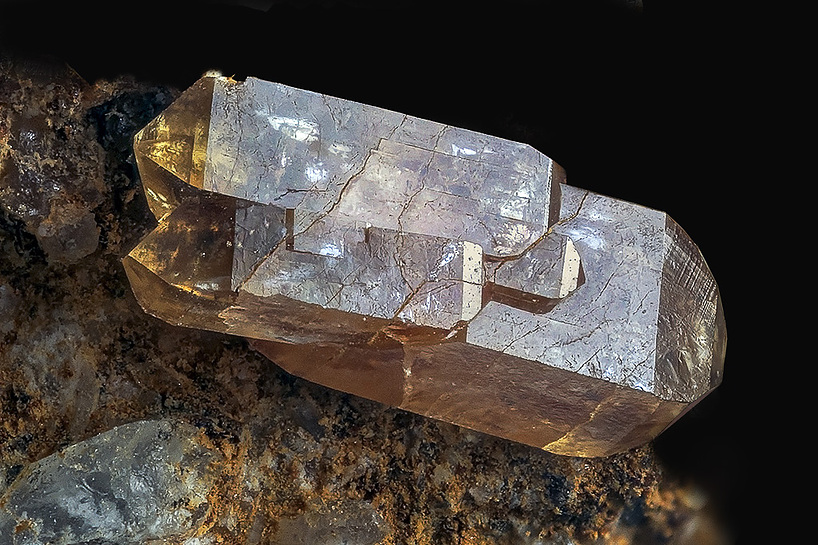
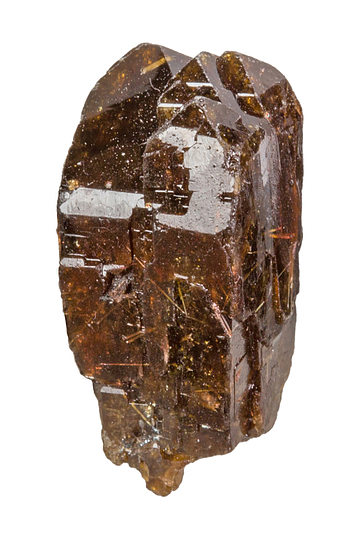
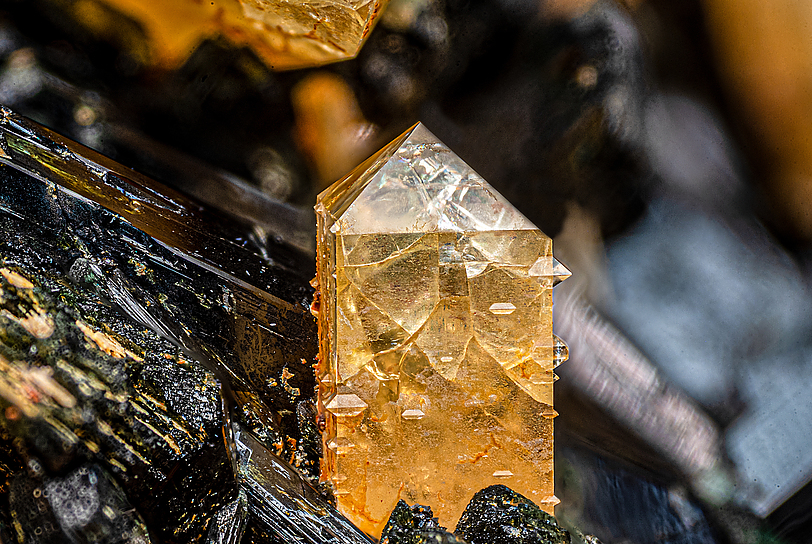
Yellowish brown, reddish, brown, light red, flesh-red, light green, gray, grayish-white, wine-yellow, green
Lustre:
Vitreous, Resinous
Hardness:
4 - 5
Specific Gravity:
4.4 - 5.1
Crystal System:
Tetragonal
Member of:
Name:
Xenotime-(Y) was found by the Norwegian mineralogist Nils Otto Tank (1800-1864) and first described by the Swedish chemist Jøns Jacob Berzelius in 1824 as Phosphorsyrad Ytterjord from a granite pegmatite at Hidra, Flekkefjord, Norway. Later, Glocker (1831) introduced the name Ytterspath. The name xenotime was finally coined by the French mineralogist François Sulpice Beudant (1832) in his 2. edition of Traité élémentaire de Minéralogie. The name is from the Greek κενός = "vain" and τιμή = "honor," in allusion to the fact that the yttrium in it was first mistaken by Berzelius for a new element (Yttrium was discovered already in 1794). It was later renamed as xenotime-(Y), with a suffix, -(Y), in according to the "Levinson modifiers" (Levinson 1966).
Type Locality:
Isostructural with:
Xenotime Group. Chernovite-(Y)-Xenotime-(Y) Series. The P (or phosphate) analogue of chernovite-(Y) and wakefieldite-(Y).
The Y analogue of xenotime-(Yb) and xenotime-(Gd).
A recent find of As-rich xenotime-(Y), accompanied by wakefieldite-(Ce) - wakefieldite-(Y) solid solution, in a silicified Agathoxylon wood is described by Matisová et al. (2016).
An unusual, strongly fluorine-enriched xenotime-(Y), was described from the Madeira pluton, Pitinga, Brasil; it is thought to contain some PO3F anions in the structure (Bastos Neto et al., 2012).
Possibly crystallochemically related to schiavinatoite / béhierite (Nb,Ta)BO4 (Ondrejka et al., 2022).
The Y analogue of xenotime-(Yb) and xenotime-(Gd).
A recent find of As-rich xenotime-(Y), accompanied by wakefieldite-(Ce) - wakefieldite-(Y) solid solution, in a silicified Agathoxylon wood is described by Matisová et al. (2016).
An unusual, strongly fluorine-enriched xenotime-(Y), was described from the Madeira pluton, Pitinga, Brasil; it is thought to contain some PO3F anions in the structure (Bastos Neto et al., 2012).
Possibly crystallochemically related to schiavinatoite / béhierite (Nb,Ta)BO4 (Ondrejka et al., 2022).
Unique Identifiers
Mindat ID:
4333
Long-form identifier:
mindat:1:1:4333:1
Similar Names
| Xenotime | A group of related mineral species | |
| Xenotime-(Gd) | A valid IMA mineral species | Gd(PO4) |
| Xenotime-(Yb) | A valid IMA mineral species | Yb(PO4) |
IMA Classification of Xenotime-(Y)
Approved, 'Grandfathered' (first described prior to 1959)
IMA status notes:
Renamed by the IMA
IMA Formula:
YPO4
Approval history:
Renamed by IMA in 1987 by special procedure.
Classification of Xenotime-(Y)
8.AD.35
8 : PHOSPHATES, ARSENATES, VANADATES
A : Phosphates, etc. without additional anions, without H2O
D : With only large cations
8 : PHOSPHATES, ARSENATES, VANADATES
A : Phosphates, etc. without additional anions, without H2O
D : With only large cations
Dana 7th ed.:
38.4.9.1
19.9.1
19 : Phosphates
9 : Phosphates of rare earths and Sc
19 : Phosphates
9 : Phosphates of rare earths and Sc
Mineral Symbols
As of 2021 there are now IMA–CNMNC approved mineral symbols (abbreviations) for each mineral species, useful for tables and diagrams.
Please only use the official IMA–CNMNC symbol. Older variants are listed for historical use only.
Please only use the official IMA–CNMNC symbol. Older variants are listed for historical use only.
| Symbol | Source | Reference for Standard |
|---|---|---|
| Xtm-Y | IMA–CNMNC | Warr, L.N. (2021). IMA–CNMNC approved mineral symbols. Mineralogical Magazine, 85(3), 291-320. doi:10.1180/mgm.2021.43 |
| Xtm | Siivolam & Schmid (2007) | Siivolam, J. and Schmid, R. (2007) Recommendations by the IUGS Subcommission on the Systematics of Metamorphic Rocks: List of mineral abbreviations. Web-version 01.02.07. IUGS Commission on the Systematics in Petrology. download |
| Xtm | Whitney & Evans (2010) | Whitney, D.L. and Evans, B.W. (2010) Abbreviations for names of rock-forming minerals. American Mineralogist, 95, 185–187 doi:10.2138/am.2010.3371 |
| Xnt | The Canadian Mineralogist (2019) | The Canadian Mineralogist (2019) The Canadian Mineralogist list of symbols for rock- and ore-forming minerals (December 30, 2019). download |
Pronunciation of Xenotime-(Y)
Pronunciation:
| Play | Recorded by | Country |
|---|---|---|
| Jolyon Ralph | United Kingdom |
Physical Properties of Xenotime-(Y)
Vitreous, Resinous
Transparency:
Translucent, Opaque
Colour:
Yellowish brown, reddish, brown, light red, flesh-red, light green, gray, grayish-white, wine-yellow, green
Comment:
Colourless to very light yellowish green, yellow or yellowish brown in transmitted light.
Streak:
Pale brown, yellowish or reddish, white
Hardness:
4 - 5 on Mohs scale
Tenacity:
Brittle
Cleavage:
Imperfect/Fair
On {100}, complete (good - according to the Handbook of Mineralogy)
On {100}, complete (good - according to the Handbook of Mineralogy)
Fracture:
Irregular/Uneven, Splintery
Density:
4.4 - 5.1 g/cm3 (Measured) 4.277 g/cm3 (Calculated)
Optical Data of Xenotime-(Y)
Type:
Uniaxial (+)
RI values:
nω = 1.72 nε = 1.816 - 1.827
Max. Birefringence:
δ = 0.096 - 0.107
Based on recorded range of RI values above.
Based on recorded range of RI values above.
Interference Colours:
The colours simulate birefringence patterns seen in thin section under crossed polars. They do not take into account mineral colouration or opacity.
Michel-Levy Bar The default colours simulate the birefringence range for a 30 µm thin-section thickness. Adjust the slider to simulate a different thickness.
Grain Simulation You can rotate the grain simulation to show how this range might look as you rotated a sample under crossed polars. Each grain retains its interference colour (retardation) while its brightness falls to black at extinction and reaches a maximum between extinction positions.
The colours simulate birefringence patterns seen in thin section under crossed polars. They do not take into account mineral colouration or opacity.
Michel-Levy Bar The default colours simulate the birefringence range for a 30 µm thin-section thickness. Adjust the slider to simulate a different thickness.
Grain Simulation You can rotate the grain simulation to show how this range might look as you rotated a sample under crossed polars. Each grain retains its interference colour (retardation) while its brightness falls to black at extinction and reaches a maximum between extinction positions.
Surface Relief:
Very High (positive)
Relative to Canada balsam mounting medium (n ≈ 1.537).
Relative to Canada balsam mounting medium (n ≈ 1.537).
This shows the grain boundary and Becke line effect under plane-polarised
light, based on the contrast between this mineral's average refractive
index and the mounting medium. It does not take into account mineral
colouration.
In focus
Interference Figure:
This shows the idealized uniaxial interference figure - the conoscopic
(convergent-light, Bertrand-lens-in) view, for a grain cut with the optic axis
centred and vertical. The coloured rings are isochromatics, computed with the
same physics as the Michel-Lévy bar above; the dark cross is the isogyre.
For a genuinely uniaxial mineral viewed this way, that cross stays perfectly stationary if you rotate the stage - unlike a biaxial mineral, where it splits apart on rotation. That invariance is itself the standard diagnostic test for telling uniaxial and biaxial minerals apart at the microscope.
For a genuinely uniaxial mineral viewed this way, that cross stays perfectly stationary if you rotate the stage - unlike a biaxial mineral, where it splits apart on rotation. That invariance is itself the standard diagnostic test for telling uniaxial and biaxial minerals apart at the microscope.
Pleochroism:
Weak
Comments:
Dichroic:
O = Pink, yellow, or yellowish brown
E = Brownish yellow, grayish brown, or greenish
O = Pink, yellow, or yellowish brown
E = Brownish yellow, grayish brown, or greenish
Chemistry of Xenotime-(Y)
Mindat Formula:
Y(PO4)
May contain minor HREE, Ca, U, Th, Si, F and other elements.
May contain minor HREE, Ca, U, Th, Si, F and other elements.
Elements listed:
Chemical Analysis
Oxide wt%:
| 1 | |
|---|---|
| P2O5 | 34.37 % |
| SiO2 | 0.31 % |
| Nd2O3 | 0.17 % |
| Sm2O3 | 0.49 % |
| Eu2O3 | 0.07 % |
| Gd2O3 | 2.69 % |
| Tb2O3 | 0.58 % |
| Dy2O3 | 4.93 % |
| Ho2O3 | 1.27 % |
| Er2O3 | 4.05 % |
| Tm2O3 | 0.70 % |
| Yb2O3 | 4.36 % |
| Lu2O3 | 0.87 % |
| Y2O3 | 46.49 % |
| Total: | 101.35 % |
Sample references:
| ID | Locality | Reference | Notes |
|---|---|---|---|
| 1 | Gloserheia, Froland, Agder, Norway | By electron microprobe, average of 8 analyses |
Crystallography of Xenotime-(Y)
Crystal System:
Tetragonal
Class (H-M):
4/mmm(4/m2/m2/m) - Ditetragonal Dipyramidal
Space Group:
I41/amd
Setting:
I41/amd
Cell Parameters:
a = 6.884-6.902(4) Å, c = 6.021-6.038(8) Å
Ratio:
a:c = 1 : 0.875
Unit Cell V:
285.33 ų (Calculated from Unit Cell)
Z:
4
Morphology:
Crystals short to long prismatic [001], with {010} and {110} faces; also equant, pyramidal {011}; as crude radial aggregates comprised of coarse crystals; in rosettes; crystals up to 5 cm are reported
Twinning:
On {111}, rare.
Crystallographic forms of Xenotime-(Y)
Crystal Atlas:
Image Loading
Click on an icon to view

Xenotime no.2 - {100} - Goldschmidt (1913-1926)
Xenotime no.8 - {100} - Goldschmidt (1913-1926)
3d models and HTML5 code kindly provided by
www.smorf.nl.
Toggle
Edge Lines | Miller Indices | Axes
Transparency
Opaque | Translucent | Transparent
View
Along a-axis | Along b-axis | Along c-axis | Start rotation | Stop rotation
Edge Lines | Miller Indices | Axes
Transparency
Opaque | Translucent | Transparent
View
Along a-axis | Along b-axis | Along c-axis | Start rotation | Stop rotation
Crystal Structure
Load
Unit Cell | Unit Cell Packed
2x2x2 | 3x3x3 | 4x4x4
Unit Cell | Unit Cell Packed
2x2x2 | 3x3x3 | 4x4x4
Show
Big Balls | Small Balls | Just Balls | Spacefill
Polyhedra Off | Si Polyhedra | All Polyhedra
Remove metal-metal sticks
Big Balls | Small Balls | Just Balls | Spacefill
Polyhedra Off | Si Polyhedra | All Polyhedra
Remove metal-metal sticks
Display Options
Black Background | White Background
Perspective On | Perspective Off
2D | Stereo | Red-Blue | Red-Cyan
Black Background | White Background
Perspective On | Perspective Off
2D | Stereo | Red-Blue | Red-Cyan
View
CIF File Best | x | y | z | a | b | c
CIF File Best | x | y | z | a | b | c
Rotation
Stop | Start
Stop | Start
Labels
Console Off | On | Grey | Yellow
Console Off | On | Grey | Yellow
Data courtesy of the American Mineralogist Crystal Structure Database. Click on an AMCSD ID to view structure
| ID | Species | Reference | Link | Year | Locality | Pressure (GPa) | Temp (K) |
|---|---|---|---|---|---|---|---|
| 0012654 | Xenotime-(Y) | Strada M, Schwendimann G (1934) La struttura cristallina di alcuni fosfati ed arseniati di metalli trivalenti. II. Arseniato e fosfato di ittrio Gazzetta Chimica Italiana 64 662-674 | 1934 | synthetic | 0 | 293 | |
| 0001706 | Xenotime-(Y) | Ni Y, Hughes J M, Mariano A N (1995) Crystal chemistry of the monazite and xenotime structures American Mineralogist 80 21-26 |  | 1995 | 0 | 293 |
CIF Raw Data - click here to close
Epitaxial Relationships of Xenotime-(Y)
Epitaxial Minerals:
| 'Zircon' | Zr(SiO4) |
Epitaxy Comments:
Parallel growth with zircon common.
X-Ray Powder Diffraction
Loading XRD data...
Data courtesy of RRUFF project at University of Arizona, used with permission.
Powder Diffraction Data:
| d-spacing | Intensity |
|---|---|
| 3.443 Å | (100) |
| 2.558 Å | (60) |
| 1.762 Å | (45) |
| 4.54 Å | (25) |
| 2.145 Å | (25) |
| 1.820 Å | (18) |
| 1.721 Å | (18) |
Comments:
similar to that of atelisite-(Y)
Geological Environment
Paragenetic Mode(s):
| Paragenetic Mode | Earliest Age (Ga) |
|---|---|
| Near-surface Processes | |
| 26 : Hadean detrital minerals | |
| Stage 4b: Highly evolved igneous rocks | >3.0 |
| 34 : Complex granite pegmatites | |
| 35 : Ultra-alkali and agpaitic igneous rocks |
Geological Setting:
Minor accessory mineral in acidic and alkalic igneous rocks and pegmatites; in mica and quartz rich gneisses. Also as a detrital mineral.
Type Occurrence of Xenotime-(Y)
Geological Setting of Type Material:
Granite pegmatite
Rodetti, Meana di Susa, Metropolitan City of Turin, Piedmont, Italy