Log In


Aphthitalite
A valid IMA mineral species - grandfathered
This page is currently not sponsored. Click here to sponsor this page.
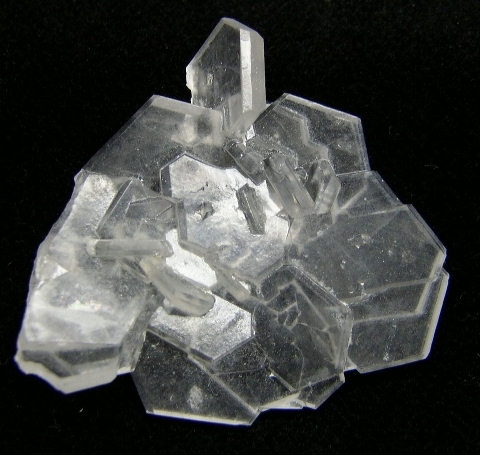
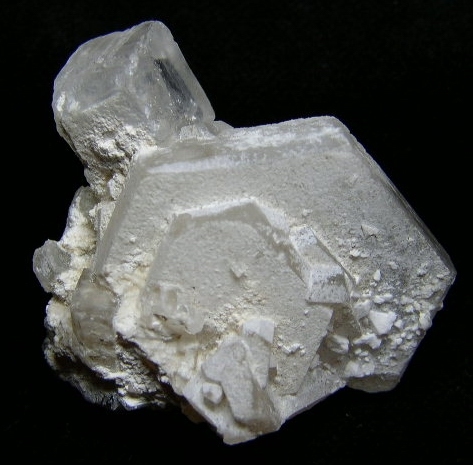
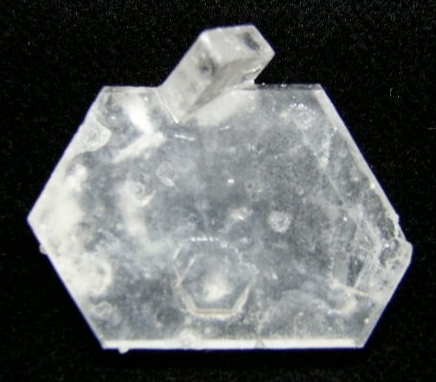
About Aphthitalite
Formula:
K3Na(SO4)2
Originally given as (K,Na)3Na(SO4)2.
Colour:
Colourless (rare), white, grey, bluish, greenish, reddish; colourless in transmitted light
Lustre:
Vitreous, Resinous
Hardness:
3
Specific Gravity:
2.656 - 2.71
Crystal System:
Trigonal
Member of:
Name:
From the Greek άφθητος ("aphthitos"), "unalterable", and άλας ("halas"), "salt", in allusion to its stability in air.
Occurs in two widely diversified environments, both as an incrustation in volcanic fumaroles and as a constituent of oceanic and lacustrine salt deposits.
As shown by experiments of Africano et al. (2002), it may deposit from volcanic gas in high fO2 conditions during cooling from ca. 800 down to 400oC, together with thénardite.
Glaserite is a common synonym.
The K analogue of Natroaphthitalite.
Structurally related to bubnovaite. Both structurally and chemically related to belomarinaite.
As shown by experiments of Africano et al. (2002), it may deposit from volcanic gas in high fO2 conditions during cooling from ca. 800 down to 400oC, together with thénardite.
Glaserite is a common synonym.
The K analogue of Natroaphthitalite.
Structurally related to bubnovaite. Both structurally and chemically related to belomarinaite.
Unique Identifiers
Mindat ID:
280
Long-form identifier:
mindat:1:1:280:0
IMA Classification of Aphthitalite
Approved, 'Grandfathered' (first described prior to 1959)
IMA Formula:
K3Na(S6+O4)2
First published:
1813
Classification of Aphthitalite
7.AC.35
7 : SULFATES (selenates, tellurates, chromates, molybdates, wolframates)
A : Sulfates (selenates, etc.) without additional anions, without H2O
C : With medium-sized and large cations
7 : SULFATES (selenates, tellurates, chromates, molybdates, wolframates)
A : Sulfates (selenates, etc.) without additional anions, without H2O
C : With medium-sized and large cations
28.2.2.1
28 : ANHYDROUS ACID AND NORMAL SULFATES
2 : A2XO4
28 : ANHYDROUS ACID AND NORMAL SULFATES
2 : A2XO4
25.1.7
25 : Sulphates
1 : Sulphates of the alkali metals and ammonium
25 : Sulphates
1 : Sulphates of the alkali metals and ammonium
Ilchagh Salt mine, Dandy to Mahneshan road, Zanjan Province, Iran