Log In


Mendipite
A valid IMA mineral species - grandfathered
This page is currently not sponsored. Click here to sponsor this page.

About Mendipite
Formula:
Pb3Cl2O2
Colour:
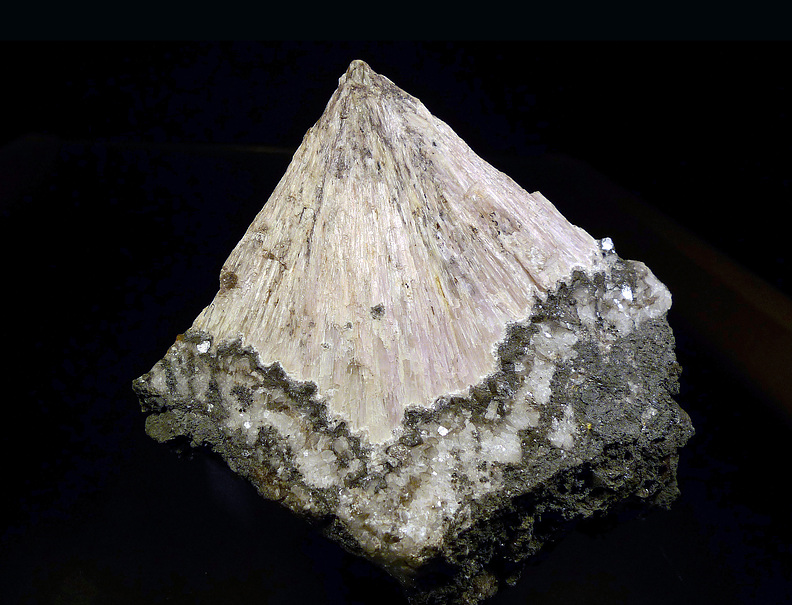
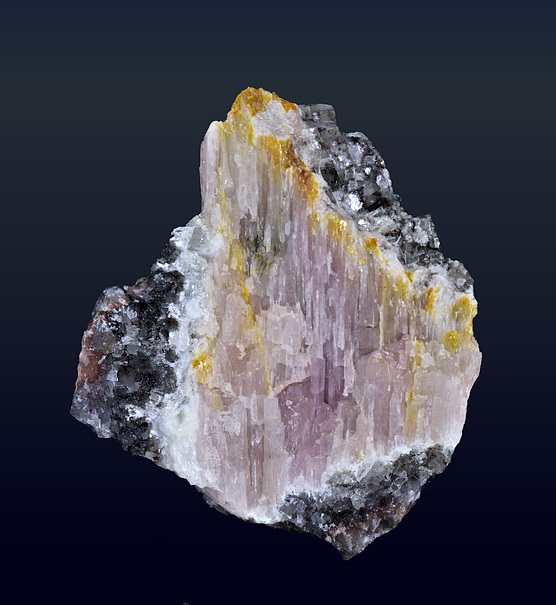
Colourless, white, grey, often tinged yellow, blue, red; nearly colourless in transmitted light
Lustre:
Adamantine, Resinous, Silky, Pearly
Hardness:
2½ - 3
Specific Gravity:
7.24
Crystal System:
Orthorhombic
Name:
After the type locality at the Mendip Hills, Somerset, England, UK.
Type Locality:
Unique Identifiers
Mindat ID:
2641
Long-form identifier:
mindat:1:1:2641:9
Similar Names
| Mendigite | A valid IMA mineral species | Mn2Mn2MnCa(Si3O9)2 |
IMA Classification of Mendipite
Approved, 'Grandfathered' (first described prior to 1959)
IMA Formula:
Pb2+3O2Cl2
Classification of Mendipite
3.DC.70
3 : HALIDES
D : Oxyhalides, hydroxyhalides and related double halides
C : With Pb (As,Sb,Bi), without Cu
3 : HALIDES
D : Oxyhalides, hydroxyhalides and related double halides
C : With Pb (As,Sb,Bi), without Cu
10.3.1.1
10 : OXYHALIDES AND HYDROXYHALIDES
3 : A3(O,OH)2Xq
10 : OXYHALIDES AND HYDROXYHALIDES
3 : A3(O,OH)2Xq
8.8.5
8 : Halides - Fluorides, Chlorides, Bromides and Iodides; also Fluoborates and Fluosilicates
8 : Halides of Pb
8 : Halides - Fluorides, Chlorides, Bromides and Iodides; also Fluoborates and Fluosilicates
8 : Halides of Pb
Mineral Symbols
As of 2021 there are now IMA–CNMNC approved mineral symbols (abbreviations) for each mineral species, useful for tables and diagrams.
| Symbol | Source | Reference for Standard |
|---|---|---|
| Mdi | IMA–CNMNC | Warr, L.N. (2021). IMA–CNMNC approved mineral symbols. Mineralogical Magazine, 85(3), 291-320. doi:10.1180/mgm.2021.43 |
Physical Properties of Mendipite
Adamantine, Resinous, Silky, Pearly
Transparency:
Transparent, Translucent
Colour:
Colourless, white, grey, often tinged yellow, blue, red; nearly colourless in transmitted light
Streak:
White
Hardness:
2½ - 3 on Mohs scale
Cleavage:
Perfect
On {110} perfect; {100} and {010} less perfect.
On {110} perfect; {100} and {010} less perfect.
Fracture:
Irregular/Uneven, Conchoidal
Density:
7.24 g/cm3 (Measured) 7.22 g/cm3 (Calculated)
Optical Data of Mendipite
Type:
Biaxial (+/-)
RI values:
nα = 2.24 nβ = 2.27 nγ = 2.31
2V:
Measured: 90° , Calculated: 84°
Max. Birefringence:
δ = 0.070
Based on recorded range of RI values above.
Based on recorded range of RI values above.
Interference Colours:
The colours simulate birefringence patterns seen in thin section under crossed polars. They do not take into account mineral colouration or opacity.
Michel-Levy Bar The default colours simulate the birefringence range for a 30 µm thin-section thickness. Adjust the slider to simulate a different thickness.
Grain Simulation You can rotate the grain simulation to show how this range might look as you rotated a sample under crossed polars. Each grain retains its interference colour (retardation) while its brightness falls to black at extinction and reaches a maximum between extinction positions.
The colours simulate birefringence patterns seen in thin section under crossed polars. They do not take into account mineral colouration or opacity.
Michel-Levy Bar The default colours simulate the birefringence range for a 30 µm thin-section thickness. Adjust the slider to simulate a different thickness.
Grain Simulation You can rotate the grain simulation to show how this range might look as you rotated a sample under crossed polars. Each grain retains its interference colour (retardation) while its brightness falls to black at extinction and reaches a maximum between extinction positions.
Surface Relief:
Very High (positive)
Relative to Canada balsam mounting medium (n ≈ 1.537).
Relative to Canada balsam mounting medium (n ≈ 1.537).
This shows the grain boundary and Becke line effect under plane-polarised
light, based on the contrast between this mineral's average refractive
index and the mounting medium. It does not take into account mineral
colouration.
In focus
Interference Figure:
This shows the idealized biaxial acute bisectrix (Bxa) interference figure
- the conoscopic view for a grain cut perpendicular to the acute bisectrix, using
this mineral's 2V. The two small white dots mark the melatopes - the points
where the two optic axes emerge - and are shown only when they fall within the
field of view. The coloured bands are isochromatics, and the dark bands are
isogyres.
Rotate the stage: at 0°/90° the isogyres form a cross through the melatopes; at 45° they pull apart into curved hyperbolas. That splitting on rotation - absent in a uniaxial figure - is the standard diagnostic test for telling biaxial minerals from uniaxial ones. If 2V is large, the melatopes may fall outside the field of view, as they often do at the microscope too.
Rotate the stage: at 0°/90° the isogyres form a cross through the melatopes; at 45° they pull apart into curved hyperbolas. That splitting on rotation - absent in a uniaxial figure - is the standard diagnostic test for telling biaxial minerals from uniaxial ones. If 2V is large, the melatopes may fall outside the field of view, as they often do at the microscope too.
Dispersion:
relatively strong
Optical Extinction:
Parallel. X = a; Y = b; Z = c.
Chemistry of Mendipite
Mindat Formula:
Pb3Cl2O2
Elements listed:
Crystallography of Mendipite
Crystal System:
Orthorhombic
Class (H-M):
222 - Disphenoidal
Space Group:
P212121
Cell Parameters:
a = 9.52 Å, b = 11.87 Å, c = 5.87 Å
Ratio:
a:b:c = 0.802 : 1 : 0.495
Unit Cell V:
663.32 ų (Calculated from Unit Cell)
Z:
4
Morphology:
Fibrous or columnar masses, often radiated.
Crystal Structure
Load
Unit Cell | Unit Cell Packed
2x2x2 | 3x3x3 | 4x4x4
Unit Cell | Unit Cell Packed
2x2x2 | 3x3x3 | 4x4x4
Show
Big Balls | Small Balls | Just Balls | Spacefill
Polyhedra Off | Si Polyhedra | All Polyhedra
Remove metal-metal sticks
Big Balls | Small Balls | Just Balls | Spacefill
Polyhedra Off | Si Polyhedra | All Polyhedra
Remove metal-metal sticks
Display Options
Black Background | White Background
Perspective On | Perspective Off
2D | Stereo | Red-Blue | Red-Cyan
Black Background | White Background
Perspective On | Perspective Off
2D | Stereo | Red-Blue | Red-Cyan
View
CIF File Best | x | y | z | a | b | c
CIF File Best | x | y | z | a | b | c
Rotation
Stop | Start
Stop | Start
Labels
Console Off | On | Grey | Yellow
Console Off | On | Grey | Yellow
Data courtesy of the American Mineralogist Crystal Structure Database. Click on an AMCSD ID to view structure
| ID | Species | Reference | Link | Year | Locality | Pressure (GPa) | Temp (K) |
|---|---|---|---|---|---|---|---|
| 0006898 | Mendipite | Krivovichev S V, Burns P C (2001) Crystal chemistry of lead oxide chlorides. I. Crystal structures of synthetic mendipite, Pb3O2Cl2, and synthetic damaraite, Pb3O2(OH)Cl European Journal of Mineralogy 13 801-809 | 2001 | 0 | 293 |
CIF Raw Data - click here to close
X-Ray Powder Diffraction
Loading XRD data...
Data courtesy of RRUFF project at University of Arizona, used with permission.
Powder Diffraction Data:
| d-spacing | Intensity |
|---|---|
| 7.40 Å | (60) |
| 3.78 Å | (60) |
| 3.51 Å | (70) |
| 3.08 Å | (60) |
| 3.04 Å | (80) |
| 2.78 Å | (100) |
| 2.64 Å | (90) |
Comments:
Låangban, Sweden.
Geological Environment
Paragenetic Mode(s):
| Paragenetic Mode | Earliest Age (Ga) |
|---|---|
| Stage 7: Great Oxidation Event | <2.4 |
| 47g : [Halogen-bearing surface weathering minerals] | |
| 47h : [Near-surface oxidized, dehydrated minerals] | |
| Stage 10b: Anthropogenic minerals | <10 Ka |
| 56 : Slag and smelter minerals (see also #51 and #55) |
Type Occurrence of Mendipite
General Appearance of Type Material:
Radiating masses of pale straw-yellow prismatic crystals and cleavages.
Associated Minerals at Type Locality:
Torr Works Quarry, Cranmore, Mendip, Somerset, England, UK