Log In


Andalusite
A valid IMA mineral species - grandfathered
This page kindly sponsored by Donna Whitney


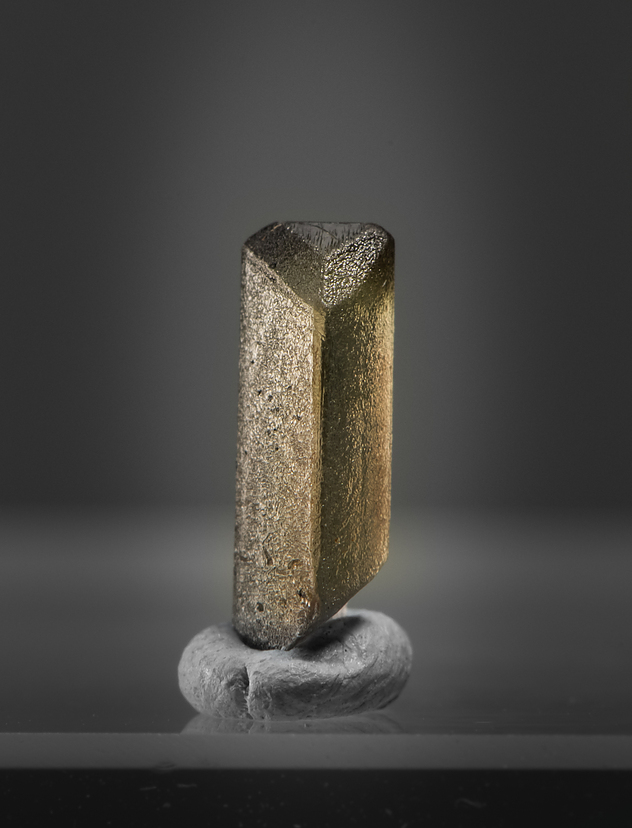
About Andalusite
Formula:
Al2(SiO4)O
Colour:
Pink to red brown, occasionally yellow, green, white, gray rarely violet
Lustre:
Vitreous, Sub-Vitreous, Greasy
Hardness:
6½ - 7½
Specific Gravity:
3.13 - 3.21
Crystal System:
Orthorhombic
Name:
Named by Jean-Claude Delamétherie in 1798 for the supposed type locality, "Andalusia region", Spain, although he seems to have been not very familiar with Spanish geography and the type locality is not in Andalusia.
Andalusite was first analysed by Werner on specimens coming from Spain. Both Werner and Delamétherie believed that the specimens came from Andalusia, which is why the latter named it "andalusite". However, it seems that the analyzed specimens came from El Cardoso (Guadalajara), a town they erroneously thought to be in Andalusia. Consequently, the type locality must be considered El Cardoso, probably the outcrop located in Zahurdon. The error was perpetuated by other later authors, who considered that the origin was the province of Almeria, and remained so in the majority of books, even in modern ones. Furthermore, andalusite had already been known previously and had even been described, in its chiastolite variety, by a Spanish author, paleontologist and Franciscan priest José Torrubia, in 1754. The description was published in his famous book, "Aparato para la Historia Natural Española", in which aragonite also appears. In both cases, the descriptions are accompanied by illustrations that depict both minerals unmistakably. (See the article by Dr. Miguel Calvo, "Minerales que tienen en España su localidad tipo" - http://milksci.unizar.es/miner/mineralesp/tipo.html )
Andalusite was first analysed by Werner on specimens coming from Spain. Both Werner and Delamétherie believed that the specimens came from Andalusia, which is why the latter named it "andalusite". However, it seems that the analyzed specimens came from El Cardoso (Guadalajara), a town they erroneously thought to be in Andalusia. Consequently, the type locality must be considered El Cardoso, probably the outcrop located in Zahurdon. The error was perpetuated by other later authors, who considered that the origin was the province of Almeria, and remained so in the majority of books, even in modern ones. Furthermore, andalusite had already been known previously and had even been described, in its chiastolite variety, by a Spanish author, paleontologist and Franciscan priest José Torrubia, in 1754. The description was published in his famous book, "Aparato para la Historia Natural Española", in which aragonite also appears. In both cases, the descriptions are accompanied by illustrations that depict both minerals unmistakably. (See the article by Dr. Miguel Calvo, "Minerales que tienen en España su localidad tipo" - http://milksci.unizar.es/miner/mineralesp/tipo.html )
Polymorph of:
Isostructural with:
Andalusite-Kanonaite Series.
Isotypic with the olivenite group.
 Visit gemdat.org for gemological information about Andalusite.
Isotypic with the olivenite group.
Visit gemdat.org for gemological information about Andalusite.Unique Identifiers
Mindat ID:
217
Long-form identifier:
mindat:1:1:217:4
Similar Names
| Andalusiitti | A synonym of Sillimanite |
IMA Classification of Andalusite
Approved, 'Grandfathered' (first described prior to 1959)
IMA Formula:
Al2SiO5
Classification of Andalusite
9.AF.10
9 : SILICATES (Germanates)
A : Nesosilicates
F : Nesosilicates with additional anions; cations in [4], [5] and/or only [6] coordination
9 : SILICATES (Germanates)
A : Nesosilicates
F : Nesosilicates with additional anions; cations in [4], [5] and/or only [6] coordination
52.2.2b.1
52 : NESOSILICATES Insular SiO4 Groups and O,OH,F,H2O
2 : Insular SiO4 Groups and O, OH, F, and H2O with cations in [4] and >[4] coordination
52 : NESOSILICATES Insular SiO4 Groups and O,OH,F,H2O
2 : Insular SiO4 Groups and O, OH, F, and H2O with cations in [4] and >[4] coordination
15.1
15 : Silicates of Aluminum
15 : Silicates of Aluminum
Mineral Symbols
As of 2021 there are now IMA–CNMNC approved mineral symbols (abbreviations) for each mineral species, useful for tables and diagrams.
Please only use the official IMA–CNMNC symbol. Older variants are listed for historical use only.
Please only use the official IMA–CNMNC symbol. Older variants are listed for historical use only.
| Symbol | Source | Reference for Standard |
|---|---|---|
| And | IMA–CNMNC | Warr, L.N. (2021). IMA–CNMNC approved mineral symbols. Mineralogical Magazine, 85(3), 291-320. doi:10.1180/mgm.2021.43 |
| And | Kretz (1983) | Kretz, R. (1983) Symbols of rock-forming minerals. American Mineralogist, 68, 277–279. |
| And | Siivolam & Schmid (2007) | Siivolam, J. and Schmid, R. (2007) Recommendations by the IUGS Subcommission on the Systematics of Metamorphic Rocks: List of mineral abbreviations. Web-version 01.02.07. IUGS Commission on the Systematics in Petrology. download |
| And | Whitney & Evans (2010) | Whitney, D.L. and Evans, B.W. (2010) Abbreviations for names of rock-forming minerals. American Mineralogist, 95, 185–187 doi:10.2138/am.2010.3371 |
| And | The Canadian Mineralogist (2019) | The Canadian Mineralogist (2019) The Canadian Mineralogist list of symbols for rock- and ore-forming minerals (December 30, 2019). download |
Pronunciation of Andalusite
Pronunciation:
| Play | Recorded by | Country |
|---|---|---|
| Jolyon Ralph | United Kingdom |
Physical Properties of Andalusite
Vitreous, Sub-Vitreous, Greasy
Transparency:
Transparent, Translucent, Opaque
Colour:
Pink to red brown, occasionally yellow, green, white, gray rarely violet
Comment:
in thin section, colorless to pink or green.
Streak:
White
Hardness:
6½ - 7½ on Mohs scale
Tenacity:
Brittle
Cleavage:
Distinct/Good
Good on {110}
Poor on {100}
Good on {110}
Poor on {100}
Fracture:
Irregular/Uneven, Sub-Conchoidal
Density:
3.13 - 3.21 g/cm3 (Measured) 3.149 g/cm3 (Calculated)
Optical Data of Andalusite
Type:
Biaxial (-)
RI values:
nα = 1.629 - 1.640 nβ = 1.633 - 1.644 nγ = 1.638 - 1.650
2V:
Measured: 73° to 86°, Calculated: 80° to 84°
Birefringence:
0.009
Max. Birefringence:
δ = 0.009 - 0.010
Based on recorded range of RI values above.
Based on recorded range of RI values above.
Interference Colours:
The colours simulate birefringence patterns seen in thin section under crossed polars. They do not take into account mineral colouration or opacity.
Michel-Levy Bar The default colours simulate the birefringence range for a 30 µm thin-section thickness. Adjust the slider to simulate a different thickness.
Grain Simulation You can rotate the grain simulation to show how this range might look as you rotated a sample under crossed polars. Each grain retains its interference colour (retardation) while its brightness falls to black at extinction and reaches a maximum between extinction positions.
The colours simulate birefringence patterns seen in thin section under crossed polars. They do not take into account mineral colouration or opacity.
Michel-Levy Bar The default colours simulate the birefringence range for a 30 µm thin-section thickness. Adjust the slider to simulate a different thickness.
Grain Simulation You can rotate the grain simulation to show how this range might look as you rotated a sample under crossed polars. Each grain retains its interference colour (retardation) while its brightness falls to black at extinction and reaches a maximum between extinction positions.
Surface Relief:
High (positive)
Relative to Canada balsam mounting medium (n ≈ 1.537).
Relative to Canada balsam mounting medium (n ≈ 1.537).
This shows the grain boundary and Becke line effect under plane-polarised
light, based on the contrast between this mineral's average refractive
index and the mounting medium. It does not take into account mineral
colouration.
In focus
Interference Figure:
This shows the idealized biaxial acute bisectrix (Bxa) interference figure
- the conoscopic view for a grain cut perpendicular to the acute bisectrix, using
this mineral's 2V. The two small white dots mark the melatopes - the points
where the two optic axes emerge - and are shown only when they fall within the
field of view. The coloured bands are isochromatics, and the dark bands are
isogyres.
Rotate the stage: at 0°/90° the isogyres form a cross through the melatopes; at 45° they pull apart into curved hyperbolas. That splitting on rotation - absent in a uniaxial figure - is the standard diagnostic test for telling biaxial minerals from uniaxial ones. If 2V is large, the melatopes may fall outside the field of view, as they often do at the microscope too.
Rotate the stage: at 0°/90° the isogyres form a cross through the melatopes; at 45° they pull apart into curved hyperbolas. That splitting on rotation - absent in a uniaxial figure - is the standard diagnostic test for telling biaxial minerals from uniaxial ones. If 2V is large, the melatopes may fall outside the field of view, as they often do at the microscope too.
Dispersion:
r < v strong
Pleochroism:
Visible
Comments:
X= reddish pink
Y=Z= greenish yellow
Varies depending on thickness of specimen, intensity of colour, and transparency. Rarely visible in thin section but clear coloured crystals can show strong pleochroism in hand specimens(Faye & Harris, 1969)
Y=Z= greenish yellow
Varies depending on thickness of specimen, intensity of colour, and transparency. Rarely visible in thin section but clear coloured crystals can show strong pleochroism in hand specimens(Faye & Harris, 1969)
Comments:
Iron substitution may dramatically increase RI and birefringence.
Chemistry of Andalusite
Mindat Formula:
Al2(SiO4)O
Element Weights:
Elements listed:
Chemical Analysis
Oxide wt%:
| 1 | |
|---|---|
| SiO2 | 34.78 % |
| TiO2 | 0.02 % |
| Al2O3 | 51.80 % |
| Mn2O3 | 12.67 % |
| Fe2O3 | 0.97 % |
| MgO | 0.06 % |
| Total: | 100.3 % |
Empirical formulas:
| Sample ID | Empirical Formula |
|---|---|
| 1 | (Al0.70Mn3+0.27Fe3+0.02)Al1.00O1.00[Si0.98Al0.02O4.00] |
Sample references:
| ID | Locality | Reference | Notes |
|---|---|---|---|
| 1 | Le Coreux, Salmchâteau, Vielsalm, Luxembourg, Wallonia, Belgium | Mn-rich andalusite-dominant cores of zoned kanonaite-andalusite porphyroblasts in schist. |
Mogok Township, Pyin-Oo-Lwin District, Mandalay Region, Myanmar