

Phishing is the starting point of most cyberattacks today. Attackers use psychological tricks and social engineering to manipulate users into clicking malicious links, sharing credentials or installing malware.
- Phishing is a type of cyberattack where attackers impersonate a trusted source to trick users into revealing sensitive information or performing harmful actions.
- It now includes Malicious emails, Fake websites (clone sites), Social media scams, Messaging app attacks, Phone based scams (vishing), Physical attacks (e.g., infected USB drives).
Channels of Phishing
- Email (Most Common) : Accounts for around 96% of phishing attacks, Easy to scale and automate, Targets corporate and personal users.
- Messaging Apps & Social Media : Harder to monitor, Increasingly used in targeted attacks.
- Phone Calls (Vishing) : Attackers impersonate banks, IT support or officials.
- Physical Media : Infected USB drives used in cyber sabotage campaigns.
Phishing Protection Methods
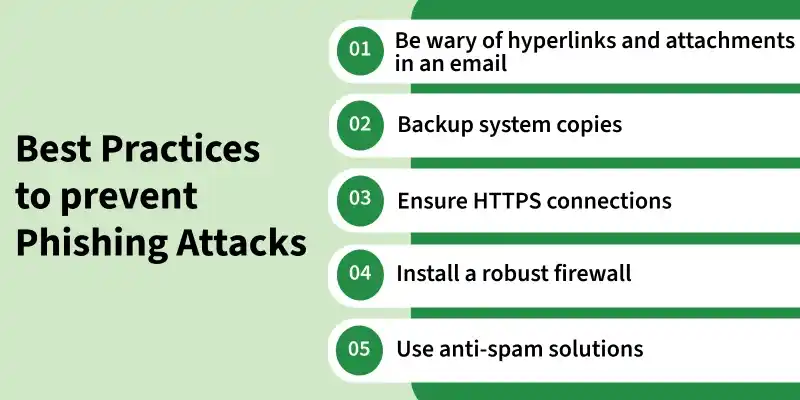
1. Security Awareness and User Training
User education is one of the most effective defenses against phishing attacks. Employees should be trained to:
- Identify suspicious emails and social engineering tactics.
- Verify sender identities before sharing sensitive information.
- Avoid clicking unknown links or downloading unexpected attachments.
- Report phishing attempts to the security team.
2. Email Security Solutions
Advanced email security tools help detect and block phishing emails before they reach users. Key capabilities include:
- Sender reputation and domain verification.
- Attachment sandboxing and malware scanning.
- Email authentication using SPF, DKIM, and DMARC.
3. Browser and Web Protection
Web security controls reduce exposure to phishing websites. Recommended measures:
- DNS, web filtering, Real-time URL reputation checks.
- Browser security warnings for suspicious sites.
- Secure Web Gateways (SWGs) to inspect web traffic.
4. AI and Machine Learning-Based Detection
AI enhances phishing detection by analyzing patterns and behaviors that traditional methods may miss.
- Detect fake or lookalike domains.
- Analyze email content and sender behavior.
- Identify credential-harvesting websites.
5. Clone Website Detection
Attackers often create websites that mimic legitimate organizations. Organizations should:
- Monitor newly registered lookalike domains.
- Detect typosquatting and brand impersonation attempts.
- Use brand protection and website monitoring services.
6. Threat Intelligence and Monitoring
Proactive monitoring helps identify phishing campaigns early. This includes:
- Tracking & Monitoring leaked employee information, social media and dark web sources.
- Consuming threat intelligence feeds.
- Integrating alerts with SIEM and SOC platforms.
7. Multi-Factor Authentication (MFA)
MFA provides an additional security layer even if credentials are stolen. Best practices include:
- Enforcing MFA on critical systems & Using phishing-resistant authentication methods such as security keys and passkeys.
