

Cyberstalking is the repeated use of digital technology to harass, threaten or monitor someone without consent. It causes fear, distress and emotional harm, exploiting online anonymity and accessibility. Victims often feel constantly watched, which can disrupt daily life and personal safety.
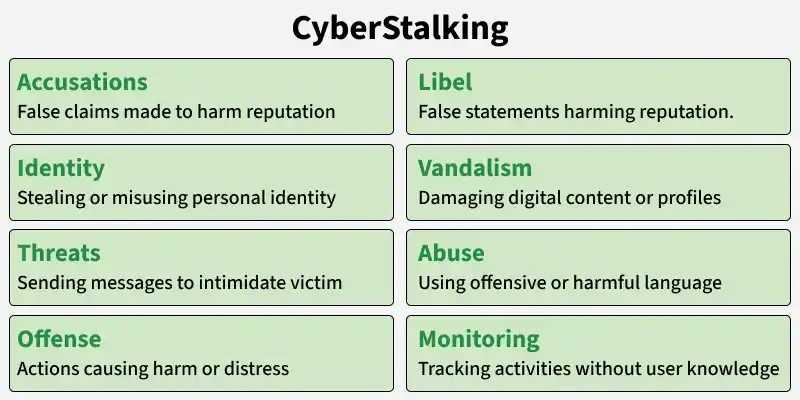
Consequences of Cyberstalking
In the United States, cyberstalking is illegal under both federal and state laws. The primary federal law is 18 U.S.C. § 2261A (Federal Cyberstalking Law), which makes it a crime to use electronic communication such as email, social media or messaging platforms to harass, threaten or stalk someone online.
- Legal Consequences: Cyberstalking may result in criminal prosecution, fines, restraining orders or imprisonment under applicable cybercrime and harassment laws.
- Psychological Impact: Continuous online harassment can cause anxiety, depression, stress, fear and long-term psychological trauma.
- Privacy Violation: Unauthorized collection, monitoring or disclosure of personal information compromises an individual's privacy and digital security.
- Reputational Damage: False allegations, impersonation or publication of private information can harm personal and professional reputation.
- Financial Impact: Victims may incur financial losses due to identity theft, fraud, legal expenses and additional security measures.
- Physical Safety Risks: Persistent cyberstalking can escalate into offline harassment, intimidation or physical threats.
Note: 69% of stalking victims experience immense emotional distress. The fear that cyberstalking victims experience is often higher than it is for in-person stalking.
Techniques Used by Cyber Stalkers
Cyberstalkers use a variety of smart and deceptive tactics to monitor, harass and control their victims. These techniques often combine technology with psychological manipulation.
- Webcam Hijacking: Attackers trick users into installing malware that secretly gives access to their webcam. Victims remain unaware while stalkers monitor or record them.
- Monitoring Social Media Check-ins: Stalkers track location updates, check-ins and posts shared on social media platforms.
- Catfishing (Fake Identity Creation): Attackers create fake profiles by impersonating someone trustworthy or known to the victim.
- Installing Stalkerware: Secretly installed on a victim’s device to track location, messages and activities. It runs in the background without the user’s knowledge, giving continuous access to private data.
- Tracking Through Geotags: Digital photos often contain location data (EXIF metadata) that reveals where the image was taken.
Best Practices for Protecting Yourself from Cyberstalking
Taking simple precautions and staying alert online can significantly reduce the risk of becoming a victim of cyberstalking. Below are some practical safety measures:
- Log Out from Shared Devices: Always sign out after using public or shared computers to prevent unauthorized access to your accounts and personal data.
- Avoid Sharing Future Plans Online: Do not post travel plans, live locations or upcoming events publicly, as stalkers can misuse this information to track you.
- Use Strong Passwords & Enable MFA: Create strong, unique passwords and enable Multi-Factor Authentication (MFA) to improve account security.
- Be Careful with Public Wi-Fi: Avoid accessing banking, email or sensitive accounts on unsecured public Wi-Fi networks.
- Manage Social Media Privacy Settings: Limit who can view your posts and personal details by adjusting privacy settings on social media platforms.
- Monitor Your Online Presence: Regularly check what information about you is available online and remove unnecessary personal details whenever possible.
Reporting Cyberstalking Incidents
Cyberstalking is a punishable offence under various legal provisions depending on your country or region. Governments and law enforcement agencies provide multiple ways to report such incidents and seek help.
- Know Your Legal Rights: Cyberstalking is a punishable cybercrime in many countries.
- Use Cybercrime Portals: Report incidents through official government cybercrime websites.
- Submit Evidence: Provide screenshots, emails, chat logs or social media messages as proof.
- Contact Local Police: Visit the nearest police station for serious threats or harassment.
- Track Your Complaint: Follow up regularly and share additional details if needed.
- Get Emergency Help: Contact emergency services immediately if you feel unsafe or threatened.
