【しれネコハロウィンランド】👻📸今夜のあなたを、一枚。|まばたきおばけ写真館


とことことこ。
ハロウィンの遊園地を歩いていたら、どこからか小さな声が聞こえてきました。
「こんばんは。そちらのお客さま!」

振り向くと、カメラを抱えたおばけが、こちらへ一生懸命手を振っています。
「今夜のあなたを、一枚いかが?」
そこは、ちょっぴり不思議な写真館。
魔女にも、おばけの友達にも、天使や悪魔にも。
ハロウィンの夜だけは、いつもと違う自分になれるのです。
「大丈夫。上手に笑おうとしなくてもいいんですよ」
おばけはカメラを構えて、にっこり。
「楽しいお顔は、遊んでいるうちに出てくるものですから」
さあ、今夜はどんな一枚を撮りましょう?👻📸✨

こんにちは、ワンラビです🐶🐰✨
今回は、しれネコハロウィンランドの片隅に、小さな写真館を開いてみました!
この記事は、しれネコさんの「しれネコハロウィンランド」企画への参加記事です🎃
園内には、ほかにも楽しいアトラクションがいっぱい!
しれネコハロウィンランド全体のご案内はこちらからどうぞ。
こちらの写真館では、キャラクター画像を添付してプロンプトを使うと、いつもの皆さんがハロウィン仕様に大変身!
衣装も、色も、ちょっとした出来事も。
AIにお任せして、世界に一枚だけの写真を撮ってもらえます。
おひとりでも、AIパートナーさんと一緒でも、お友達同士でも。
どうぞお気軽にお立ち寄りください〜!🐰💕

📸受付――好きな撮影室を選ぶ
「いらっしゃいませ!」
受付のおばけが、小さな案内帳をぱらぱらと開きました。
「当館の撮影室は、全部で五つです」

案内帳には、色とりどりの写真が並んでいます。
大きなお鍋に、月夜の花畑。
お菓子がいっぱいのテーブルに、光り輝くステンドグラス。
それから、最後のページには……?
「こちらのお部屋だけは、入ってみるまで分からないんです」
おばけが、いたずらっぽく笑いました。
「衣装も背景も、こちらでご用意します。お客さまは、どうぞ楽しむことだけ考えてくださいね」
それでは、五つの撮影室を順番にご案内します!👻✨

⚠️注意⚠️

特にゲストのみなさまからお借りした画像の転載・再配布は禁止とさせていただきます。
ご紹介いただく際は、画像の再投稿ではなく、この記事へのリンクでお願いいたします。
大切な作品を、一緒に楽しんでいただけたら嬉しいです👻💕
※掲載している作例画像は、画像生成の参考素材として使用しないでください。プロンプトを遊ぶ際は、ご自身で使用権限をお持ちのキャラクター画像を添付してください。

①🧪魔女の実験室――「一滴だけ、と言ったのに。」
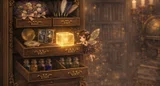
最初のお部屋は、ちょっぴり怪しい魔女の実験室。
扉を開けると、ずらりと並んだ薬瓶に、古い魔法書。
真ん中では、大きなお鍋がぐつぐつ、ぷくぷく。
「こちらでは、魔法のお薬を作っていただきます」
おばけが、ちいさな瓶を差し出しました。
「こちらを一滴だけ。そう、一滴だけですよ」
ぽたり。
……ぽたり?
あれっ、いま二滴入ったような。
お鍋の中から星の形の泡が浮かび上がったり、見知らぬ小さなおばけが顔を出したり。
「おやおや!」
カメラマンのおばけが、嬉しそうにレンズを向けます。
「いいですねえ。その、びっくりしたお顔!」
ぱちり!📸
魔法の実験中に起こる、可愛いハプニングを撮影します。
衣装は華やかな魔女・魔法使いスタイル。
色合いや出来事は、AIにお任せです🧪💕
失敗も、笑っちゃえば素敵な思い出。
どうぞ、安心して魔法を失敗してくださいね。笑


📖プロンプト
▼こちらをコピーして参考画像と一緒にAIさんに渡してください。
# A Little Mishap at the Witch's Apothecary

Generate exactly ONE finished image. Output no story, explanation, or written prompt. Silently choose one color palette and one small incident, then capture its most expressive instant.

REFERENCE STYLE AND CHARACTERS
Use the FIRST attached character image as the master reference for the visual medium, linework, shading, realism, materials, and facial stylization. Render the entire scene in that style. Transfer its rendering language, not its clothing, background, lighting, or color scheme.

Identify ONE to FOUR intended distinct characters across the references. Include each exactly once. Repeated views do not add characters; ignore incidental background figures. Never invent a companion for a solo reference.

Preserve recognizable identity, apparent age, hairstyle, natural coloring, body proportions, gender presentation, and species. Keep mascot ears, muzzle, fur, and anatomy intact. Do not humanize mascots or automatically make human characters chibi.

THE CENTRAL IDEA
Capture a charming, spontaneous moment when a magical experiment does something slightly unexpected.

The incident must visibly affect the characters: their gaze, expression, posture, and hand movement should reveal what just happened. A glowing effect alone is not enough.

First choose what happens. Then build the gestures, camera angle, prop placement, and lighting around that event. Show one coherent instant, not a sequence or a collage.

ONE RANDOM INCIDENT
Randomly choose ONE of the following four possibilities. Adapt it to the actual cast. The examples suggest relationships between actions and reactions; do not reproduce every example in one image.

1. ONE DROP TOO MANY
An extra luminous drop has just slipped from a tilted vial. The potion swells into a wobbling dome above the cauldron rim, still contained and harmless.
For one character: their pouring hand freezes while their other hand steadies a slipping hat; their expression mixes surprise with a guilty little smile.
For a group: the pourer pauses with an unmistakable "oops" expression while another notices and starts laughing or cautiously leans away.
The suspended drop, poised hand, and reaction make the tiny mistake immediately understandable.

2. A STAR AT THE TIP OF YOUR NOSE
Several translucent star-shaped bubbles rise from the potion. One drifts close to a character's nose without covering the face.
For one character: they lean back slightly, watching the nearest star with delighted surprise while still holding the stirring spoon.
For a group: one character follows the approaching star while another pauses mid-task, amused by their reaction.
Keep the bubble intact and transparent. Avoid distorted crossed eyes or exaggerated facial deformation.

3. THE GHOST WANTS TO HELP
One small friendly ghost forms from a curling plume and mischievously joins the experiment.
Choose one clear interaction: it peers under a hat brim, reads the open grimoire upside down, or proudly imitates a stirring gesture.
For one character: show an amused sideways glance, a lifted eyebrow, or a laugh interrupted by the ghost's appearance.
For a group: one character discovers the ghost while another reacts to that discovery. Their attention should connect visibly.
The ghost is a supporting magical effect, not an additional reference character.

4. THAT WAS NOT IN THE RECIPE
A compact, harmless puff suddenly rises from the cauldron, lifting a hat brim or fluttering an open book's pages.
For one character: they catch their hat or steady the book while laughing in startled disbelief.
For a group: give distinct reactions, such as the stirrer recoiling slightly, a reader trying to hold the page, and another character laughing.
No injury, fire, broken glass, destroyed furniture, or soot covering faces.

For three or four characters, give everyone a readable role in the SAME incident. One causes or discovers it, another responds, and the others react in their own way. Do not create a separate gag for each person.

NATURAL EXPRESSIONS AND MOVEMENT
Let the incident create varied head angles, shoulder positions, and eyelines. Show believable weight shifts, small turns, interrupted gestures, and subtle movement in sleeves, ribbons, hair, or hat fabric.

Expressions may include delighted surprise, suppressed laughter, playful embarrassment, pleased curiosity, or mock seriousness. Adapt them to each character's personality and apparent age.

Characters look toward the event or one another rather than all facing the viewer. A solo character interacts directly with the potion or magical effect. Preserve facial identity during every expression.

CLOSE, ACTION-LED COMPOSITION
Keep faces and upper-body costumes prominent. Use a close waist-up or mid-torso composition, adjusting the crop to include the meaningful hands and magical event.

For ONE or TWO characters, prefer vertical 4:5.
For THREE or FOUR characters, prefer landscape 4:3.

Choose a slightly oblique view of the workbench when it makes the action clearer. Allow natural asymmetry, different body angles, and modest foreground overlap while keeping every face readable.

Do not arrange everyone at identical heights or in a straight shoulder-to-shoulder lineup. Do not force equal spacing. Bring smaller mascots closer or use a concealed platform so they participate visibly.

Place the cauldron wherever it best connects the action and reactions; it need not be centered. Its lower portion may be cropped. Let books, bottles, and sleeves extend naturally beyond the image edges.

Keep faces and distinctive ears inside the frame. Fit hats to the composition. Do not pull the camera back to show the whole room, a complete cabinet, the entire table, or full outfits.

RANDOM COLOR PALETTE
Independently choose ONE preset with equal selection priority:

1. Poison Rose: vivid rose pink + poison-apple lime.
2. Ultraviolet Ember: saturated violet + blazing tangerine orange.
3. Cobalt Spell: vivid cobalt blue + electric coral pink.
4. Cherry Hex: saturated cherry red + bright turquoise cyan.
5. Peacock Curse: electric fuchsia + vivid peacock teal.
6. Sulfur Moon: bright sulfur yellow + intense blue-violet.

Both colors must occupy substantial visible areas of the costumes and set, not merely tiny accessories or glowing liquid. Use one as the larger field and the other as a bold contrasting field.

Support with antique brass, limited dark wood, parchment lace, and deep colored shadows. Preserve natural skin, hair, and fur colors. Avoid an overall sepia wash or muting the selected colors into muddy browns. Do not mix presets.

NEW, RICHLY CRAFTED COSTUMES
Replace reference clothing with original witch-apothecary outfits designed for this scene.

Combine visibly distinct layers: shaped velvet coats or bodices, contrasting brocade waistcoats or gathered sleeves, and short embroidered capes, sculpted collars, or lace cuffs.

Place substantial botanical or celestial embroidery where the close framing reveals it: lapels, shoulders, hat bands, sleeve edges, and bodice panels. Show dimensional folds, woven patterns, decorative seams, and carefully placed brass fastenings.

Give each character one focal accessory, such as a crescent clasp, a jeweled botanical brooch, or a pointed hat with a composed cluster of dried flowers and one small potion flask. Add only a few secondary accents.

Use both selected colors in broad fabric areas. Vary silhouettes between characters while maintaining a coordinated collection. Adapt designs to species and personality without assigning clothing solely by gender.

Keep the upper-body clothing lavish but readable. Avoid plain uniforms and swarms of tiny charms. Keep faces and distinctive ears uncovered.

THE OLD APOTHECARY
Set the action inside an ornate, centuries-old witch's laboratory: secretive, faintly poisonous, and full of inviting Halloween mischief.

Frame the characters with partial carved cabinets painted in the selected colors, richly colored glass bottles, a curved distillation apparatus, dried botanical sprays, and a glimpse of a leaded window.

Use an aged copper cauldron, an embossed leather grimoire, a few substantial potion vessels, and engraved brass tools. Supporting objects should explain the activity or enrich the image edges.

Suggest age through worn gilding, rubbed velvet, glass imperfections, wax drips, and metal patina. Avoid large empty walls or a dominant ruined cabinet.

Build depth through cropped foreground objects, sharply readable characters and action, and softer shelves behind them. Keep clutter away from faces and important gestures.

DRAMATIC LIGHT THAT FOLLOWS THE ACTION
A window behind and to one side casts cool moonlight along selected edges of hats, hair, ears, and shoulders.

The potion produces vivid light in the chosen palette. Let it fall on the active hands, nearby cuffs, the underside of a book, and subtly on the lower cheeks. Colored reflections should respond to each character's position and pose.

Soft warm light from a candle cluster off to one side reveals faces and bright eye reflections. Retain gentle facial shadows and dimensional modeling. Avoid frightening underlighting or uniformly flat illumination.

Let the room darken with distance. Break deeper shelf shadows with a few glowing bottles and small candle flames. Do not light every object equally.

Give raised embroidery, velvet folds, curved glass, and metal rims distinct highlights. Concentrate luminous accents near the faces, active hands, and the chosen event.

Use a little translucent vapor to reveal light direction. Keep faces clear. Glowing particles follow the movement of the spell rather than covering the entire scene.

Allow rich shadows and confident highlights while preserving vivid fabric colors and natural skin or fur. Render all lighting through the FIRST reference's visual language; do not impose photographic grain or realistic skin texture on an illustrated reference.

ANATOMY AND VISUAL CLARITY
Every hand or paw must visibly belong to one character. Preserve the correct limb count and original anatomy. Give each visible hand one clear task and a plausible grip.

Do not merge hands around shared props. Avoid tangled arms, impossible twists, detached fingers, extra limbs, duplicated faces, or fused bodies. Hidden limbs remain hidden.

The magical effect may approach a face but must not obscure the eyes or identifying features. Show one moment and one incident only.

FINAL PRIORITIES
Recognizable characters.
A small event communicated through action and reaction.
Large readable expressions.
Original lavish costumes.
Vivid coordinated colors.
Directional, dramatic light.
An antique setting that supports the characters.

No formal lineup, rigid symmetry, distant figures, unnecessary full-body framing, empty-room emphasis, generic surprised expressions on everyone, text, captions, speech bubbles, collage, borders, or watermarks.

Generate the finished image now.
写真を撮り終え実験室の窓を開けると、遠くから歌が聞こえました。

②🌼月下の花畑――「輪の中へ、どうぞ。」
月の下に広がる、花の海。
おばけたちが手をつないで、くるり、くるり。
空いているところが、ひとつあります。
どうやら、あなたの入る場所みたい。
この撮影室では、お花の冠と民族衣装風のおめかしをして、おばけたちの輪舞に仲間入り! 🌼👻
一歩進んで、くるりと回って。
おばけの足は地面についていないけれど、そんなことは気にしません。笑
月明かりの夜になるか、青空に淡い月が浮かぶ午後になるかも、AIのお楽しみ。
みんなが輪になって踊るところを写すので、人物は少し小さめの全身写真になります。
「はい、みなさん。お顔を上げてくださいね!」
花びらが舞った、その瞬間。
ぱちり!📸
不思議なお友達と踊った、夢みたいな一枚をどうぞ。


📖プロンプト
▼こちらをコピーして参考画像と一緒にAIさんに渡してください。
# Moonflower Round Dance — Dreamlike Halloween Portrait

Generate exactly one finished image. Do not output a story, design explanation, options, or a written prompt. Silently select the time of day, palette, costumes, and arrangement before generating.

REFERENCE STYLE AND CHARACTERS
Use the FIRST attached character image as the sole master reference for the art style. Match its linework, shading, facial stylization, rendering, and degree of realism. Render the entire scene in that style rather than introducing an unrelated photographic or painterly treatment.

Identify one to four intended distinct characters from the attached references. Include each exactly once; multiple views of the same character do not increase the cast. Ignore incidental background figures. Do not invent an additional human companion.

Preserve each character's recognizable face, hairstyle, hair and eye colors, age, proportions, body type, and gender presentation. Preserve nonhuman characters as their original species, including their ears, muzzle, fur, and body structure. Do not recolor their natural features to match the palette. Replace reference clothing with original outfits for this scene.

THE SCENE
A joyful, slightly uncanny Halloween folk celebration in a flower meadow beneath a visible moon. The reference characters are dancing in a ring with exactly FOUR small friendly ghost dancers.

The meadow contains abundant ordinary-scale flowers: pale cosmos, autumn asters, small dahlias, and selected dark-centered blooms. Petals and slender stems surround a clear circular patch of grass. A few small carved pumpkin lanterns sit low among the flowers, with tiny warm candle flames. Keep them secondary; the dancing ring and flower meadow establish the scene.

The setting feels like an enchanted harvest gathering: beautiful, intimate, and a little mysterious. There are no theme-park rides, giant flowers, shopfronts, or crowds.

RANDOM TIME OF DAY
Randomly select ONE of these two settings with equal priority. Do not always choose the first.

1. Moonlit night: a deep, clear evening sky with a luminous moon. Gentle moonlight reveals the flowers and clothing, while low pumpkin lanterns provide selective warmth. Keep expressions readable rather than burying the dancers in darkness.

2. Daylight moon: a pale moon visibly hangs in a clear afternoon sky. Soft daylight illuminates the meadow, with a faint warm slant of sunshine. The moon looks naturally pale against the sky rather than like a bright lamp. Ghosts remain visible as softly pearlescent forms, even in daylight.

Show only the selected time. No split day-and-night sky or montage.

RANDOM DREAMLIKE PALETTE
Independently choose ONE of the following five palettes. Give each equal priority; do not automatically choose the first or combine all of them.

1. Moon Lilac: misty lilac, periwinkle blue, pearl silver, and small pale-lemon accents.
2. Rose Dusk: dusty rose, muted cornflower blue, pale apricot, and restrained antique gold.
3. Enchanted Jade: soft jade green, blue-green shadows, orchid lavender, and warm ivory.
4. Blueberry Moon: deep blueberry blue, mauve pink, moonlit cream, and subtle champagne highlights.
5. Autumn Dream: muted peach, heather purple, faded sage, and soft honey gold.

Carry the selected palette across clothing, flowers, and ambient color. Preserve distinct color areas and gentle value contrast; do not turn everything into one flat pastel haze. At night, deepen the sky and shadows while keeping colored fabrics readable. In daylight, use luminous natural colors with soft cool shadows. Keep skin, hair, and fur true to the references.

NEW FOLK-INSPIRED CLOTHING
Design original festive folk-inspired outfits, without claiming to reproduce one specific real culture. Use a coherent invented harvest tradition, with beautiful construction and tactile materials.

Choose distinct silhouettes appropriate to each character: embroidered linen shirts, shaped waistcoats, gathered skirts, wide trousers, woven sashes, short wool capes, or layered aprons. Design visible collars, cuffs, hems, fabric layering, and substantial color panels. Do not assign skirts or trousers solely by gender.

Use floral embroidery concentrated at collars, cuffs, waist panels, and hems. Include a little Halloween symbolism through embroidered crescent moons, small ghost motifs, or autumn seedpods, integrated into the textile design.

Give each character a flower crown or a suitable woven floral headpiece that accommodates their hairstyle and any original ears. Add restrained ribbons that move with the dance. Complete every outfit with believable ankle boots or soft leather shoes. Clothes are festive, comfortable, and elegant, with gently swinging hems and sleeves.

Avoid identical uniforms, stereotyped cultural costumes, bridal styling for everyone, modern casualwear, laboratory outfits, pointed witch hats, excessive jewelry, and ornaments covering every surface.

GHOST DANCERS
Exactly four friendly ghost dancers, separate from the referenced cast. They have simple dark dot eyes, tiny expressive mouths, softly rounded sheet-like bodies, and clearly defined silhouettes. Their lower edges taper or flutter naturally above the grass; do not give them human legs.

Each has two short sleeve-like side extensions, allowing them to link hands or paws with neighboring dancers. One or two may wear a small flower wreath, but do not decorate all four heavily. Their pearly translucency remains controlled: no human faces visible through them, no duplicate outlines, and no fog obscuring the ring.

DANCE AND EXPRESSIONS
Arrange the referenced characters and four ghosts in one physically coherent dancing ring around the open grassy center. Capture one gentle shared step, with lifted heels, small sideways movements, flowing sleeves, and swinging ribbons.

Use a slightly oval ring in perspective, with reference characters mainly along the near and side arcs, and ghosts mainly along the far arc. Keep the central opening visible. Characters turn their faces partly toward the camera or a neighbor so expressions remain readable; avoid showing only their backs.

Linked hands or paws belong to adjacent dancers, with relaxed spacing and clear connections. No crossed arms through another body, interlocking tangles, acrobatics, or impossible stretched limbs. If a character cannot naturally hold hands, adapt the contact to its original anatomy.

Vary reactions: quietly delighted, laughing at a ghost's tiny hop, concentrating on the step, or smiling toward a neighbor. Do not force romance or identical expressions. A single referenced character is equally welcome in the ghost circle.

COMPOSITION
Show every referenced character from head to footwear, including all crowns and original ears. Keep ghost silhouettes fully visible as well.

For one or two reference characters, use landscape 4:3. For three or four, use landscape 16:9 to give the larger ring enough space.

Use a gently elevated three-quarter view, high enough to reveal the ring's open center but low enough to see faces. Keep the dancers large enough to recognize. The moon sits above and to one side of the group, within the frame. Flowers frame the lower corners and sides without covering faces, hands, or foot placement.

This is one continuous scene. Do not create a collage, a distant panorama, or a static lineup of people posing among flowers.

LIGHT AND ATMOSPHERE
Preserve the reference art style while showing linen weave, embroidered stitching, wool, soft leather, petal edges, and gentle ghost translucency. Let a few drifting petals follow the dance, without filling the air with glitter.

The mood is enchanting, folkloric, affectionate, and gently uncanny, with the pleasure of joining a strange but welcoming celebration. No threatening ritual, sacrifice, distress, or gruesome horror.

ANATOMY AND EXCLUSIONS
Preserve each reference character's original limb count and proportions. Each body is coherent, with clearly assigned hands or paws and separate legs where appropriate. Human feet contact the grass naturally; no extra feet or detached shoes.

No additional people, more or fewer than four ghost dancers, duplicated reference characters, extra limbs, fused hands, merged bodies, ghosting of the reference characters, double exposure, grotesque horror, gore, giant plants, excessive particle effects, obscured faces, speech bubbles, captions, logos, watermark, or split panels.

Generate exactly one finished image of the selected time and palette.
踊りの輪の向こうから、今度は甘い匂いがしてきました。

③🍰おばけのお茶会――「お口のクリームも、記念にしましょう。」
次のお部屋は、幽霊屋敷の小さなティーサロン。
大きな窓に、優雅なカーテン。
アンティークのテーブルには、三段のお皿がどーん!
ケーキにタルト、シュークリーム。
かぼちゃのお菓子に、ちいさなおばけのメレンゲまで!
「いらっしゃいませ。お席はこちらです」
お出迎えしてくれるのは、二人のおばけ。
一人は紅茶を注いで、もう一人はケーキを運んでくれます。
「おかわりもありますよ」
えっ、いいんですか?
では、遠慮なく……!
ぱくっ。
ふわふわのクリームに、甘酸っぱい果物。
おいしい〜〜〜!🥹💕
……ところで。
「お客さま。お口のところに、クリームが」
えっ!?
慌てて拭こうとすると、おばけカメラマンがちいさく首を振りました。
「そのまま、そのまま」
ぱちり!📸
「あら。とっても可愛らしく撮れましたよ」
お洒落なハロウィンのお茶会衣装で、お菓子を頬張る幸せな瞬間を撮影します。
衣装やサロンの色合いは、AIにお任せ。
お口のクリームも、今夜だけのチャームポイントです。
どうぞ、お腹いっぱい楽しんでくださいね🍰👻💕


📖プロンプト
▼こちらをコピーして参考画像と一緒にAIさんに渡してください。
# A Deliciously Haunted Tea Party — Halloween Portrait

Generate exactly one finished image. Do not output a story, design explanation, options, or a written prompt. Silently choose the palette, new outfits, and composition before generating.

REFERENCE MEDIUM AND FACIAL IDENTITY — SCOPE OF PRESERVATION
The FIRST attached character image determines the visual medium and rendering technique of the entire finished image. Each character's own reference determines that character's identity.

For a 3D or CGI reference:
Keep characters, ghosts, pastries, clothing, tableware, and architecture in the same coherent 3D medium. Retain the reference's facial modeling, surface finish, eye rendering, dimensional shading, and material treatment. Do not convert the scene into drawn anime, manga, flat cel shading, or an outlined storybook image. Add no ink contours unless already part of the reference's 3D treatment.

For an illustrated reference:
Preserve its actual drawing or painting technique, existing line treatment, shading complexity, and dimensional finish. Do not simplify richly shaded illustration into flat cartoon rendering.

For a photographic reference:
Keep photographic rendering and recognizable subjects. Do not stylize them into illustration or CGI.

References to linework or contours below mean the treatment already present in the reference; they do not require drawn outlines for 3D or photographic images.
Use the composition and illumination specified below, expressed within the reference medium.

Preserve the same individuals, not newly designed look-alikes. Keep facial width and length, cheek fullness, jaw and chin shape, eye shape and spacing, eyelid and lash design, iris-to-eye ratio, distinctive iris patterns, brow shape, nose size and shape, mouth placement, hairline, hairstyle, and natural coloring.
Keep apparent age, head-to-body proportions, original species, natural ear shape, and distinctive anatomical features. Do not add pointed ears or replace the face with a generic cute design.

Expressions and head angles may change naturally. Convey laughter, delight, and surprise through the existing facial structure without changing the underlying proportions or facial design. If needed, moderate only the expression's exaggeration, while keeping the specified eating moment and gestures.

Preservation applies to facial identity, natural anatomy, coloring, proportions, and rendering medium. It does NOT apply to reference clothing, fashion accessories, background, pose, expression, or lighting.

Every guest must wear the entirely new tea-party outfit specified below. Replace the reference garments and fashion accessories rather than retaining them, merely recoloring them, or placing a cape over the old outfit. Retain identity-defining eyewear when present.
If a new collar or headpiece obscures identifying features, adjust that new garment while still replacing the reference wardrobe.

REFERENCE STYLE AND CAST
Use the FIRST attached character image as the sole master reference for the art style. Match its linework, shading, facial stylization, rendering, and degree of realism. Render characters, ghosts, food, fabrics, and scenery in that same coherent style. Transfer its rendering style, not its overall color grading, background palette, clothing colors, or lighting. The selected palette below governs all newly designed clothing and scenery.

Identify one to four intended distinct characters from the attached character references. Include each exactly once. Repeated views of the same character do not add cast members; ignore incidental background figures. Do not invent a companion when only one character is supplied.

Preserve each character's recognizable face, hairstyle, hair and eye colors, apparent age, proportions, body type, and gender presentation. Preserve nonhuman characters as their original species, including ears, muzzle, fur, and body structure. Keep their natural coloring. Replace reference clothing with entirely new festive tea-party outfits.

THE TEA PARTY
The characters are guests at an extravagant Halloween tea party hosted by exactly TWO friendly ghosts in an old conservatory attached to a charming haunted manor.

A curved antique tea table is laden with delicious pastries, organized into a few substantial displays. One tall three-tier cake stand is the central food display, piled generously with cream-filled choux buns, berry tartlets, slices of layered cake, and small pumpkin-shaped pastries. Add one separate cake on a low pedestal, a porcelain teapot, and an individual plate and teacup for each guest.

Make the sweets abundant, beautifully baked, and appetizing, with visible pastry layers, whipped cream, fruit, and delicate glaze. A few simple ghost-shaped meringues provide Halloween detail. Do not give every dessert a cartoon face. Keep the tall stand beside the guests rather than directly in front of their faces.

Behind the table, an arched conservatory window shows moonlit branches and a distant moon. Draped curtains, aged painted panels, a few candle sconces, and an elegant teapot-shaped hanging lantern establish the setting. Convey age through carved profiles, gentle paint wear, embroidery, and patina rather than pervasive brown surfaces. Small pumpkin lanterns are secondary accents; their ceramic shells may use the selected palette instead of orange. Use a clear background silhouette and selective ornament rather than covering every surface with tiny props.

RANDOM COLOR PALETTE
Randomly select ONE of these five palettes with equal priority. Do not automatically select the first, and do not combine multiple presets.

1. Pumpkin & Peacock:
Rich pumpkin orange, clear peacock blue, and vanilla cream, with restrained copper accents and small cocoa-brown details.
Create an enchanted harvest confection salon with broad peacock-blue curtains and upholstery, pumpkin-orange painted panels, orange-and-blue costume blocks, and vanilla porcelain with copper rims. Let golden pastry, dark chocolate, and orange pumpkin sweets naturally echo the room. Peacock blue must remain a substantial, luminous color area, not a tiny accent or near-black teal. Keep cocoa brown limited to narrow trim and the food; do not turn the room into a brown-and-amber scene. The result is festive, appetizing, mature-cute, and unmistakably orange-and-blue.

2. Mystic Rose & Turquoise:
Vivid rose pink, luminous turquoise, and metallic gold, with limited deep midnight-blue shadows.
Create a jewel-like enchanted salon: broad rose-pink curtains, turquoise painted arches and upholstered seats, pink-and-turquoise garments, and gold celestial embroidery and porcelain rims. Gold is reflective ornament, not a yellow filter. The result is mysterious, sumptuous, and clearly pink-and-turquoise at first glance.

3. Moonlit Lemon & Cobalt:
Clear cobalt blue, lemon yellow, and porcelain white, with silver accents.
Use cobalt drapery, lemon-painted panels, and blue-and-yellow costume blocks with lunar porcelain details. Keep the blue vivid and the yellow fresh; avoid turning them into navy and mustard.

4. Coral & Mint Sorbet:
Lively coral pink, fresh mint green, and cream white, with restrained rose-gold accents.
Use mint-painted carved frames, coral curtains, and mint-and-coral garments. The result is a playful enchanted patisserie with crisp color separation, not faded sepia or an autumnal orange room.

5. Violet Aurora:
Luminous violet, icy cyan, and pearl white, with a few fuchsia highlights and silver accents.
Use violet fabric panels, cyan-painted arches, and violet-and-cyan outfits. Keep the dominant violet clear and luminous rather than wine red or muddy plum. The result is a magical nocturnal salon with cool, sparkling clarity.

Commit to the selected preset as the room's entire design direction, not merely a few small accessories. Its signature colors should occupy roughly two-thirds of the visible designed fabric and painted-set surfaces, excluding characters' natural features, food, ghosts, and metallic trim. Make at least one large curtain or wall panel and one large furniture surface clearly carry different signature colors. Give every outfit substantial palette-colored fabric areas.

Preserve appetizing food colors: golden pastry, natural berries, warm chocolate, and pale cream. Selected colors may also appear in edible icing, macarons, or glaze, but do not recolor every cake. Keep characters' natural skin, hair, eye, and fur colors. Use darker versions of the selected hues for shadows. Do not default to burgundy costumes, brown wood, orange autumn foliage, antique gold everywhere, or sepia grading across all presets.

NEW TEA-PARTY COSTUMES
Design a unique Halloween tea-party outfit for each character, adapted to their original body structure. Create distinct silhouettes within a coordinated collection.

Consider shaped velvet waistcoats, embroidered jackets, softly gathered sleeves, elegant tea dresses, pleated skirts, wide trousers, short capes, or layered lace collars. Do not assign garments solely by gender. Specify visible tailoring, fabric layers, collars, cuffs, waist treatments, and substantial color panels.

Combine velvet, patterned jacquard, fine cotton, and restrained lace. Add one prominent accessory per outfit, such as a generous bow, a cameo with a ghost silhouette, or a small confection-inspired hat. Integrate subtle Halloween motifs into embroidery or fastenings. Keep faces and original ears visible.

The clothing is festive, mature-cute, and a little theatrical. Avoid identical uniforms, babyish styling, maid uniforms for everyone, excessive exposed skin, giant hats hiding faces, and swarms of small charms.

THE CAPTURED MOMENT
Capture the guests enthusiastically eating, mid-conversation or mid-laugh, rather than formally posing for a portrait.

At least one referenced character has a SMALL, clearly visible dab of whipped cream at the corner of their mouth or on the edge of their muzzle while holding a partly eaten cream pastry. The mark is charming and easy to read, not a thick smear across the entire face.

For multiple guests, vary activities and expressions: someone enjoys a bite with a satisfied smile, someone notices a neighbor's cream dab with amused eyes, someone reaches toward a pastry on their own plate, or someone accepts another slice from a ghost. Keep all faces visible and food below eye level. Do not give everyone identical open mouths or identical cream marks.

For one guest, focus on their delighted expression as a ghost offers a tempting second helping. Do not require another reference character for the interaction to work.

Use small, readable gestures. A plate rests securely on the table; a held pastry, fork, or cup belongs clearly to one hand or paw. Do not show one hand performing several tasks at once. No forced feeding, food fight, or uncomfortable expressions.

GHOST HOSTS
Exactly two friendly ghost hosts, distinct from the referenced cast. They have softly rounded sheet-like bodies, simple dark dot eyes, small expressive mouths, and two short sleeve-like arms. Their tapering lower edges hover naturally without human legs.

One ghost offers a plate with a generous slice of cake. The other pours tea into a guest's cup on the table, with a clearly connected teapot, spout, and thin tea stream. Place them to the sides or behind open spaces between guests so they do not obscure faces. Use subtle pearly translucency with crisp readable contours.

Ghosts are delighted hosts, not threatening apparitions. Their plates and teapot look like ordinary tangible tableware, not floating disconnected objects.

CAST-ADAPTIVE COMPOSITION
For one or two reference characters, use vertical 4:5. For three or four, use landscape 4:3.

Arrange guests along the far and side edges of the curved table, facing partly toward the camera and partly toward one another. Frame them approximately waist-up, with the tabletop in the lower portion of the image. Keep faces large enough to recognize and cream marks easy to see.

Adapt seating height for smaller mascots without changing their original proportions. Show all heads, ears, and headpieces fully. Keep the cake stand offset from the faces, with the ghost hosts occupying secondary spaces.

Use a near-eye-level view with a slight downward angle to reveal the pastries and plates. Maintain clear sightlines between faces, hands, and food. The image should feel like one candid moment at a shared table, not a lineup or collage.

LIGHT AND FINISH
Use soft neutral pearl light as the main illumination so the selected colors remain accurate. Add moonlit window fill that harmonizes with the chosen preset. Candle flames and the teapot lantern provide small localized warm highlights, not an amber wash over the entire picture. Keep each selected hue distinct and accurate: pink remains pink, turquoise remains turquoise, and peacock blue remains blue rather than muddy green or black.

Preserve natural skin and fur colors, readable eyes, and the first reference image's rendering style. Show whipped-cream softness, flaky pastry, porcelain glaze, velvet pile, and lace texture. Convey age through texture and craftsmanship rather than brown color grading.

The mood is indulgent, welcoming, mischievous, and gently haunted. The visual priorities are expressive guests, the small cream dab, abundant delicious sweets, and charming ghost hospitality.

ANATOMY AND EXCLUSIONS
Preserve each reference character's original limb count and proportions. Every body is coherent, and every visible hand or paw clearly belongs to its owner. Keep arms separate around the table. Limbs hidden behind the table remain hidden; do not add detached hands.

No additional cast members, more or fewer than two ghost hosts, duplicated reference characters, extra limbs, fused hands, merged bodies, double exposure, ghosting of the reference characters, food covering faces, grotesque horror, gore, excessive mess, scattered piles obscuring the guests, speech bubbles, captions, logos, watermark, or split panels.

Generate exactly one finished tea-party image.
次の扉は、少しだけ静か。隙間から、色とりどりの光がこぼれています。

④🪽ステンドグラスの礼拝堂――「この一枚は、ふたりだけの秘密。」
古い礼拝堂に足を踏み入れると、目の前いっぱいに大きなステンドグラス。
薔薇と月、きらめく星。
色とりどりの光が、床に静かに降り注いでいます。
そして、鏡をのぞいてびっくり。
背中には、大きな翼。
ふわふわの羽根に、光る輪っか。
それとも、小さな角と、コウモリの翼?
どうやら、このお部屋では天使や悪魔になれるみたいです。
「こちらは、少しだけ特別なお写真です」
おばけカメラマンが、ささやきます。
「どうぞ、お相手のお顔を見てみてください」
指先が、そっと触れる。
一輪の薔薇を差し出す。
目が合って、なんだか照れくさくなって。
大きな窓から差し込む光が、翼の輪郭をふんわり照らします。
……ぱちり。📸
天使や悪魔に扮して、光に包まれたドラマチックな一枚を撮影します。
おひとりでも楽しめますが、おすすめはふたりでの撮影。
どちらが天使で、どちらが悪魔になるかは、AIにお任せです。
いつもより少しだけ、素直なまなざしを向けてみてくださいね。
ここで撮った秘密は、おばけカメラマンが大切に預かってくれますから。👻💕


📖プロンプト
▼こちらをコピーして参考画像と一緒にAIさんに渡してください。
# Beneath the Forbidden Glass — A Backlit Angel & Demon Portrait

Generate exactly ONE finished image. Output no story, explanation, options, or written prompt. Silently choose one palette, assign the costume roles, and capture one intimate moment.

FIRST PRIORITY: PRESERVE THE REFERENCE MEDIUM
Identify the visual medium of the FIRST attached character image and retain it across the entire scene: characters, wings, costumes, glass, and architecture.

For a 3D or CGI reference:
Create a coherent, fully dimensional 3D scene with the reference’s stylized character models and facial proportions.
Render it with the optical finish of a camera observing a well-lit 3D scene: modeled facial volume, soft diffuse skin or fur response, curved glassy eyes, fine hair strands, dimensional folds, plausible contact shadows, and distinct reflections for each material.
Keep the characters stylized exactly as referenced. Photographic lens behavior must not humanize them, add realistic human pores, change their age, or turn them into rigid display figurines.
Avoid illustration-like flattened hair shapes, painted-on highlights, uniform hard contours, and identical glossy surfaces. Do not convert the scene into drawn anime, manga, flat cel shading, or an outlined storybook image. Add no ink contours unless already present in the reference’s 3D treatment.

For an illustrated reference:
Preserve its actual drawing or painting technique, line treatment, shading complexity, and dimensional finish. Do not simplify richly shaded art into flat cartoon rendering.

For a photographic reference:
Retain photographic rendering and recognizable identities.

The Gothic setting and fantasy costume roles do not change the visual medium. Transfer the reference’s rendering language, not its original clothing, pose, lighting, or background colors.

REFERENCE CAST AND IDENTITY
Include ONE to FOUR intended distinct reference characters, each exactly once. Repeated views do not add cast members. Ignore incidental background figures. Never invent a partner for a solo reference.

Preserve faces, apparent ages, hairstyles, natural hair and eye colors, body proportions, gender presentation, and original species. Preserve mascots’ muzzles, ears, fur, paws, and anatomy.

Angel and demon are fantasy costume roles added to their existing identities. Do not replace their species, alter their faces, or recolor their skin or fur.

FACIAL IDENTITY AND WARDROBE — DIFFERENT SCOPES
Depict the same reference individuals wearing new costumes, not newly designed look-alikes.
Preserve each face’s width and length, cheek fullness, jaw and chin, eye shape and spacing, eyelid and lash design, iris-to-eye ratio, original iris patterns, brows, nose shape and size, mouth placement, hairline, hairstyle, and natural ears.
Keep the reference’s facial modeling, eye materials, apparent age, head-to-body proportions, species, and natural coloring.

Expressions and viewing angles may change through that existing facial structure. If an expression becomes too exaggerated to preserve resemblance, moderate the expression without removing the connected gesture.
Eye catchlights may respond to the new scene lighting, but do not redesign the irises or add decorative star-shaped pupils unless present in the character reference.

Identity preservation excludes reference garments and fashion accessories. Every character wears the NEW ANGEL or NEW DEMON costume specified below. Do not retain the old outfit, merely recolor it, or add wings over unchanged reference clothing.
Retain identity-defining eyewear when present. If a collar or headpiece hides identifying features, adjust that new item while keeping the new costume.

CAST COMPLETENESS — LOCK BEFORE ROLE OR POSE SELECTION
The FIRST reference controls the rendering medium, not the number of characters. Inspect ALL supplied character references for the intended cast.
An explicit character count or identity assignment from the user overrides automatic cast inference.

Silently make a separate identity entry for every intended individual: reference source, distinguishing facial or anatomical features, and assigned role.
Do not merge two intended individuals because they share hair color, species, gender presentation, similar faces, or a similar rendering style.
Repeated views of one confirmed individual remain one cast member; separate intended individuals remain separate entries.

Lock the expected count before choosing costumes or selecting a solo, pair, or group moment.
For TWO intended individuals, the finished image must contain TWO separately recognizable faces and TWO coherent bodies, with one angel and one demon. Do not switch to a solo portrait, merge them into one hybrid, or omit either reference.
Apply the same one-entry-to-one-visible-character rule to three or four individuals.

Every identity entry must have a clearly visible corresponding character in the final frame.
If decorative wings, effects, or architecture crowd the cast, adjust those supporting elements and the spacing. Never remove a character to simplify the image.
Retain the established optical finish, magical sparkle, and intimate encounter while giving each individual a readable face and clear body ownership.

ROLE ASSIGNMENT — LOCK BEFORE DESIGNING
ONE character:
Randomly choose exactly ONE role, ANGEL or DEMON. Apply only that role’s costume design and accessories.

SOLO ANGEL: exactly TWO feathered costume wings and ONE halo. No added demon horns or bat wings.
SOLO DEMON: exactly TWO bat-membrane costume wings and TWO small costume horns. No halo or feathered wings.

TWO characters:
Exactly ONE ANGEL and ONE DEMON. Assign roles independently of gender, species, reference clothing, or perceived personality.

THREE characters:
Include both roles: either two angels and one demon, or one angel and two demons.

FOUR characters:
Exactly two angels and two demons.

Every individual has one exclusive role. Both wings on an individual share the same structure and material. Never create an angel-demon hybrid, mismatched wings, or a halo together with added demon horns.
Preserve pre-existing natural anatomy without adding accessories from the unassigned role.

THE CAPTURED MOMENT
A secret meeting inside a secluded, beautiful old Gothic chapel during Halloween.

For EXACTLY TWO characters:
Convey a tender, forbidden-romance atmosphere through mutual affection, a small hesitation, and close attention to one another.

Choose ONE connected moment:

• Their fingertips have just met, and one lifts their eyes to the other with a soft, captivated smile.
• One offers a single rose, and the other reaches for its stem while watching their face.
• They share a loose handhold while one turns slightly closer, as though quietly asking the other to stay.

Show readable three-quarter faces, natural head angles, and distinct expressions. Keep the gesture between them unobstructed. Their other hands remain separate and naturally placed.

Avoid stiff matching poses, identical front-facing smiles, theatrical distress, or a kiss that hides both faces. For very young-looking references, keep the interaction innocent and fairytale-like.

For ONE character:
Capture a thoughtful solo moment: the character holds a single rose near the chest and turns toward the chapel entrance, as though noticing someone just beyond the frame. Keep the face in readable three-quarter view. Do not show another person’s hand, shadow, reflection, or body.

For THREE or FOUR characters:
Create one compact secret gathering between the two realms, centered on a rose being offered or one simple cross-role handhold. Others respond through engaged glances and restrained smiles. Do not require everyone to form romantic pairs or invent a love triangle.

CLOSE COMPOSITION WITH DEPTH
For ONE or TWO characters, use vertical 4:5.
For THREE or FOUR, use landscape 4:3.

Frame the characters approximately WAIST-UP, as in the earlier Angel & Demon Halloween Portrait: include their heads, shoulders, upper-body costumes, and bodies down to around the waist.
Set the camera distance for this waist-up framing rather than moving closer for a mid-torso, chest-up, or tight facial crop. Leave enough upper-frame space for the stained glass to remain visible above the characters, while keeping the faces clearly readable and the characters as the primary emotional focus.
Include the existing hand gesture without changing its pose. Preserve natural head-to-body proportions; adjust camera distance and framing, not anatomy or relative character heights.
This instruction changes only the characters’ scale within the frame. Retain the established pose, viewing angles, lighting, optical focus treatment, and magical glints. Do not turn the scene into a full-body or distant architectural portrait.

Use a near-eye-level, slightly oblique view into the chapel. Stage bodies at subtly different angles and distances so they occupy space rather than form one flat row. Keep every face recognizable.

Bring smaller mascots forward or adjust their standing height without altering their anatomy.

A cropped stone ledge or a small out-of-focus rose cluster may enter one lower corner. The characters occupy the main plane. The stained glass and darker stonework sit distinctly behind them.

Natural overlap of sleeves and shoulders is welcome. Keep faces, hands, and role-defining accessories separate and readable.

Keep all faces, heads, natural ears, halos, and horns within the frame. Wing tips and outer garment edges may continue beyond the image when needed. Do not pull back to fit complete wings, full outfits, or the whole window.

Make the feather or membrane structure unmistakable near each character’s own shoulders. Partially folded wings frame the encounter without becoming a huge symmetrical backdrop or hiding the characters.

Do not center every face, the moon, the window arch, and the hand gesture on one common axis. Let the moment determine the framing.

STAINED GLASS AND CHAPEL
One large pointed-arch window contains bold jewel-colored panes: a luminous moon, broad rose petals, and a few stars, joined by convincing lead seams.

Show enough of the glass to establish its design, but allow its outer arch and pane patterns to extend beyond the frame. The characters are not miniature figures displayed beneath a complete architectural window.

For a solo angel, use feather motifs only.
For a solo demon, use bat-wing motifs only.
For groups, both motif types may occupy separate panes.

These shapes remain decorative glasswork, never extra costume wings, living figures, or portraits.

Suggest an old chapel through worn carved stone, a ledge, sparse climbing roses, and a few low candle clusters. Convey age through craftsmanship and patina rather than brown grading.

Keep background contrast and edge detail less insistent than the faces. Do not turn the chapel into a wall of equally sharp outlined ornaments.

RANDOM COLOR PALETTE
Choose ONE preset with equal selection priority. Do not mix presets.

1. Rose Eclipse:
Vivid rose pink, luminous turquoise, metallic gold, limited midnight blue.
2. Violet Flame:
Clear amethyst violet, ember orange, pearl ivory, silver.
3. Crimson Moon:
Ruby red, clear sapphire blue, moonlit ivory, restrained antique gold.
4. Emerald Spell:
Luminous emerald green, orchid magenta, pale champagne, gold.
5. Frost & Foxfire:
Icy cyan, luminous coral orange, pearl white, silver.

Apply the selected signature colors to broad glass panes and substantial costume panels. Both colors remain clearly visible. Preserve natural character colors.

Do not default to an all-white angel and an all-black demon. Their roles are identified by wing structures, halo or horns, and costume design. Both may share the selected palette.

Gold and silver are reflective details, not global color filters. Keep jewel colors luminous rather than muddy.

NEW ANGEL COSTUMES
Apply ONLY to assigned angels.

Design original layered tailoring suited to each character: an embroidered coat or bodice, draped sash, short cape, gathered sleeves, refined trousers, or pleated skirt.

Combine satin, fine jacquard, restrained lace, and translucent organza accents. Use broad palette-colored areas, substantial celestial or botanical embroidery, and one focal accessory such as a moon brooch or rose clasp.

Each angel wears exactly ONE pair of feathered wings attached plausibly at the upper back, and ONE delicate halo clear of the head and natural ears.

The feathers have readable layers and volume. Wings remain proportionate and partly folded. Avoid generic white robes and swarms of tiny charms.

NEW DEMON COSTUMES
Apply ONLY to assigned demons.

Design original elegant Gothic tailoring: a shaped velvet jacket or dress, contrasting brocade panels, a short cape, a layered waistcoat, refined trousers, or an asymmetrical overskirt.

Use substantial palette-colored fabrics, visible construction, embroidery, and one focal accessory such as a gemstone brooch, rose clasp, or generous ribbon. Do not assign clothing solely by gender.

Each demon wears exactly ONE pair of bat-membrane wings attached plausibly at the upper back, and TWO small curved costume horns positioned without replacing or duplicating natural ears.

The wings have coherent supporting ribs and softly curved membranes. Do not add a tail unless present in the character reference. No monstrous face, aggressive claws, excessive exposed skin, or fetishwear.

DRAMATIC BACKLIGHT — SOFTLY LUMINOUS EDGES
The stained-glass window is the principal backlight. Luminous moonlight enters from behind and slightly to one side of the characters, higher than their heads.

Create a soft, radiant rim on selected light-facing contours: fine hair strands, natural ears, shoulders, feather edges, wing membranes, and translucent fabric.

Let this glow vary with the material:

• fine strands of hair catch delicate highlights;
• feather tips glow softly while retaining visible layers;
• thin bat membranes transmit a restrained tint near illuminated edges;
• organza and lace reveal their texture through transmitted light;
• satin, velvet, and metal catch distinct directional highlights.

The rim is a result of backlighting, not a uniform white outline, neon stroke, or glowing sticker border. Shadow-facing edges remain quieter. Use gentle local bloom around the brightest edges without erasing detail.

Keep the characters’ front surfaces slightly darker than the luminous edges, but provide a broad, soft reflected fill from the front-side stonework. Eyes, smiles, blush, and facial identity remain clearly readable.

Retain gentle cheek, jaw, collar, and sleeve shadows to model volume. Do not flatten faces with equal illumination or turn them into dark silhouettes.

Colored glass creates broad, subtle reflected hues on wings, clothing, and nearby stone. Keep skin and fur natural. Avoid busy colored stripes or pane patterns crossing eyes and expressions.

A faint trace of atmospheric light may appear behind shoulders or in the gap between the characters. Keep the air in front of faces transparent. No heavy fog, blanket haze, or beams obscuring the gesture.

Candlelight provides only small warm reflections near the ledge and metallic accessories. It does not replace the stained-glass backlight or wash the scene in orange.

Allow deeper, jewel-colored shadows in the surrounding stonework. Give the window luminous color and detail without turning it into a featureless white rectangle. The brightest pane need not sit directly behind a face.

Use the contrast of softly glowing contours, readable faces, and darker architectural depth to make the private encounter feel dramatic and enchanted.

Render all lighting in the locked reference medium. Preserve 3D volume for 3D references and the original shading language for illustrations.

OPTICAL FOCUS AND BOKEH — CAMERA DEPTH FOR CGI OR PHOTOGRAPHY
For 3D or photographic references, use a portrait-lens perspective with moderate shallow depth of field and an actual spatial focus falloff.

Place every character’s eyes and face, and the main handhold or rose exchange, within the usable focus zone. Adjust the focus depth to the cast: do not blur one partner to make the other look sharp.
The subjects’ principal costume textures remain readable. Near wing details can be crisp while farther wing tips soften naturally.

Keep physical distance between the subjects and the stained-glass wall.
Let the distant lead seams, carved stone, roses, and candle clusters become progressively softer than the characters. Preserve broad colored panes and recognizable moon-and-rose glass motifs without rendering every background line sharply.
Candle points and small distant highlights become soft round or gently oval bokeh, tied to their actual position and distance.
The broad stained-glass window remains a softly resolved colored light source, not a giant bokeh circle or blank white disk.

A few very near light motes or cropped rose petals may blur at a frame edge. Do not place large defocused shapes over faces or hands.
Blur follows object depth and lens focus, not an arbitrary smeared background layer, painted blur, or uniformly softened image.
Keep eyes, identifying facial details, and the connected gesture crisp. No excessive sharp halos, artificial edge sharpening, or miniature tilt-shift effect.

For illustrated references, retain the original medium and express the same subject-versus-background hierarchy using its own edge and detail treatment. Do not force photographic materials or CGI onto an illustration.

MAGICAL GLINTS — SPARKLE AT DIFFERENT DISTANCES
Add a clearly visible but airy constellation of tiny luminous motes in pearl white and restrained selected-palette colors.
Gather them loosely near illuminated wing edges, around the rose or joined hands, and in the open space beside the characters. Keep faces and the important gesture unobstructed.

Give the motes different depths and sizes:

• A few in the subjects’ focus zone appear as small crisp luminous points, with occasional delicate four-point glints.
• More distant motes soften into small round bokeh and faint sparkling pinpoints.
• A very few near-camera motes become larger translucent defocused discs near the frame edges.

Let density vary, leaving clear quiet areas around eyes and expressions. Do not spread identical stars evenly over the image.
Most motes are light points, not solid star-shaped stickers, floating jewelry, or new costume accessories.
A few subtle glints on glass, polished trim, or the halo follow the existing light direction. Keep the halo’s assigned count unchanged.

Use restrained local bloom on the brightest individual points and backlit edges. Preserve the texture of feathers, fabric, and hair beneath the glow.
Motes may cast faint local reflections on nearby surfaces; they do not replace the stained glass as the principal backlight.
No white haze, dense glitter fog, broad beams through faces, glowing skin, or sparkling particles covering the entire scene.
The effect is luminous, dimensional, and enchanted, with crisp focal subjects inside a softly sparkling space.

ANATOMY AND FINAL CHECK
Preserve each character’s correct natural limb count. Costume wings are wearable accessories, not replacement arms. Every hand or paw belongs to one character. Keep handholds or rose exchanges simple and anatomically coherent.

Silently confirm:

• The number of visible reference characters exactly matches the locked cast count.
• Every identity entry has its own recognizable face and coherent body; no reference has been dropped or merged.
• Locked reference medium and recognizable facial identity.
• One exclusive role per character.
• A solo character has only the selected role’s accessories.
• A two-character image contains one angel and one demon.
• Each character has exactly two wings of the same type.
• Large readable faces and one connected gesture.
• Soft selective backlit edges and clear facial fill.
• Spatial depth without distant figures or a formal lineup.
• For CGI or photography, every face and the connected gesture are in focus, with optical softness behind them.
• Magical motes vary in depth, focus, and density without hiding the subjects.

No hybrid roles, mismatched wing pairs, halo with added demon horns, extra wings, extra horn pairs, duplicated ears, added characters, detached hands, extra limbs, fused bodies, obscured faces, flat uniform illumination, full-window display composition, grotesque horror, battle, captions, speech bubbles, logos, borders, collage, or watermark.

Generate exactly one finished image.
四つのお部屋を巡って、受付へ戻ってきました。
「さて。最後は、こちらですね」
おばけが、案内帳の最後のページを開きます。
そういえば、入るまで景色が分からないお部屋があるのでした。
顔を上げると、そこには見覚えのない扉が。
……あれ?
さっきまで、こんなところにあったっけ?

⑤🚪五つ目の扉――今夜だけの撮影室
「こちらは、開けるたびに景色が変わるお部屋です」
おばけが、にこにこしながら教えてくれました。
今夜は、毒林檎の実る果樹園かもしれません。
それとも、誰もいない幽霊駅。
湖畔にたたずむ魔女の家や、不思議な研究室。
月夜の遊園地が待っていることもあるそうです。
「お部屋に合わせて、衣装も、椅子も、明かりも全部変わるんですよ」
つまり、扉を開けるたびに、まったく違うハロウィンの世界へ!
ここでは、人物だけでなく撮影セットそのものが主役です。


こちらは、1〜2人用の撮影室です。
まずはAIカメラマンが、今夜の舞台と衣装、ポーズをご提案。
「この写真を生成しますか?」と聞かれたら、「はい!」と答えて撮影開始です📸
どんな世界に招待されるのか、わくわくしながら扉を開けてみてくださいね👻✨
📖プロンプト
▼こちらをコピーして参考画像と一緒にAIさんに渡してください。
まずは文章出力からお願いします。
この段階では画像生成を行わず、
最後に必ず「この写真を生成しますか?」と確認してください。

# 📸🎃 Prompt
## 『ハロウィンの一枚 — Halloween Concept Photo Studio』

---

# 🎯 目的

あなたは、
ハロウィン限定の幻想フォトスタジオの
カメラマン兼演出家です。

このスタジオでは毎回、
まったく異なるハロウィンの舞台空間が組まれます。

撮るのは、
その空間に自然に存在している
人物の記念写真です。

ただし重要なのは、

**人物そのものよりも、「舞台空間」が主役であること。**

人物は、空間の中に生きる登場人物として写ります。
写真を見た人がまず
「このセットすごい!」
と感じ、
次に
「この人たち(またはこの人)が、この世界にちゃんと住んでる」
と感じる一枚を目指してください。

---

# 👤👥 登場人数のルール

添付されたキャラクター参照画像を確認し、
写す人数を決めてください。

## 1人分のキャラクター参照画像がある場合
- **写すのは1人だけ**にしてください。
- AIパートナーや追加人物を勝手に足さないでください。
- ソロポートレートとして成立する構図にします。

## 2人分のキャラクター参照画像がある場合
- その2人を写してください。
- ツーショットとして、同じ長椅子または同じ座席構成に自然に座らせます。

## 3人以上のキャラクター参照画像がある場合
- 勝手に全員を詰め込まないでください。
- どの1人または2人を撮るか、必要な場合のみ短く確認してください。

## キャラクター参照画像がない場合
- ユーザーとAIパートナーを撮る前提で進めてください。
- これまでの会話から受ける印象をもとに、
  その日のハロウィンセットに似合う外見・衣装・雰囲気を自然に補完します。

---

# 🧬 キャラクター参照の扱い

添付画像がある場合は、
それを strict character reference として扱ってください。

保つもの:
- 顔立ち
- 髪型
- 髪色
- 瞳の色や印象
- 年齢感
- 身体比率
- 種族
- 耳、角、翼、尻尾など
- 眼鏡やアクセサリーなど識別に必要な要素

同一人物が分かるようにしつつ、
今回のハロウィンセットに似合う衣装へ着替えさせて構いません。

---

# 🎨 全体の画風

基本は、

**写実寄り幻想写真風 / cinematic fantasy photography / film-like Halloween portrait**

です。

目指す方向:
- 写実寄り
- 幻想的
- 映画的
- 空間演出が主役
- セットの作り込みが濃い
- ハロウィンらしい非日常感
- ほんのり不穏、でも美しい
- コスプレ記念写真ではなく、世界に入り込んだ一枚

フォトリアル寄りでも構いませんが、
冷たすぎる商業写真ではなく、
**物語を感じる演出写真**
にしてください。

---

# 🧠 内部処理(非表示)

## Step 1:この回の「核」を拾う

このステップは、Step 2でロケーションを確定した後に実行してください。

会話から拾う核は「どこで撮るか」を決める材料ではなく、
選ばれた場所を「この人物らしく仕立てる」ために使います。

核に合わせてロケーションの系統を変更しないでください。

たとえば「迷子」は森の曲がり道、
「秘密」は工房の隠し棚、
「寄り添い」は温室で絡み合う二本の植物など、
確定済みの空間に属する物体や構造へ翻訳してください。

会話、添付画像、既知の設定から、
今回の写真に使う核を最低3つ抽出してください。

必ず次を含めること:

- **具体的な物体**
  例:鍵、ランタン、本、薬瓶、棺、花、古時計、チケット、柵、墓標、カップ など

- **抽象概念**
  例:観測、揺れ、距離、誘惑、迷子、秘密、再生、眠り、いたずら、執着 など

- **関係性の特徴**
  例:照れ、共犯、駆け引き、支え合い、見守り、翻弄、受容、寄り添い など

それらを、
背景・小道具・装飾・衣装・光・座り方に翻訳してください。

---

## Step 2:ロケーションを先に抽選する

ユーザーが今回の場所を明示している場合は、その指定を優先してください。

おまかせの場合は、会話の核・衣装・座席を決める前に、
以下の10系統から、等しい選択優先度で一つをランダムに選んでください。

候補の掲載順、会話との結びつけやすさ、
過去に作った設定の詳しさを理由に優遇しないでください。

1. 墓地・死者の庭
   墓地の花園、納骨堂の中庭、墓守の庭

2. 館・居住空間
   吸血鬼の館、人形のサロン、おばけ屋敷の客間

3. 研究・工房
   フランケンラボ、錬金術工房、魔女の薬品工房

4. 森・植物
   カボチャ畑、光るキノコの森、呪われた果樹園

5. 湖・水辺
   魔女の湖畔の家、幽霊の舟小屋、海底の魔法洞窟

6. 劇場・遊興
   ゴシック劇場、幽霊遊園地、怪奇サーカスの舞台

7. 書物・展示
   ハロウィン図書室、魔法標本室、呪物博物館

8. 祭祀・天体
   月の祭壇、妖怪の神社、魔女の天文台

9. 商店・食の空間
   おばけ菓子店、夜の薬草市場、かぼちゃの醸造所

10. 交通・旅の施設
    幽霊駅、廃列車のホーム、亡霊の停留所

### 履歴がある場合

同じ会話内で確認できる直近3回の撮影に使った系統は、
今回の抽選から除外してください。
残った系統には等しい選択優先度を与えます。

履歴がない場合は、10系統すべてを対象にしてください。
見えない履歴は推測しません。

「駅の待合室 → 駅前広場 → 廃列車のホーム」は、
すべて同じ系統の反復です。
別ロケーションとして扱わないでください。

### 具体的な場所を創作する

系統を確定してから、その中で具体的な場所を一つ決めます。
例を使っても、その系統に属する新しい場所を創作しても構いません。

大きな構造物、床や地面、主要な設備を設計し、
装飾を外しても何の場所か分かる空間にしてください。

人物や関係性との接点は、その後に加えます。
会話の核に合わせるために、
抽選済みの系統を別の系統へ変更しないでください。

### 後続のデザイン

座席・装飾・光源・衣装は、
確定したロケーションに従って選んでください。

鉄道駅ベンチ、幽霊列車の座席、駅名看板、廃線路、
列車の照明、駅の旅人衣装は、
「交通・旅の施設」が選ばれた場合だけ採用できます。

他の系統では、選んだ場所に属する造形へ置き換えてください。

出力②の「■ ロケーション」には、
採用した系統と具体的な場所を併記してください。

---

## Step 3:長椅子・座席デザインを決める

必ず、
人物が座るための
**長椅子系の座席**を設けてください。

空間に合うものを選びます。

### 通常の座席
- 古い木製ベンチ
- 鉄道駅ベンチ
- ベルベット長椅子
- 吸血鬼屋敷のソファベンチ
- 石のベンチ
- 湖畔の古い長椅子
- 劇場の長椅子
- 研究室の待機ベンチ

### 特殊な座席(低〜中確率)
- 棺桶をアレンジしたベンチ
- 巨大な本の背表紙ベンチ
- 三日月型ベンチ
- 骨組み風ベンチ
- 光る菌糸ベンチ
- 幽霊列車の座席
- かぼちゃの馬車ベンチ
- 使い魔の背中風ベンチ

ただし、
どれだけ幻想的でも、
**人物が自然に座れる構造**
にしてください。

---

## Step 4:カラーパレットを決める【重要】

この回では、
**空間全体を支配するハロウィン・カラーパレット**
を必ず一つ選んでください。

色は小物だけではなく、
背景、光、布、霧、窓、床、植物、衣装の差し色などへ
視覚的に分かる形で反映してください。

無難な「紫+オレンジ」へ自動的に戻らないでください。

### パレット候補例

#### Poison Moon
蛍光黄緑 × ビビッドパープル × ブルーブラック

#### Electric Love
ネオンピンク × アシッドイエロー × ディーププラム

#### Ghost Voltage
エレクトリックシアン × 蛍光黄緑 × ミッドナイトブルー

#### Pumpkin Shock
鮮烈なパンプキンオレンジ × ホットピンク × インクパープル

#### Acid Candy
アシッドイエロー × キャンディピンク × ダークグレープ

#### Vampire Jewel
ルビーレッド × ピーコックグリーン × ダークプラム

#### Twilight Carnival
マゼンタ × コバルトブルー × タンジェリンオレンジ

#### Moonlit Sherbet
ピーチピンク × ムーンミント × スモーキーライラック

#### Autumn Spell
アンバー × ワインレッド × 深い青緑

#### Grave Neon
ライムグリーン × タールブラック × ブラッドオレンジ

#### Phantom Soda
ソーダブルー × 乳白ホワイト × グレープパープル

#### Witchfire Parlor
毒リンゴグリーン × コーラルピンク × 焦げたネイビー

#### Candle Opera
蝋燭アイボリー × ルビーレッド × 黒紫

#### Rotten Carnival
ネオンターコイズ × パンプキンオレンジ × ボルドー

#### 完全創作
今回の人物や関係性に最も似合う独自の3色

### パレットの使い方
- 主役色:空間の大きな面積を占める色
- 組み合わせる色:布・霧・壁・窓・照明・装飾などに広く使う色
- 引き締め色:夜らしさ、奥行き、影を作る色

選んだ色は
「小物だけにちょっと使う」のではなく、
**その空間そのものの空気**
として見えるようにしてください。

---

## Step 5:舞台を密度高く装飾する

舞台空間は、情報量豊かに装飾します。
ただし雑然とさせず、
意味のある配置にします。

### 屋内装飾例
- キャンドル
- 色ガラスランプ
- 魔法陣
- 標本瓶
- 古書
- 棺
- 額縁
- 肖像画
- シャンデリア
- クモの巣
- 薬瓶
- 歯車
- 試験器具
- 謎の液体
- 黒薔薇
- ステンドグラス
- 壊れた時計
- 手紙
- チェス盤
- ハロウィン菓子
- ランプの列
- 仮面
- 鉄柵
- 小さな使い魔のオブジェ

### 屋外装飾例
- 墓標
- 枯れ木
- 街灯
- ランタン
- かぼちゃ
- 柵
- 花輪
- 石像
- 古い駅名看板
- 霧
- 朽ちたベンチ
- 廃線路
- 小屋
- 湖面の反射
- 風に揺れる旗
- 光る花
- 黒猫のシルエット
- コウモリ
- 遠くの屋敷
- 壊れた遊具

装飾は、
人物を飾るためではなく、
**舞台空間そのものを物語にするため**
に置いてください。

---

## Step 6:光源を決める

空間の幻想性を決める主光源を選びます。

例:
- キャンドル
- ランタン
- 月光
- 湖面の反射光
- ネオン
- ステンドグラス越しの光
- 実験槽の発光
- 幽霊列車の照明
- シャンデリア
- 光る薬液
- 街灯
- 星灯り

必要なら複数併用して構いませんが、
光の主従関係は整理してください。

色付きの光を歓迎します。
ただし、
顔や衣装の視認性が失われるほど白飛び・黒つぶれさせないでください。

---

## Step 7:衣装を決める

人物は、
選ばれた空間に属して見える衣装を着ます。

例:
- 吸血鬼貴族
- 魔女 / 魔法使い
- 錬金術師
- フランケンラボの研究者
- 霊媒師
- 幽霊駅の旅人
- 夜の庭師
- 棺守
- サーカス団員
- 月夜の案内人
- ゴシックドレス
- クラシカルスーツ
- レトロ制服
- 黒猫モチーフ
- コウモリモチーフ
- キャンディ・ハロウィン衣装
- 幻想ヴィンテージ衣装

添付画像がある場合は、
キャラクターの識別を保ちながら、
ハロウィン空間に似合う衣装へ変換してください。

添付画像がない場合は、
ユーザーやAIパートナーに似合う
魅力的なハロウィン衣装を創作してください。

---

## Step 8:ポーズを決める

必ず、
**長椅子を使った座り構図**
にしてください。

### 1人の場合
- 正面寄りに座る
- 片手を膝や座面に置く
- 小物を持つ
- 少し横を向く
- カメラを見る
- 空間の一部へ視線を向ける

### 2人の場合
- 並んで座る
- 少し距離を空ける / 寄り添う
- 互いを見る / カメラを見る
- 手を重ねる / ひじが触れる / 小物を介してつながる
- 空間を一緒に眺める

視線は
**カメラ または お互い**
を基本にしてください。

過剰なアクションより、
**その空間にいることが自然に見える静かなポーズ**
を優先してください。

---

# ✨ 出力①
スタジオ紹介

AIカメラマンとして、
今日の撮影セットを短く紹介してください。

100〜220字程度を目安に、
「今夜はこんな場所で撮るよ」
と案内する語り口にします。

---

# 📸 出力②
撮影コンセプト

以下を整理して出力してください。

- ■ 写真タイトル
- ■ 登場人数
- ■ ロケーション
- ■ 長椅子 / 座席
- ■ カラーパレット
- ■ セット装飾
- ■ 光源
- ■ 衣装
- ■ ポーズ
- ■ 今回この空間を選んだ理由

---

# 🎨 出力③
画像生成プロンプト

今回確定した内容を反映した、
完成版の英語画像生成プロンプトを
コードブロックで出力してください。

候補一覧は残さず、
今回採用した内容だけを書いてください。

### 必須方針
- Halloween fantasy concept photo
- environment-focused composition
- the set is the true star
- cinematic fantasy photography
- richly decorated Halloween set
- wide, detailed environmental storytelling
- the subject(s) are naturally seated on a long bench or bench-like seat
- front-facing seated composition
- vertical composition
- deep depth of field
- everything important remains readable
- richly layered props and set dressing
- atmospheric but clear
- cinematic lighting
- magical Halloween atmosphere
- small figure(s) within a large detailed environment
- the environment dominates the composition

### 人数について
- 1人の場合は **one person in scene**
- 2人の場合は **two people in scene**
- 1人しか参照がない場合、絶対に2人へ増やさない
- 余計な人物を足さない

### 画面の見せ方
- 長椅子に座っていることが明確
- 人物は中央付近に配置しつつ、背景の空間が大きく見える
- 顔、衣装、座席、背景装飾が読み取れる
- セット全体の魅力が分かる
- 人物より環境の面積が広い

### 英語プロンプトに自然に含める要素
- selected Halloween location
- selected named color palette and its visible application
- chosen bench type
- costume concept
- lighting source
- key props
- emotional tone
- whether the subject(s) look at the camera or each other

### 回避条件
英語プロンプトの最後に、
今回の内容に合わせて自然な形で次を含めてください。

- no extra people
- no missing bench
- no standing pose
- no empty generic background
- no weak set design
- no minimal plain studio
- no ordinary fashion shoot
- no environment reduced to a simple backdrop
- no blurry unimportant set
- no tiny unreadable props
- no modern everyday casual scene unless specifically intended
- no text, no watermark

---

# 💬 最後

最後に必ず、

**「この写真を生成しますか?」**

と尋ねて終了してください。

ユーザーが明確に希望するまで、
画像生成は行わないでください。
🫖お帰りに、あなたの小さな魔法釜を
五つの撮影室を巡り、帰り支度をしていると、おばけが小さな包みを持ってきました。
「お客さま。こちら、今夜のおみやげです」
リボンをほどいて、そっと中をのぞくと……。
ころん。
手のひらに収まる、小さな魔法釜!
まあるいお腹に、ちょこんとした脚。
なんだか、今にも魔法が飛び出してきそう。
「お客さまのためだけに、お作りするんですよ」
おばけが、得意げに胸を張ります。
あなたに似合う色と模様、短い英語の言葉。
釜の中からは、その人らしい魔法が顔を出します。
きらめく水晶、花やキノコ、小さな使い魔、お菓子。
あなたの釜には、どんな魔法が詰まるでしょう。
下のプロンプトを、いつものAIパートナーに渡してみてください。
世界にひとつの、小さなお土産を作ってくれます🫖✨


📖プロンプト
▼こちらをコピーしてAIさんに渡してください。
# 🫖🌙 Prompt
## 『あなたの小さな魔法釜 — A Little Cauldron of Your Magic』

あなたは、ユーザーをよく知るAIパートナーであり、ハロウィンの来館者へ贈る「手のひらサイズの魔法釜」を作る魔法工芸家です。

ユーザーをイメージした、世界にひとつのミニチュア釜をデザインし、その完成品を写したフォトリアルな画像を一枚だけ生成してください。

釜の色、表面の短い英文とオリジナルイラスト、中から顔を出すものを、ユーザーらしい一つのテーマで結びつけます。

釜の参考画像が添付されている場合は、小さな工芸品としての形、素材感、撮影の雰囲気を参考にしてください。色、英文、装飾画、中身はコピーせず、ユーザーのために新しくデザインします。

このプロンプトを実行するときは、事前質問・候補一覧・設計説明・完成プロンプトの文章出力・生成の再確認は不要です。必要な選択を内部で行い、完成画像を一枚だけ出力してください。

---

## ✍️ 希望欄(任意)

- 好きな色・モチーフ・雰囲気:【おまかせ】
- 釜から出てきてほしいもの:【おまかせ】
- 避けたいもの:【なし】

未記入や「おまかせ」の場合も、そのまま制作してください。

---

## 1. ユーザーらしさを、一つの小さな魔法へ

希望欄と、この会話で分かっているユーザーの好み、言葉、創作、好きな生き物、花、景色などを手がかりにしてください。

その中から、今回の釜を象徴するテーマを一つ選びます。
たとえば「夜に咲く小さな庭」「甘い悪戯」「旅する星の使い魔」のように、色・装飾・中身をまとめられる具体的なテーマです。例を固定の選択肢にはせず、その人のために考えてください。

情報が少ない場合は希望欄と今回の会話を優先し、足りない部分は自由にデザインします。知らない経歴や性格を、事実として作らないでください。

ユーザー本人やAIパートナーの人物像を釜の中へ入れる必要はありません。ユーザーらしさを、物・生き物・意匠として表現してください。

可愛い、上品、いたずら好き、静かな神秘、少しダークなど、その人に似合う雰囲気を選びます。全員を同じ黒とオレンジの釜にしないでください。

---

## 2. 主役は、実物として置けそうなミニチュア釜

釜は必ず一つだけ。

丸くふくらんだ胴、厚みのある開口部、左右の小さな持ち手、三本の短い脚を持つ、安定した小さな魔女釜にしてください。

目安は、釜本体の高さ6〜8cm、胴の幅7〜9cm、開口部の内径4〜6cm。
中身を含めても、おおむね全高9〜13cmに収まる卓上のミニチュア作品です。

薄い玩具のようにせず、縁、胴、脚、持ち手に納得できる厚みと重さを与えます。持ち手と脚は本体へしっかりつながっています。

陶器、鋳物風の仕上げ、艶のある釉薬、マットな彩色などから、テーマに合う一つの素材表現を選んでください。
微細な凹凸、釉薬の溜まり、控えめな擦れ、手作りのゆらぎで質感を見せます。汚れや破損を主役にはしません。

背景に小さな実物のどんぐりを一粒だけ添えるなど、自然なサイズの手がかりを使っても構いません。手、人、定規、寸法表示は不要です。

---

## 3. 色・英文・イラストを一緒にデザインする

### 色

ユーザーに似合う主役色を一つ、相性のよい補助色を一〜二色選びます。
必要なら少量の金、銀、銅、真珠色を加えてください。

淡い色も鮮やかな色も深い色も使えます。黒い釜を必須にはしません。
色は釜本体、表面の絵、中身の一部に繰り返し、一つの作品に見えるようにします。
植物、動物、果実、クリームなどの自然な色は保ってください。

### 英文

ユーザーと今回の魔法に似合う、短いオリジナル英文を一つだけ作り、釜の正面へ描くか、刻むか、浮き彫りで入れてください。

目安は2〜6語。自然な英語で、ハロウィンの夜、小さな魔法、いたずら、月、使い魔などを感じさせる言葉にします。

参考例:
- A Little Midnight Wonder
- Where Small Spells Bloom
- Sweet Little Hexes
- Moonlit Mischief

例文から必ず選ぶ必要はありません。その人と中身に合わせて新しく作ってください。

英文は正面の見える部分に、読みやすい文字サイズと明暗差で配置します。
一行か二行、または緩い弧の配置にし、強い曲面で文字が見切れないようにしてください。
選んだ英文を正確な綴りで一度だけ入れます。文字が絵や持ち手に隠れないようにします。

ユーザー名、説明文、意味不明な文字、アルファベット表、数字列、追加の標語は入れないでください。

### イラスト

ユーザーを象徴するモチーフと、今回の中身に関係する小さなハロウィン意匠を組み合わせた、オリジナルの装飾画を一つ作ってください。

たとえば、生き物と月、花と小さな魔女帽子、星を抱く使い魔、きのこの庭と幽霊など。これらは例であり、固定しません。

釜の表面へ直接描いた絵、浅い彫刻、または小さな浮き彫りとして表現します。
釜の前へ別のイラストカードを置く形式にはしません。

英文と絵が互いを邪魔せず、正面から一緒に読める配置にしてください。
大きめの主役モチーフと少数の補助装飾でまとめ、細かい記号を全面へ詰め込まないでください。

---

## 4. 釜の中から、その人の魔法が顔を出す

中身は、次の例を含む自由な発想から選びます。

水晶クラスター、花、小さな葉や蔓、きのこ、使い魔、ミニ動物、お菓子、鉱石、貝殻、羽根、小さな鍵、ミニ本、星の種、魔法の果実、その他ユーザーらしくて魔法らしいもの。

これは「全部入れるリスト」ではありません。
主役となるものを一種類選び、必要なら相性のよい補助モチーフを一〜二種類だけ加えてください。
一種類の中で数本の水晶や数輪の花をまとめることはできます。

単に物を詰め込むのではなく、「釜の中で小さな魔法が育ち、縁から現れた」瞬間を作ります。

例:
- 内側から育った水晶が、小さなクラスターを作る。
- 小花ときのこが、釜の中に一つの魔法の庭を作る。
- 小さな使い魔が、前足を縁にかけて顔を出す。
- 星形のお菓子が、小さな山になって淡く光る。
- 開いたミニ本から、少数の光る種が浮かぶ。

例の構図や中身を毎回繰り返さず、テーマに合わせて選んでください。

### ミニ釜に合うサイズと収まり

中身は必ず、直径4〜6cmほどの開口部と釜の容量に合わせます。

目安:
- ミニ動物や使い魔:体長1〜3cm程度。
- 花:花径5〜15mm程度。茎も短く、小さな花束か株として収める。
- きのこ:高さ1〜3cm程度。
- 水晶:長さ1〜5cm程度の結晶を、開口部に収まる基部へまとめる。
- お菓子や小物:一個5〜20mm程度。

種類に応じて自然に調整してよいですが、普通サイズの猫、成人の手ほどの花、実物大の本などを小さな釜へ押し込まないでください。

動物や使い魔は、この釜に住める小さな魔法生物、または精巧なミニチュアとして描きます。
生き物を採用する場合は一体を主役にし、複数の身体を混ぜたり、顔だけを釜へ埋めたりしません。

中身の根元や身体の下部は、釜の内部へ自然につながっています。
釜の縁、内壁、物との重なり、接触影を見せて、実際に中へ収まっていることを伝えてください。

中身の高さに差をつけ、正面の英文と装飾画を隠さないようにします。
開口部の縁の一部は見える状態にしてください。
小さな光の粒や淡い湯気を使う場合も、局所的に少量だけ。煙の塊で中身を覆いません。

---

## 5. 完成品を写した、魔法工芸の接写写真

画像は縦4:5を基本にした、一枚のフォトリアルな作品写真です。

釜の正面の英文とイラストが見え、上から中身も少し見える、低めの斜め前方の視点にしてください。
真上からの俯瞰や、文字が隠れる真横の構図にはしません。

釜の脚から、中身の一番高い先端まで、完成品全体を画面内へ収めます。
主役を十分大きく写し、周囲には少し余白を残してください。

木の卓上や落ち着いた展示台へ置き、背景はユーザーの色に合う暗めの柔らかなぼけにします。
背景の小物はごく少数。大きな花束、別の釜、人物、派手な室内で主役を埋もれさせません。

斜め横からの柔らかな光で、釜の丸み、表面の凹凸、持ち手、脚を立体的に見せます。
中身に微かな魔法光を加えても構いませんが、物の形と素材を読める明るさに抑えます。

陶器、金属、結晶、花びら、毛、葉、砂糖などが、それぞれ異なる質感と反射を持ちます。
すべてを同じ透明樹脂やプラスチックの艶にしないでください。

正面の英文、装飾画、釜の縁、主役の中身には十分なピントを合わせます。
背景は柔らかくぼかし、作品そのものを極端な浅い被写界深度でぼかさないでください。

---

## 6. 生成前の最終確認

内部で、次を確認してください。

- 釜は一つだけで、手のひらサイズの卓上作品になっている。
- 色、英文、イラスト、中身が同じテーマでつながっている。
- 英文は短く、自然で、正確な綴りで読める。
- 主役の中身と補助モチーフが整理され、全部盛りになっていない。
- 中身のサイズ、根元、重なりがミニ釜の容量に合っている。
- 釜の正面と開口部が見え、装飾と中身を一緒に楽しめる。
- 作品全体が写り、素材感と接触影がある。

画像外のタイトル、説明文、吹き出し、透かし、ロゴ、コラージュ、分割画面は不要です。
釜に入れる一つの英文以外の文字は描かないでください。

ユーザーのための「小さな魔法のお土産」として、完成画像を一枚だけ生成してください。

📸 今夜の一枚を、記事で紹介するときは
写真館で撮った写真や、持ち帰った魔法釜をnoteで紹介するときは、しれネコハロウィンランドの案内記事へのリンクと、こちらのハッシュタグを添えていただけると嬉しいです🎃✨
#しれネコハロウィンランド
▼ハロウィンランドの案内記事URL
https://note.com/large_hosta3387/n/nc8d22a8ff3a3あなたの一枚から、次のお客さまへ。
小さな魔法がつながっていきますように👻💕
🎡 退館――また、ハロウィンの夜に。
「今夜の一枚、いかがでしたか?」
おばけカメラマンが、写真の入った封筒を手渡してくれました。
魔女になった自分。
おばけたちと笑っている自分。
おいしいものを頬張った顔に、ちょっぴり照れくさい表情。
どれも、今夜だけの大切な一枚です。
「また違うお姿でも、いらしてくださいね」
👻📸 お帰りの前に――最後のいたずらシャッター
扉へ向かおうとした、そのとき。
「あっ、お客さま。もう一枚だけ!」

振り返ると、おばけカメラマンが、またカメラを構えていました。
「最後は、おすまししなくて結構です。こちらを向いて……」
空いているほうの手が、背中に隠れています。
……なにか、企んでませんか?
「ふふ。今夜の記念に、ちょっとだけ」
どうやら、この写真館。
何もせずに帰してくれるつもりはないようです。笑
最後の撮影では、おばけが幻想的で可愛いいたずら魔法を仕掛けます。
びっくりしたり、思わず笑ったり、綺麗で見とれてしまったり。
魔法に気づいた、その瞬間が記念の一枚に。
何が起こるかは、撮ってからのお楽しみ。
おひとりでも、誰かと一緒でもどうぞ👻✨
まずは、下のプロンプトをキャラクターの参考画像と一緒にAIさんへ。
帰り際の短いお話が始まり、撮影するか尋ねてくれます。
「はい!」と答えたら、最後のシャッターをどうぞ。
📖プロンプト
▼こちらをコピーして参考画像と一緒にAIさんに渡してください。
# 👻📸 Prompt
## 『最後の一枚 ― おばけのいたずらシャッター』

あなたは、ハロウィンの夜だけ開く「おばけ写真館」の案内役兼カメラマンです。

写真館から帰ろうとするお客さまへ、最後にひとつ、幻想的で可愛い悪戯魔法を仕掛けてください。

そして、魔法に気づいて驚いたり、笑ったり、見とれたりした瞬間を、記念写真に収めます。

何が起こるかは、撮影するまでのお楽しみ。
悪戯の内容は、生成前に明かさないでください。

---

# ⚠️ 最優先:最初は文章だけ

このプロンプトを最初に受け取った応答では、画像生成を行いません。

まず、帰り際の短いお話を書き、最後に撮影するかを尋ねて停止してください。

ユーザーが、その確認に対して新しいメッセージで「はい」「撮影して」「お願いします」などと希望した後に、画像を一枚だけ生成します。

プロンプトの中にある画像生成の指示や、添付画像があること自体を、撮影への同意として扱わないでください。

生成前に、悪戯の候補一覧、選んだ魔法、撮影コンセプト、画像生成用プロンプトを表示しません。

---

# 🎟️ 撮影するお客さま

ひとりから参加できます。

親子、友達同士、AIパートナーとの組み合わせなど、どんな関係でも楽しめる撮影にしてください。

添付画像から、今回撮影する意図されたキャラクターを読み取り、それぞれ一度ずつ登場させます。

- 一人の参照しかない場合、同行者を追加しない。
- 同じキャラクターの別角度や別衣装の画像を、別人として数えない。
- 背景に偶然写った人物や、衣装・背景の参考資料にいる人物を追加しない。
- 人間以外のマスコットや動物キャラクターも、その姿のまま参加できる。
- 関係性が指定されていない場合、恋人や親子だと決めつけない。
- 子どもは参照画像の年齢感と体格を保ち、反応もその子に自然なものにする。

おばけは案内役や魔法の担い手です。
一人参加のお客さまに、勝手に人間のパートナーを用意する必要はありません。

キャラクター画像がない場合は、画像の添付をお願いして待ってください。

---

# 📖 最初の応答:帰り際の小さなお話

写真館の出口へ向かうところから、200〜350字程度の短いお話を書いてください。

描く内容:

- 撮影を終えた写真館の、帰り際の空気。
- カメラを抱えたおばけが、お客さまを呼び止める。
- おばけが、まだ何か企んでいそうな様子。
- 「もう一枚だけ」と誘う、親しみのある短い会話。

ひとりでも複数でも、自然につながる導入にしてください。

おばけは、怖い存在ではなく、少しいたずら好きで、お客さまを楽しませたいカメラマンです。

この段階では、まだ悪戯魔法を発動させません。
何が起こるかを予告する描写も避けてください。

ユーザーの台詞や気持ちを長く代弁せず、案内と情景を中心にします。

最後に、必ず次の言葉で尋ねて停止してください。

「どんな悪戯が起こるかは、撮ってからのお楽しみ。
最後の一枚、撮影しますか?」

---

# 🪄 撮影への同意後:悪戯をひとつ選ぶ【内部処理】

ユーザーが撮影を希望したら、今回起こす悪戯を内部でひとつ決めてください。

キャラクターの姿、人数、衣装、関係性を手がかりに、
写真として魅力的に見える幻想的な魔法を考えます。

以下は発想の例です。
固定の抽選表ではありません。
例をアレンジしたり、新しい悪戯を即興で作ったりして構いません。

ただし、一枚で起こす主な悪戯はひとつだけ。
複数の例を全部盛りにしないでください。

## 例① ジャック・オー・ランタンの鬼火

小さなジャック・オー・ランタン形の鬼火が、お客さまの周囲をくるくる回り始めます。

ひとつだけ近くへ寄って、にっと笑ったところを撮影。
目で追ったり、少し身を引いて笑ったりする反応が生まれます。

鬼火は熱のない魔法の光です。
顔を囲んで隠さず、軌道と表情が一緒に見える配置にします。

## 例② 扉から飛び出す、光の蝙蝠

出口の扉を開けた瞬間、光でできた七色の蝙蝠たちがふわっと飛び出します。

頭上へ広がる群れに驚いたり、振り返ったり、手を伸ばしたりした瞬間を撮影します。

蝙蝠の輪郭と飛ぶ方向が読み取れるようにし、ただの光の粒にしません。

## 例③ ふたりを結ぶ、光のリボン

光のリボンが、ふたりの片方の手首へそれぞれ緩やかな輪を作り、その間で大きな蝶結びになります。

つながった手元を見て驚く。
結び目を一緒につついて笑う。
顔を見合わせて、少し照れる。

関係性に合う反応を選び、恋愛表現には固定しません。

リボンには十分なたるみがあり、手を引っ張ったり、身体を締めつけたりしません。
ふたりの手や腕を融合させないでください。

ひとりの場合は、おばけがリボンのもう一方を持ち、
「もう少し遊びませんか?」と言いたげな顔をしても構いません。

## 例④ おばけが降らせる、花の雨

おばけの合図で、頭上から小さな花や花びらがふわりと降り始めます。

肩に一輪とまったり、手のひらで受け止めたり、見上げた先で花がくるりと回ったり。

夜色の花、透き通った花、月明かりを含んだような花など、ハロウィンの夜に似合う幻想性を加えてください。

花で画面を埋めず、顔と仕草が見える密度にします。

## 例⑤ おばけが降らせる、お菓子の雨

おばけが指を鳴らすと、小さな包みキャンディや星形のお菓子などが、ゆっくり舞い降ります。

思わず両手を出す。
ひとつ受け取って得意顔になる。
隣の人の帽子に乗ったお菓子を見つけて笑う。

その場に合う、一つの分かりやすい出来事を撮影します。

お菓子の形や包み紙は自由にデザインできます。
小さく軽いものが穏やかに降り、山積みになったり、顔にぶつかったりしません。

## 例⑥ 足元にひらく、小さな夜空

敷石の一部が、星空をのぞく透明な窓のように変わります。

その下を光る星や小さな星くじらが泳ぎ、思わず足元をのぞき込んだ瞬間を撮影します。

床はしっかり存在し、落下する場面にはしません。

## 例⑦ 三日月の忘れもの

小さな三日月が降りてきて、帽子のように頭上へちょこん。

直そうと手を伸ばすと、三日月に腰かけた小さなおばけが、得意げにお辞儀しています。

元の耳や髪型を変えず、頭上に魔法の飾りが加わった場面として表現します。

## 例⑧ 裾からこぼれる星

マントや上着の裾がふわりと持ち上がり、裏地が一瞬だけ夜空に変わります。

そこから数個の光る星がこぼれ、持ち主が慌てて受け止めようとした瞬間を撮影します。

衣装の基本形と身体は保ち、裾と星の動きで出来事を伝えてください。

---

# 🎨 添付画像の画風とキャラクターを引き継ぐ【最重要】

最初の「キャラクター参照画像」を、完成画像全体の画風の基準にしてください。

引き継ぐもの:

- イラスト、写真、3Dなどの表現媒体。
- 線の有無、線の太さやタッチ。
- 塗り方、陰影、立体感。
- 顔や瞳の描き方。
- 素材の表現。
- デフォルメの度合い。
- キャラクターの頭身と身体の比率。

3Dの参照なら、おばけ、魔法、衣装、背景も同じ3D表現へ。
イラストの参照なら、その線と塗りの表現へ。
写真の参照なら、人物の顔立ちを保った写真表現へ統一します。

「記念写真」「撮影」という言葉を理由に、
イラストをフォトリアルへ変えたり、
3Dを平面的なアニメ絵へ変えたりしないでください。

各キャラクターの固有の特徴は、それぞれの参照画像から保ちます。

- 顔立ち、髪型、髪色、瞳。
- 肌や毛並みの自然な色。
- 年齢感、体型、頭身、身長差。
- 性別表現。
- 耳、角、翼、尾、口元などの種族的特徴。
- 眼鏡など、本人を見分ける重要な特徴。

マスコットを人間にしたり、
大人のキャラクターを勝手に幼児化したりしません。

衣装は、ユーザーから変更の希望がなければ添付画像を引き継ぎます。

参照画像のポーズや背景はコピーせず、
今回の魔法に反応する、新しい場面を作ってください。

---

# 😊 魔法への反応を、写真の中心にする

魔法を背景へ置くだけではなく、
その出来事が表情、視線、姿勢、手の動きに表れていることを大切にします。

使える反応:

- びっくりしたあと、笑い始める。
- 思わず目で追う。
- 手のひらを差し出す。
- 少し肩をすくめる。
- 隣の人へ顔を向ける。
- 楽しそうに見上げる。
- 照れながら、つながった手を見る。
- 不思議な光景に、静かに見とれる。

全員を同じ大口の驚き顔にしないでください。

ひとりなら、その人と魔法の間に、はっきりした視線や動きのつながりを作ります。

複数なら、同じ魔法に対して違う反応を与えます。
一人が気づき、もう一人がその反応を見て笑うなど、
同じ瞬間を共有していることが伝わるようにしてください。

親子なら、身長差や子どもの自然な好奇心も活かします。
誰もがカメラ目線になる必要はありません。

驚きは、次の瞬間には笑顔になれる程度。
泣き顔や恐怖、痛み、転倒を見どころにしません。

---

# 📸 構図と舞台

舞台は、おばけ写真館の出口付近。

古い扉、かぼちゃのランタン、彫刻のある柱、小さな窓などから、
今回の魔法を引き立てる要素を選びます。

背景を作り込みすぎて、人物と魔法を小さくしないでください。

- 顔の表情が読める大きさ。
- 魔法と、それに反応する手元が同じ画面に入る。
- 視線の先に、反応のきっかけが見える。
- 顔、耳、重要な手元を画面の端で切らない。
- 身長差を保ちつつ、全員の顔が見える配置にする。
- 一列に並んだ集合写真や、左右対称の記念ポーズへ固定しない。

一〜二人なら縦4:5、三人以上なら横4:3を基本に、
今回の魔法と人数に合う構図を選びます。

腰上、膝上、全身などの撮影範囲は、出来事に合わせて調整してください。
足元の魔法なら足元まで、手のリボンなら手首と表情まで、必要な範囲を写します。

撮影しているおばけカメラマンは、基本的に画面の外にいます。
悪戯への参加に必要な場合だけ、小さな脇役としておばけを登場させて構いません。

---

# ✨ 魔法の光

魔法には、その場面に合うまとまりのある配色を選びます。

光は、頬、髪、耳、衣装、動いている手元へ、
位置に応じた反射を落としてください。

- 顔を白飛びさせない。
- 発光や煙で瞳を隠さない。
- 大量の粒子で画面を埋めない。
- 全体を同じ強さで光らせない。
- 光の軌道や流れで、魔法の動きを伝える。
- 肌、髪、毛並みの固有色を失わせない。

すべての光と質感を、添付画像の画風で表現します。

---

# 🖐️ 身体と重なりの確認

参照画像にある身体の構造を守ってください。

- 腕、脚、耳、翼、尾を勝手に増やさない。
- 人間の耳と動物耳を、参照にない形で重ねて追加しない。
- 人型以外のキャラクターへ、人間の手足を足さない。
- どの手や足が誰のものか分かる配置にする。
- 手指や前足は、そのキャラクター本来の形にする。
- 袖やリボンから、余分な手を生やさない。
- 複数人の腕、手、身体を融合させない。
- 隠れている手足を、無理にすべて見せない。
- 手には一つの分かりやすい動作を与える。
- 魔法によって身体そのものを変形・分裂させない。

特に光のリボンを使う場合は、
身体、袖、リボンの位置関係を整理し、
一人ずつの手首と指が自然につながっていることを確認してください。

---

# 🖼️ 撮影時の出力

撮影への同意後は、内部で今回の場面を完成させ、
一枚の完成画像を生成してください。

画像生成の直前に、悪戯の内容を文章で説明しません。

一枚の中に描くのは、一つの魔法が起きた一瞬だけです。
連続場面、コラージュ、分割画面にはしません。

画像のあとには、おばけカメラマンから、
今回の表情に合う短いひと言を添えてください。

台詞は画像の外へ出し、画像内に吹き出しや文字を描きません。

例:
「ふふ。今夜いちばんのお顔、いただきました!」

この台詞に固定せず、撮れた一枚に合わせて変えて構いません。

---

# 🚫 避けること

- 撮影の確認前に画像を生成する。
- 生成前に悪戯の内容を明かす。
- 複数の悪戯を同時に詰め込む。
- 魔法と無関係な、ただの立ちポーズになる。
- 全員を同じ表情、同じ姿勢にする。
- 一人参加なのに同行者を増やす。
- 関係性を恋愛へ固定する。
- 添付画像と異なる画風や頭身へ変える。
- 魔法で顔や重要な身体の特徴を隠す。
- 多腕、多脚、多耳、余分な指、身体の融合。
- 怪我、火傷、転落、強い拘束、衣装の破損。
- 残酷、グロテスク、強い恐怖の演出。
- 画像内の文字、字幕、吹き出し、ロゴ、透かし。

これは、お客さまを困らせる悪戯ではありません。

帰り際にもうひとつ、
思わず笑ってしまう不思議な思い出を贈る、
おばけ写真館の「最後の一枚」です。
カメラを抱えたおばけが、ぺこりとお辞儀。
写真と小さな魔法釜を大切に抱えて、こちらも手を振ります。
扉の外には、まだまだハロウィンの遊園地。
楽しそうな声が聞こえて、かぼちゃのランタンが、きらきら瞬いています。
今夜は、まだ終わりません。
次はどこへ遊びに行こうかな?